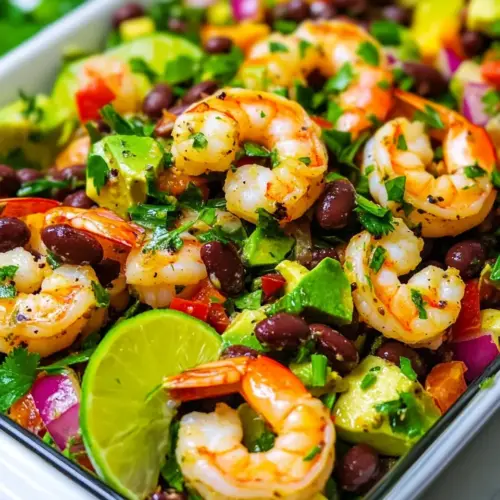
Lime Cilantro Shrimp and Black Bean Salad
Lime Cilantro Shrimp and Black Bean Salad is a bright, easy weeknight dinner that balances creamy avocado, tender shrimp, and hearty black beans with a tangy lime dressing. The combination is fresh, slightly sweet from honey, and carry a warm cumin undertone, perfect for summer meals or casual entertaining. Make it when you want something fast, flavorful, and satisfying.
Equipment
- Medium skillet
- Large Bowl
Ingredients
- one 15-ounce can black beans, drained and rinsed (I use no salt added) Provide a hearty base of fiber and protein, adding creamy texture and earthy flavor while being drained and rinsed to remove excess sodium and canned liquid.
- 1 medium ripe avocado, diced into bite-sized pieces Add creamy richness and a buttery texture that balances spicy and acidic elements while contributing healthy monounsaturated fats and mild flavor.
- 1 medium jalapeno pepper, sliced into thin rounds Bring bright heat and crisp texture with thin rounds that add fresh jalapeño flavor and a pleasant spicy bite to the salad.
- 1 small serrano chile pepper, finely minced (remove seeds for less heat); optional Add concentrated heat and aromatic chile flavor when minced finely; remove seeds to control spiciness and distribute flavor evenly throughout the salad.
- 1/2 medium cucumber, diced into bite-sized pieces Provide cool, crisp crunch and refreshing moisture with mild flavor that balances richer and spicier components when diced into bite-sized pieces.
- 1/3 cup fresh cilantro finely minced, or to taste Contribute fresh herbaceous brightness and citrusy notes that tie together flavors; finely mince to evenly distribute color and aroma.
- 3 tablespoons olive oil Offer a smooth, fruity fat that helps emulsify dressing components and coat salad ingredients for cohesive flavor and mouthfeel.
- 1 pound shrimp, cleaned and deveined (I used 12-15 count large shrimp) Deliver succulent, savory seafood protein with a firm texture; clean and devein shrimp for safety and quick cooking that pairs well with lime and cilantro.
- 1 to 2 teaspoons cumin, or to taste Impart warm, earthy undertones and a subtle smoky note that complements the shrimp and beans; adjust amount to suit preferred spice profile.
- 1 teaspoon kosher salt, or to taste Enhance overall seasoning and draw out other flavors with a clean salty finish; use kosher salt to taste for proper seasoning balance.
- 1 teaspoon freshly ground black pepper, or to taste Provide sharp, pungent heat and aromatic depth while grounding other spices; freshly ground pepper brightens the overall flavor.
- 1/4 to 1/3 cup freshly squeezed lime juice Add lively acidity and bright citrus flavor that tenderizes shrimp slightly and balances richness; use freshly squeezed lime juice for best brightness.
- 2 to 4 tablespoons honey, or to taste Supply a touch of natural sweetness that balances acidity and heat; adjust 2 to 4 tablespoons to achieve desired sweet-tart harmony.
Instructions
- To a large bowl, add the black beans, avocado, jalapeno, optional serrano chile, cucumber, cilantro; set aside: The moment you combine these elements you get textures that will anchor the salad visually and by mouth, with the coolness of the diced avocado and the snap of the cucumber creating contrast to the warm shrimp later on. Smell the fresh cilantro release a bright, citrusy aroma that complements the other ingredients, and listen for the soft, cushioned thump as the diced pieces settle together. This step matters because it allows the flavors to mingle slightly while you cook, giving the salad a rounded profile when you fold in the hot shrimp . A common mistake is overcrowding the bowl and mashing the avocado , so be gentle when stirring and keep pieces bite sized.
- To a medium skillet, add the olive oil, shrimp, evenly sprinkle with cumin, salt, pepper, and cook over medium-high heat for about 2 minutes.: As the olive oil warms, you should detect a faint fruity sheen from the oil and the skillet will begin to shimmer, signaling it is ready. When the shrimp hits the pan you will hear a lively sizzle, and very quickly the edges will turn opaque and take on light caramelization, offering a sweet, roasted aroma. This searing creates texture and locks in juices, which is why a hot pan and dry shrimp are essential. Avoid moving the shrimp too soon, or you risk preventing that golden crust. One frequent error is crowding the pan, which causes steaming instead of searing, so cook in batches if necessary.
- Flip shrimp over, turn the heat to medium-low, add the lime juice, honey, stir to combine, and cook until shrimp are done, about 2 minutes. Taste the sauce. If desired, add additional lime juice, honey, salt, pepper, or cumin.: Lowering the heat before adding the lime juice and honey prevents the citrus from tasting overly sharp and allows the honey to meld into a glossy sauce that coats the shrimp . You will notice a gentle bubbling as the liquid reduces and concentrates, releasing a sweet and tangy perfume. The visual cue is that the shrimp will be fully opaque and slightly firm to the touch, not rubbery. This technique preserves tenderness while building a balanced glaze. Be cautious not to overcook; overcooked shrimp shrinks excessively and becomes tough, which is the most common pitfall here.
- Transfer the shrimp and all the sauce to the bowl with the lettuce and vegetables. Stir to combine. Taste and make any other seasoning adjustments if necessary (I sprinkled with another 1/2 teaspoon cumin) and serve immediately. Salad is best fresh but will keep airtight in the fridge for up to 2 days, noting the avocado will oxidize and the vegetables will soften and release their natural juices as time passes.: Tasting at this stage is critical because the hot sauce will carry more pronounced flavors, and adjustments can make the final salad sing. You may sense a need for more acidity, sweetness, or seasoning; tweak in small increments and taste again. The aroma should be layered with citrus, warm spice, and a touch of sweetness, assuring balance. A typical mistake is to add too much salt at once, so season lightly and re-evaluate after mixing with the beans and vegetables.
- Transfer the shrimp and all the sauce to the bowl with the lettuce and vegetables. Stir to combine: When the warm sauce hits the bowl it will lightly dress the ingredients and release fragrant steam, which helps carry the flavors into the black beans and avocado . Stir with a gentle folding motion so the avocado keeps its shape and the cucumber remains crisp, allowing each component to be evenly coated. This step matters because it marries the hot and cold elements into a cohesive whole. Avoid vigorous mixing that can bruise delicate pieces and make the salad mushy.
- Taste and make any other seasoning adjustments if necessary (I sprinkled with another 1/2 teaspoon cumin) and serve immediately: Final tasting allows you to fine tune the interplay of heat, acid, and sweetness now that everything is combined. The finished salad should present a bright lime scent, a warm cumin undertone, and contrasting textures from the creamy avocado , crisp cucumber , and tender shrimp . Serve right away to enjoy the textural contrasts at their peak. Common mistakes include letting the salad sit too long before serving, which causes the vegetables to soften and the avocado to brown.
- Salad is best fresh but will keep airtight in the fridge for up to 2 days, noting the avocado will oxidize and the vegetables will soften and release their natural juices as time passes: If you must store leftovers, transfer to an airtight container and press a piece of plastic wrap directly on the surface to slow browning of the avocado . You will notice the texture and brightness diminish over time, and the flavors will meld further into the dressing. Use within two days for best quality. A typical oversight is refrigerating with the dressing already mixed in for too long, which leads to soggier vegetables, so consider storing components separately when possible.
Notes
- Balance sweetness and acidity Start with the lower end of the honey and lime juice ranges, then increase gradually until the dressing feels bright but not cloying.
- Control the heat Remove seeds from the jalapeno or serrano for milder spice, or leave them in for a more assertive kick, tasting as you go.
- Prep ahead wisely Keep the avocado and dressing separate until serving to avoid browning and soggy textures.
- Get a good sear Use a hot skillet and avoid crowding to achieve caramelized edges on the shrimp, which add flavor and texture.
- Season in layers Salt the shrimp while cooking and taste again after combining with the beans and vegetables to ensure a balanced final seasoning.