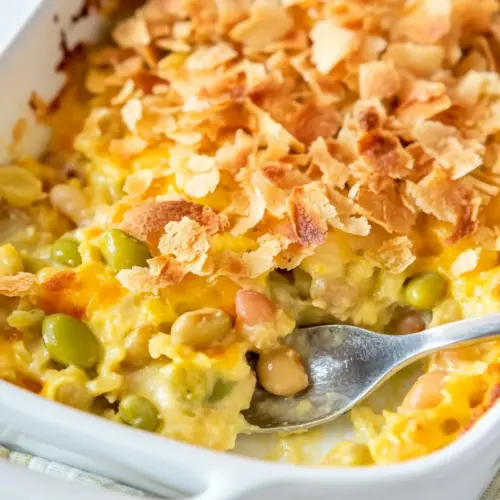
Lima Bean Casserole
Lima Bean Casserole is a creamy, comforting side that balances tender lima beans with melted cheddar and a crunchy cracker topping. This easy weeknight dinner or potluck dish offers mild savory depth from condensed cream of celery soup and a hint of Worcestershire, making it a crowd pleasing, make ahead favorite to enjoy warm and bubbly.
Equipment
- Casserole Dish
- Saucepan
- Skillet
- Mixing Bowl
Ingredients
- 1 (14-ounce) bag frozen lima beans Frozen and blanched offering a tender, slightly sweet base that provides bulk and mild flavor to the casserole while holding up to baking heat; thaw briefly before mixing to avoid excess liquid and ensure even cooking throughout.
- 1 tablespoon butter Softened to develop a mellow, rich foundation and impart subtle savory fat that binds flavors together; melt gently to avoid browning and sweat until translucent to release natural sweetness.
- 1/2 medium onion, diced Diced to contribute aromatic sharpness and sweet undertones that brighten the dish; cook until softened in butter to mellow pungency and integrate into the creamy sauce.
- 1 (10.75-ounce) can condensed cream of celery soup Condensed and creamy, supplying concentrated savory and herbaceous notes that form the casserole’s saucy backbone; whisk with milk for a smooth consistency and even coating of other ingredients.
- 1/4 cup milk Added to thin the condensed soup to a spoonable sauce consistency while adding a touch of dairy richness; stir in gradually to reach desired creaminess without making the mixture too runny.
- 2 teaspoons Worcestershire sauce Savory and tangy, enhancing umami depth and balancing richness with a mild acidic, Worcestershire complexity; measure precisely to avoid overpowering the delicate bean flavors.
- 1 (2-ounce) jar diced pimentos, drained Briny and mildly sweet, delivering pops of color and a piquant, peppery acidity that contrasts creamy elements; drain well to prevent excess moisture and distribute evenly for visual appeal.
- 1/4 teaspoon black pepper Ground to season subtly with warm, sharp heat that accentuates other flavors without overwhelming them; add to taste and mix thoroughly to ensure even seasoning.
- 1 1/2 cups shredded cheddar cheese Shredded to contribute rich, sharp dairy flavor and a gooey, melty texture that binds the casserole when baked; layer or stir in so each bite contains cheesy richness and a golden top.
- 16 Ritz crackers, coarsely crushed Crushed to provide a buttery, crispy topping that adds contrasting texture and a light, salty crunch when baked; distribute evenly over the casserole surface for a crisp, golden finish.
Instructions
- Preheat oven to 350 degrees.: As the oven warms, you will notice a faint heat ripple and a dry warmth that helps the casserole develop an even bake. Preheating ensures the dish goes into a consistent environment so the cheese melts evenly and the topping crisps. If you skip preheating you risk uneven cooking, where the filling might be lukewarm while the top browns too quickly. Check the oven gauge early, because an oven running cool will lengthen bake time and alter texture.
- Cook lima beans according to package directions.: When you cook the lima beans , listen for a gentle simmer and watch for the beans to become tender but still hold shape. Properly cooked beans will have a soft, buttery yield when pressed between a spoon and the roof of your mouth. Overcooking can make them mushy and cause the casserole to lose structure, so time them carefully and drain well to avoid adding excess water to the mixture. If beans are undercooked they will be starchy and detract from the silky final texture.
- Cook onion in butter until soft.: As the diced onion sizzles in the butter , you will smell a sweet aroma and see the pieces turn translucent. This step develops sweetness and mellows harsh onion bite, which deepens the casserole flavor. Stop once the onion is soft and glossy, not browned, to keep a gentle savory base. A common mistake is to rush this step, leaving raw onion sharpness in the casserole, so take your time and stir to prevent sticking.
- In a large bowl, combine lima beans, soup, milk, onion, Worcestershire sauce, pimentos, black pepper and 1 cup cheddar cheese.: When you stir these components, note how the condensed cream of celery soup and milk fuse into a smooth, pale sauce that coats each lima bean . The aroma will deepen with the savory hint from the Worcestershire sauce and the sweetness from the pimentos . Combining off heat helps preserve the cheese texture until baking. A potential pitfall is overworking the beans, which can break them down, so fold gently until everything is evenly distributed.
- Transfer to a 1 1/2 to 2-quart lightly greased casserole dish.: As you spoon the filling into the dish, you'll feel its creamy weight and see it settle into an even layer. Greasing the dish prevents sticking and promotes an easy release when serving. Spread the mixture smoothly so the top is level, which helps the cheese and crackers brown uniformly. If the dish is too full, it may bubble over, so use the recommended size to avoid a messy oven.
- Sprinkle remaining cheese and the crackers on top. Cover with foil and bake 20 minutes. Uncover and place bake in oven for 10 minutes.: The moment you add the remaining cheddar cheese and the coarsely crushed Ritz crackers , the casserole visually shifts from purely creamy to promising a crisp crown. The crackers should be distributed so there are gaps for hot air to crisp them during baking. Pressing them lightly helps them adhere, but avoid packing them down, which can prevent proper browning. Overly thick topping layers may toast unevenly, so aim for a thin, even scatter.
- Cover with foil and bake 20 minutes: Covered baking steams the interior, allowing the filling to heat through and meld without drying out, and you should hear a soft bubbling around the edges as it begins to set. The foil traps moisture so the beans remain tender and the cheese melts into silky pockets. A common error is to leave the dish covered for too long, which can prevent the topping from crisping later, so stick to the time and monitor the bubbling as an indicator that the center is hot.
- Uncover and place bake in oven for 10 minutes: Once uncovered, the oven's dry heat will transform the topping into a golden, crunchy layer and bring the cheese to a bubbly finish. Watch for a fragrant toasty smell and a golden hue on the crackers as signs of readiness. Remove the dish when the crackers are crisp and the cheese has small, molten bubbles; leaving it too long can dry the filling. A common problem is misreading the visual cues, so rely on color and bubbling rather than time alone to judge doneness.
Notes
- Drain beans well, drain cooked lima beans thoroughly in a colander and let them steam dry briefly, because excess water dilutes the sauce and keeps the topping from crisping.
- Sauté the onion gently, cook the diced onion over medium heat in the butter until soft and translucent so you get sweet, mellow flavor without browning that could alter the casserole's balance.
- Measure milk precisely, stick to the 1/4 cup of milk so the condensed soup reaches the correct consistency; too much liquid makes the filling runny and underbaked.
- Use freshly shredded cheese, shred the cheddar cheese from a block for better melting and texture, because pre-shredded cheese often contains anti caking agents that can affect creaminess.
- Distribute crackers evenly, scatter the crushed Ritz crackers in a thin, even layer to ensure uniform browning, avoiding clumps that might stay soggy.
- Monitor the oven color, rely on the visual cues of golden crackers and bubbling cheese when uncovering, since oven temperatures vary and color is the best readiness indicator.