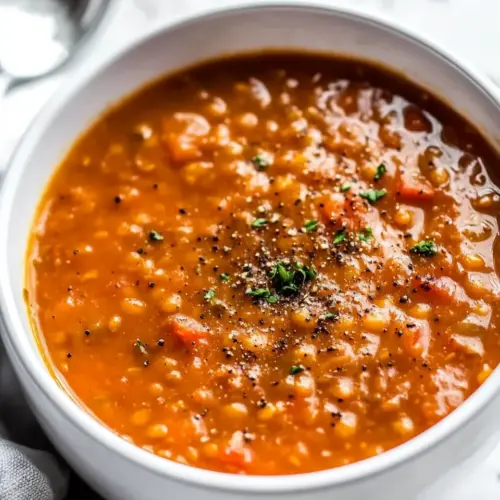
Lentil Soup
Lentil Soup is a creamy, comforting bowl full of savory aromatics and tender lentils. This easy weeknight dinner features a fragrant base of onion and garlic, wholesome vegetables, and warming spices for a satisfying, budget friendly meal you will want to make again and again.
Equipment
- Large Pot
- Potato Masher
- Immersion Blender
- Cutting Board
- Chef's Knife
Ingredients
- 1 tablespoon olive oil Warm and fragrance-building, drizzle at the start of cooking to sauté aromatics and prevent sticking while adding a fruity, slightly bitter backbone to the soup.
- 1 yellow onion chopped Softening and flavor-releasing, chop finely and sauté until translucent to provide a sweet, savory base that balances the lentils and spices.
- 4 cloves garlic minced Aromatic and pungent, mince and add early to bloom oils and deepen savory notes; contributes a subtle heat and complexity when cooked.
- 1 large carrot chopped Earthy and naturally sweet, chop into uniform pieces to tenderize during simmering and add body, texture, and a hint of sweetness to the broth.
- 1 stalk celery chopped, just over 1/2 cup Crisp and aromatic, chop to roughly half a cup to introduce vegetal depth and crunch that mellows and enriches the soup base as it simmers.
- 2 cups dried green lentils or brown lentils Hearty and protein-rich, rinse and inspect before adding to simmering liquid to provide bulk, a creamy texture when cooked, and absorb surrounding flavors.
- 3 large tomatoes diced, or 4 small tomatoes Juicy and acidic, dice to release fresh brightness and umami that lifts the stew, balancing the earthiness of lentils and the richness of the stock.
- 2 potatoes medium diced into 1-inch pieces, Yukon gold if possible Starchy and comforting, dice into 1-inch pieces so they cook evenly, tenderize in the broth, and thicken the soup slightly while adding a buttery note.
- 2 litres low sodium chicken stock or broth, divided Savory and liquid-forming, use as the main cooking medium to hydrate lentils and vegetables, infuse savory depth, and control the soup’s saltiness and consistency.
- 2 teaspoons vegetable stock powder such as Vegeta, or beef/chicken bullion powder Concentrated and savory, dissolve into the stock to enhance meaty umami and round out flavors, especially if low-sodium broth needs additional depth.
- 2 teaspoons paprika sweet or mild, or 1 teaspoon smoky Warm and smoky or sweet, sprinkle into the pot to introduce gentle heat, color, and aromatic complexity that complements cumin and tomatoes.
- 1 teaspoon ground cumin Warm and earthy, measure and add to build a subtle depth and aromatic warmth that pairs with paprika and enhances the overall savory profile.
- 1 tablespoon fresh thyme chopped, optional Herbaceous and fragrant, chop and stir in near the end if using to contribute bright, woody notes and a fresh, garden-like lift to each spoonful.
- 1/4 cup fresh parsley plus extra to garnish Bright and herb-forward, roughly chop and add to the soup and as garnish to provide fresh, slightly peppery green notes and visual contrast.
- 1 pinch salt to taste Balancing and seasoning, add sparingly during cooking and adjust to taste to enhance overall flavor and bring out the natural sweetness of vegetables.
- 1 pinch pepper to taste Ground and warming, season to taste to sharpen flavors and add subtle heat that complements the other spices without overpowering the dish.
Instructions
- Heat oil in a large pot over low-medium heat. Add chopped onion and cook until translucent, about 3 to 4 minutes. Stir in garlic and sauté for another minute until fragrant.: The kitchen will fill with a warm note as the olive oil loosens its aroma, and you should see a faint shimmer in the oil when it is ready. This gentle heat prevents the olive oil from burning and allows the aromatics to bloom evenly. One common mistake is cranking the heat which makes the oil smoke, imparting bitterness.
- Add the chopped carrot and celery and cook for about 8 minutes, stirring occasionally, until softened. If using meat, brown it at this stage. Stir in the green lentils, coating them well in the aromatics, and let them cook for 2 to 3 minutes. Add a splash of oil if the mixture looks dry.: You will notice the onion soften and turn glossy as it releases its sugars, and the sound will shift from a sharp sizzle to a softer bubble. This translucent stage signals that the base flavor is sweet and mellow, not sharp. If you skip this you risk a raw onion bite in the finished bowl.
- Add the chopped tomatoes and cook until they begin to soften and break down. Then toss in the potatoes and continue cooking for another 5 minutes, stirring occasionally to prevent sticking.: The moment you add the garlic a fragrant perfume will rise, and the kitchen will feel cozy. Keep it moving because garlic browns very fast and can turn bitter; a golden hint is ideal, anything darker tastes burnt.
- Pour in the broth along with stock powder, paprika, cumin, thyme and parsley. Stir everything together, increase the heat to bring to a gentle simmer, then reduce heat to low. Cover and simmer for 40 to 50 minutes, stirring occasionally, until the lentils and potatoes are fully tender.: The carrot and celery will release sweet and savory juices as they soften, creating a comforting, layered base. Stirring occasionally helps them sweat rather than brown too quickly. A frequent error is crowding the pot, which prevents proper softening and leads to uneven texture.
- Mash a portion of the soup with a potato masher or briefly blend with an immersion blender to thicken the texture as desired. Season with salt and pepper to taste. Garnish with fresh parsley and serve hot with crusty bread or garlic toast.: When the lentils hit the pot they should glisten as they pick up the oil and aromatics, and you will smell a toasty edge that promises depth. This brief toasting helps the lentils keep their shape and absorb flavor. If you skip it the lentils may taste bland.
- Add the chopped tomatoes and cook until they begin to soften and break down: The tomatoes will release bright juices that add acidity, and you will see the mixture loosen as they break down. This step brightens the overall flavor and balances the earthiness. Using underripe tomatoes can leave the soup flat, so choose ripe ones.
- Toss in the potatoes and continue cooking for another 5 minutes, stirring occasionally to prevent sticking: The potatoes should take on some of the pan flavors and start to soften at the edges; this helps them finish perfectly in the simmer. Stirring keeps the pieces from sticking and ensures even cooking. If you cut the potatoes too unevenly they will cook at different rates, causing some to be mealy and some to be firm.
- Pour in the broth along with stock powder, paprika, cumin, thyme and parsley: When the broth hits the pot it will loosen the mixture and carry the spices throughout; you should see steam and small bubbles forming as it heats. This infusion is where flavors marry, so add herbs and spices now for full integration. Over seasoning at this stage makes it hard to balance later, so taste as it cooks.
- Stir everything together, increase the heat to bring to a gentle simmer, then reduce heat to low: Look for small consistent bubbles rising to the surface, that steady simmer is what gently breaks down lentils and potatoes without attacking them. A vigorous boil will shake the pot and can break delicate pieces apart, so moderate the heat carefully.
- Cover and simmer for 40 to 50 minutes, stirring occasionally, until the lentils and potatoes are fully tender: Over this long simmer the broth will deepen and the texture will change from distinct pieces to a cohesive whole, with aromas of cumin and paprika rounding the pot. Stirring occasionally prevents sticking and lets you check doneness. A frequent pitfall is not simmering long enough, leaving hard lentils or undercooked potatoes.
- Mash a portion of the soup with a potato masher or briefly blend with an immersion blender to thicken the texture as desired: The sound will change to a softer simmer as the starches release and the body thickens, creating a creamy mouthfeel without dairy. This textural tweak helps the soup cling to the spoon and feel luxurious. Beware of over blending which can make the soup gluey rather than velvety.
- Season with salt and pepper to taste: At this point the flavors have concentrated and you should add salt and pepper sparingly while tasting frequently. Proper seasoning brightens and balances the entire pot. The biggest mistake is adding too much salt all at once; adjust gradually.
- Garnish with fresh parsley and serve hot with crusty bread or garlic toast: Fresh parsley will add a final green pop and lift at the finish, and the contrast of warm soup with crisp bread is delightful. The garnish also provides a visual cue that the bowl is ready to enjoy. Serving without a garnish misses a final fresh note, but it does not ruin the dish.
Notes
- Add a smoky twist by using smoked paprika in place of sweet paprika for a gentle campfire note, but use less to avoid overpowering the delicate lentils.
- Make it vegetarian by using vegetable stock instead of chicken stock, keeping the same simmer time so the lentils and potatoes reach the right tenderness.
- Boost the herb profile by adding chopped fresh herbs near the end, like additional parsley or thyme, for a lively finish and brighter flavor.
- Control the texture by mashing only a portion of the soup to keep some whole lentils for bite, this yields a pleasing contrast between creamy and firm elements.
- Stretch it into meals by serving over cooked grains such as rice or bulgur for bulk without changing the original pot, soaking up the savory broth.