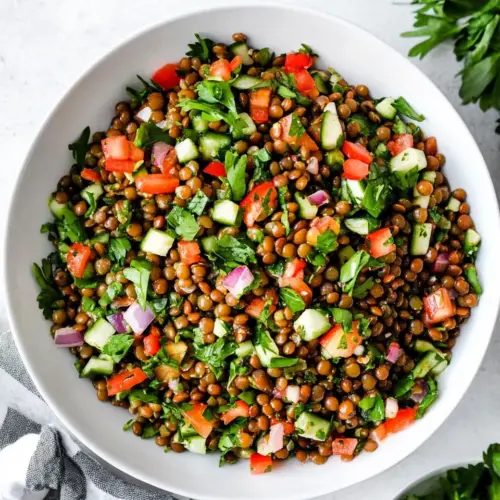
Lentil Salad
Lentil Salad is a bright, easy salad that balances tender green lentils with crisp cucumber and red bell pepper, fresh herbs, and a lemony dressing. This approachable, protein packed dish works for easy weeknight dinners and make ahead lunches, offering creamy feta contrast and refreshing herb notes. It is a pantry friendly, nutritious choice that stays vibrant and satisfying.
Equipment
- Large Saucepan (I use All Clad)
- Salad Bowl (I love my Williams Sonoma Pantry Serving Bowl)
Ingredients
- 1 cup uncooked green lentils, rinsed well and picked over Provide a hearty, protein-rich base that absorbs flavors during cooking; simmer until tender but not mushy to maintain salad texture. Rinse thoroughly to remove debris and reduce foaming during boiling for a clean-tasting result.
- 3 cups water (or vegetable broth) Add a simmering medium that helps cook lentils evenly and infuse subtle savory notes if using broth; measure precisely to avoid overly soft lentils. Bring to a gentle boil, then reduce heat to maintain a steady simmer for best texture.
- 1 bay leaf Impart a mild aromatic background and subtle savory depth during cooking; remove before serving to avoid an overpowering bay leaf flavor. Nestle in the cooking liquid with the lentils and discard once the lentils are cooked to taste.
- 1 English cucumber, finely diced Contribute a crisp, refreshing crunch and mild vegetal flavor when finely diced; toss in near the end to preserve firmness. Peel if desired and seed sparingly to prevent excess moisture in the salad.
- 1 red bell pepper, stemmed, seeds removed, and finely diced Bring a sweet, slightly crisp bite and vibrant color when finely diced; remove seeds and stems to ensure even texture and avoid bitterness. Dice uniformly to blend well with lentils and other diced vegetables.
- 1/2 small red onion, finely diced Add a sharp, slightly pungent bite and crunchy texture when finely diced; soak in cold water briefly if milder flavor is preferred. Dice small to distribute the onion’s flavor evenly throughout the salad.
- 1/4 cup chopped Italian parsley Provide fresh, bright herbal notes and a tender texture when chopped; stir in just before serving to preserve color and aroma. Use Italian parsley for its slightly peppery, clean flavor that complements lemon and olive oil.
- 1/4 cup chopped fresh mint leaves Offer cool, minty brightness and aromatic lift when chopped; add sparingly to avoid overpowering other herbs. Use fresh leaves for best fragrance and fold gently into the salad to retain tenderness.
- 1/3 cup crumbled feta cheese, optional Contribute creamy, salty richness and tang when crumbled; add optionally to enhance savory balance. Sprinkle over the salad before serving to lend a Mediterranean character without overwhelming herbs and lemon.
- 1/4 cup olive oil Supply a smooth, fruity fat that binds the dressing and coats ingredients evenly; whisk with lemon and mustard for an emulsion. Use extra-virgin olive oil for fuller flavor and drizzle gradually while whisking to achieve desired consistency.
- 2 teaspoons lemon zest Provide intense citrus aroma and concentrated lemon flavor that brightens the salad; grate finely to avoid bitter white pith. Use fresh zest for the most vibrant and fragrant results and combine with juice for layered lemon notes.
- 2 tablespoons fresh lemon juice Deliver fresh acidity and brightness to balance the earthiness of lentils; add gradually and taste to achieve harmony. Squeeze lemon juice just before assembling to preserve maximum flavor and acidity.
- 1 teaspoon Dijon mustard Help create a cohesive, slightly tangy dressing and aid emulsification when whisked with oil and lemon; choose a smooth Dijon for steady texture. Use modest amounts to add complexity without dominating the salad.
- 1 teaspoon honey or pure maple syrup Introduce subtle sweetness to balance acidity and round out flavors; choose honey for floral notes or maple for a deeper, earthier sweetness. Dissolve into the lemon-mustard mixture to create a well-balanced vinaigrette.
- 1 clove garlic, minced Provide a pungent, savory kick and depth when minced; mash or finely mince to distribute flavor evenly in the dressing. Combine with oil and lemon to mellow raw sharpness while preserving garlicky aroma.
- Kosher salt and black pepper, to taste Season to taste to enhance and balance all flavors; add gradually and taste between adjustments for best results. Use kosher salt for clean seasoning and freshly ground black pepper for a bright, peppery finish.
Instructions
- In a large saucepan, combine the lentils, water or broth, and bay leaf. Bring to a boil over medium high heat and then turn to low and cook for 15 to 20 minutes or until lentils are soft, but still slightly firm. Do not overcook or the lentils will be mushy.: You will notice a rising perfume from the pot as the lentils heat up, and the surface will move from still to a steady simmer with occasional small bubbles. Keep the lid slightly ajar if you see foam forming, and stir once or twice to ensure even cooking. The ideal texture is tender with a slight bite, almost al dente, so check a lentil at 15 minutes by tasting; it should yield but not collapse. Overcooking turns them into a puree, which loses the pleasant contrast with the raw vegetables, so drain promptly when they reach that tender but intact point. A common mistake is leaving them unattended on too high heat, which can cause them to split and become gluey.
- While the lentils are cooking, make the dressing. In a small bowl or jar, whisk together the olive oil, lemon zest, lemon juice, Dijon mustard, honey or maple syrup, garlic, salt, and pepper. Set aside.: As you whisk, watch the dressing emulsify into a glossy mixture, the citrus scent bright and immediate. The mustard helps bind the oil and lemon into a cohesive emulsion, and the honey smooths the edges of the acid so the dressing feels rounded on the tongue. Smell the dressing to judge the balance; if the lemon dominates, add a touch more oil, if it feels flat, a pinch more salt or an extra drop of lemon will sharpen it. Let the dressing rest briefly to allow the garlic to soften and integrate. A common error is adding salt before tasting, which can lead to over salting once the dressing meets the lentils and vegetables.
- When the lentils are done cooking, use a colander to drain the lentils. Discard the bay leaf. Rinse quickly with cold water. Transfer to a large bowl.: The rinse will stop carryover cooking and firm each lentil's surface, leaving a cooler, springier bite. When you drain, listen for the quick hiss of steam escaping, and see that the lentils shed excess starch, preventing them from clumping. Transferring them while still slightly warm helps the dressing soak in better, but ensure they are not hot enough to wilt the herbs or melt the feta cheese . One pitfall is draining too long and letting them sit dry, which makes them less receptive to the dressing.
- Add the cucumber, red pepper, red onion, parsley, mint, and feta cheese, if using, to the bowl. Stir. Drizzle with dressing and toss until well combined. Serve immediately or let sit for 30 minutes so the flavors can meld.: As you add each item, note the burst of color and the fresh herb aroma that fills the bowl. Turning the salad gently keeps the feta cheese in small crumbles rather than mashed into a paste. Tossing by hand or with a large spoon ensures even distribution so each bite has a balance of textures. If the herbs clump, a few careful stirs will separate them; avoid vigorous mixing which can bruise delicate leaves. A common misstep is adding everything while the lentils are too hot, which will make the vegetables limp and mute the herbs' brightness.
- Drizzle with dressing and toss until well combined. Serve immediately or let sit for 30 minutes so the flavors can meld: When the dressing hits the salad, you should see a light sheen on the lentils and vegetables, and the citrus aroma will lift. Toss gently to coat without crushing the vegetables or breaking the lentils. If you serve immediately, expect bright, crisp contrasts; if you rest it for 30 minutes, the flavors will integrate and the lentils take on more of the dressing's personality. Always taste before serving and adjust salt and pepper. A frequent oversight is over dressing; aim for a thin coating rather than pooling oil at the bottom of the bowl.
Notes
- Cook to texture: Aim for lentils that are tender but still hold their shape, tasting at around 15 minutes so you avoid a mushy finish.
- Use room temperature dressing: Let your dressing come to room temperature before dressing cold ingredients so it mixes more easily and coats evenly.
- Chop uniformly: Finely dicing the cucumber, red bell pepper, and red onion ensures each bite is balanced and prevents large vegetable pockets.
- Rest for depth: If time allows, let the salad sit for 30 minutes so the flavors meld, which deepens the overall taste without extra effort.
- Store smart: Keep leftovers in an airtight container and refrigerate up to four days, stirring before serving to redistribute the dressing.