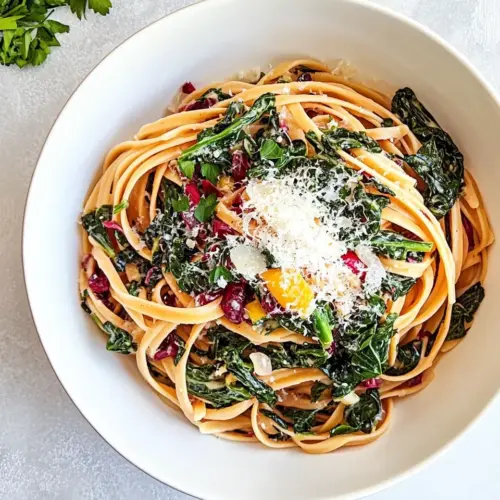
Lemony Swiss Chard Pasta
Lemony Swiss Chard Pasta blends creamy olive oil, bright lemon, and tender Swiss chard with crunchy toasted hazelnuts and sweet golden raisins. This easy weeknight pasta feels both light and satisfying, perfect for spring meals and casual dinners. Whole grain fusilli soaks up the silky sauce for a textured, comforting bite, making it a recipe you will return to again and again.
Equipment
- Large Pot
- Large Skillet
- Colander
- Measuring Spoons
Ingredients
- 12 ounces whole grain fusilli pasta Boil in salted water until al dente to provide a hearty, nutty base and substantial texture that soaks up sauce and flavors. Whole grain fusilli holds sauces in its twisted shape and contributes fiber and a deeper taste profile to the dish. Stir gently with greens and dressings to integrate all components without breaking the pasta.
- 3 tablespoons extra-virgin olive oil, divided Drizzle to sauté and finish; use divided portions to cook aromatics and to dress the completed pasta for sheen and flavor. Extra-virgin olive oil adds fruity, peppery notes and a silky mouthfeel while carrying fat-soluble flavors throughout. Reserve a bit for tossing at the end to keep the pasta glossy and to meld the lemon and cheese.
- 2 bunches Swiss chard, stems removed and thinly sliced, leaves chopped Strip stems and slice stems thinly while roughly chopping leaves to provide contrasting textures and bright, earthy flavor. Swiss chard offers tender leafy volume that wilts into the pasta and slightly crunchy stems that add bite when cooked briefly. Add stems early in the pan and leaves near the end to ensure even cooking and vibrant color.
- 4 garlic cloves, thinly sliced Slice thinly and gently sauté to release a pungent, aromatic backbone that infuses the oil with savory depth. Garlic adds warmth and complexity to balance the lemon and greens, developing sweeter, nuttier notes if cooked until lightly golden. Add near the beginning to fragrance the dish but avoid burning to prevent bitterness.
- 1/2 teaspoons ea salt Season during cooking and after tossing to enhance overall flavor profile and balance other elements; use measured amounts to avoid over-salting. Salt helps draw moisture from the greens and elevates the sweetness of caramelized onions and raisins while highlighting the cheese and lemon. Adjust to taste, adding sparingly if using pecorino, which contributes additional saltiness.
- 3 tablespoons lemon juice Squeeze fresh to brighten and cut through richness, providing zesty acidity that lifts the entire dish. Lemon juice complements the earthy chard and nutty pasta while balancing the sweet notes from raisins and caramelized onions. Add gradually and taste to achieve a lively, but not overpowering, citrus presence.
- 1/2 cup caramelized onions, optional Fold in if desired to introduce deep, sweet-savory notes that add complexity and a silky texture contrast. Caramelized onions contribute umami and mellow sweetness that pairs well with lemon and cheese, enriching the overall mouthfeel. Use as an optional garnish or mix-in to elevate the dish without overwhelming the chard.
- Pinches of red pepper flakes Sprinkle small pinches to add subtle heat and a faint smoky warmth that enhances other flavors without becoming dominant. Red pepper flakes provide a pleasant counterpoint to the lemon and sweet components, waking the palate and adding interest. Add cautiously and increase to desired spice level while tasting.
- 1/3 cup golden raisins Soak or plump briefly and fold into the pasta to introduce bursts of concentrated sweetness and chewy contrast. Golden raisins add a fruity accent that brightens earthy greens and complements toasted hazelnuts and pecorino. Distribute evenly to ensure occasional sweet pops in each bite.
- 1/3 cup toasted hazelnuts, chopped Toast and chop to add crunchy texture and a toasty, buttery flavor that complements the pasta and cheese. Toasted hazelnuts provide richness and a nutty aroma while offering a satisfying contrast to the tender greens and pasta. Scatter over the dish just before serving to preserve crunch.
- 1/4 cups shaved pecorino cheese Shave thinly to offer salty, tangy, and creamy umami notes that meld with lemon and oil for a savory finish. Pecorino’s crystalline texture and sharp flavor punctuate the dish, balancing sweet raisins and caramelized onions and enhancing overall depth. Use sparingly as a finishing element to avoid overpowering the other ingredients.
- Microgreens, optional, for garnish Garnish lightly to add fresh, peppery, or herbaceous micro-flavors and a delicate visual finish when using. Microgreens contribute a subtle fresh bite and bright color that complements the hearty pasta and wilted chard. Scatter just before serving for an attractive and lively topping when desired.
- Freshly ground black pepper Grind freshly to season and provide aromatic, slightly floral heat that ties components together and finishes the dish. Freshly ground black pepper enhances savory flavors and gives complexity to lemon and cheese without overwhelming delicate greens. Adjust to taste, adding a few turns at the end for maximum aroma.
Instructions
- Bring a large pot of salted water to a boil. Prepare the pasta according to the package directions, cooking until al dente. Before draining the pasta, scoop out 1 cup of the starchy pasta water and set aside. Drain the pasta.: The air fills with the brisk scent of bubbling water, and you should see a steady, rolling boil before adding the whole grain fusilli pasta . Salting the water seasons the pasta from the inside, which is crucial for depth. A typical problem is adding pasta to water that is not hot enough, causing it to become gummy rather than al dente; wait for that active boil. Listen for a lively roar, and you will know it is ready. If your kitchen smells faintly of mineral water, that is normal depending on your tap. Use a large pot so the pasta has room to move, preventing sticking. Stir immediately once you add the pasta to avoid clumps. If you notice starchy foam climbing the pot, reduce heat slightly to maintain a controlled boil.
- Heat 1 tablespoon of the oil in a large skillet over medium heat. Add the chard stems and cook for 1 to 2 minutes, or until they begin to soften. Add the chard leaves, garlic, salt, and several grinds of pepper, and sauté for 1 to 2 minutes, or until the leaves are wilted.: As the pasta cooks, watch for the slight chew that indicates al dente, about the lower end of the package time. Al dente pasta feels firm against your teeth, with a tiny white dot in the center if you bite. Overcooking makes it soft and less able to hold sauce. To prevent overcooking, begin checking two minutes before the package suggests. When you bite into a piece, it should resist slightly but not be hard. If the texture is too firm, give it another minute and recheck. Keep a timer so you do not forget while tending to the chard.
- Add the pasta, the remaining 2 tablespoons olive oil, the lemon juice, caramelized onions, if using, red pepper flakes, and 1/2 cup of the reserved pasta water, and toss. Add the raisins and hazelnuts and toss again. If the pasta is dry, add more of the reserved pasta water. Top with the cheese, season to taste, and garnish with microgreens, if desired.: This glossy, salty liquid is magic for bringing the sauce together, creating a silky emulsion between the oil and the pasta. You will see it cling to the pasta when you toss, making the finish cohesive. Many cooks forget to reserve this and then the final dish can feel dry; scoop it first. The water carries starch that helps the lemon juice and olive oil adhere to the fusilli. Keep it warm near the stove so it does not cool down and shock the pasta when added. If you accidentally drain it away, you can boil a little extra water and save some, but it will be less ideal.
- Drain the pasta: quickly but do not rinse it, because rinsing removes the starch that helps sauce cling. As you drain, the steam will rise and release a nutty aroma from the whole grain. If you plan to finish cooking in the skillet, undercook slightly so the pasta can finish absorbing flavors. A common error is rinsing under water to stop cooking, which leaves the pasta slick and cold; instead, toss it immediately in the skillet to marry with the sauce.
- Heat 1 tablespoon of the oil in a large skillet over medium heat: You should see a thin shimmer on the pan surface and smell a faint fruity note of the extra-virgin olive oil . Medium heat allows the oil to warm and carry flavors without burning delicate aromatics. Too high a flame can scorch the oil and impart bitterness, so dial it back if smoking occurs. Use a pan large enough to hold the pasta without crowding. When the oil moves easily across the pan, it is ready for the next step.
- Add the chard stems and cook for 1 to 2 minutes, or until they begin to soften: The stems are sturdier than the leaves and need the extra moment to become tender. You will hear a gentle sizzle and see the stems take on a glossy sheen. This step builds a base texture and a savory backbone. If you skip this, the stems remain tough and fibrous in the final dish. Stir frequently to prevent uneven browning. If they start to brown too quickly, lower the heat and add a splash of the reserved pasta water to moderate the cooking.
- Add the chard leaves, garlic, salt, and several grinds of pepper, and sauté for 1 to 2 minutes, or until the leaves are wilted: The leaves will collapse dramatically and release a green, vegetal scent that feels fresh and slightly sweet. The thinly sliced garlic will perfume the oil, softening as it cooks. This rapid sauté keeps the chard bright and tender rather than mushy. A common mistake is overcooking the leaves until they turn dull and lose their flavor; aim for a vivid color and tender texture. Stir to ensure even cooking and scrape up any fond for added flavor. If the garlic starts to brown too fast, reduce heat to avoid bitterness.
- Add the pasta, the remaining 2 tablespoons olive oil, the lemon juice, caramelized onions, if using, red pepper flakes, and 1/2 cup of the reserved pasta water, and toss: At this point the skillet sings with combined aromas: citrusy lemon, savory garlic, and nutty oil. The reserved pasta water helps bind the oil and lemon into a silky sauce that clings to the fusilli pasta . Tossing distributes flavors evenly and helps the pasta finish cooking in the sauce, soaking up those nuances. If the mixture seems dry, add more hot reserved pasta water a splash at a time until the texture is glossy and cohesive. A trap is adding cold water, which cools the pan and prevents the sauce from emulsifying; always use warm reserved water. Taste and tweak salt and lemon to balance.
- Add the raisins and hazelnuts and toss again: The golden raisins soften slightly and offer sweet highlights, while the toasted hazelnuts contribute crunch and a warm, toasty aroma. Each toss should coat the pasta with glossy sauce and distribute these textural contrasts. If the raisins are too firm, let the pasta sit a minute for them to plump. Avoid adding nuts that are not toasted, as they will taste flatter and less aromatic. If you prefer a more uniform texture, chop the hazelnuts finer, but keep some larger pieces for bite contrast.
- If the pasta is dry, add more of the reserved pasta water: The goal is a cohesive, silky coating not a soupy pool. The starchy water binds oil and lemon into a creamy sheen that clings to the fusilli . Add small amounts and observe the texture change; you will see the sauce become glossy and ribbon across the pasta. A common misstep is overwatering, which dilutes flavor and makes the dish sloppy. If that happens, simmer briefly to reduce, stirring gently to avoid breaking the pasta. Keep tasting so you stop adding liquid when balance is achieved.
- Top with the cheese, season to taste, and garnish with microgreens, if desired: The shaved pecorino cheese melts slightly into the warm pasta, adding salty tang and a creamy note that rounds the lemon. Freshly ground black pepper and a final sprinkle of salt lift the flavors in the last moment. Microgreens provide a bright, fresh finish and a visual pop. A mistake here is over salting after the cheese is added; taste first because pecorino can be quite salty. Serve immediately while warm and glossy.
Notes
- Reserve warm pasta water before draining and keep it hot to help the sauce emulsify properly when you finish the pasta in the skillet.
- Toast hazelnuts properly over medium heat until aromatic, shaking the pan often to avoid scorching and to preserve their crunch and flavor.
- Separate stems from leaves and cook stems a touch longer, so they soften evenly without turning the leaves limp or watery.
- Use fresh lemon juice for the brightest citrus note, squeezing just before adding to keep the flavor vibrant and lively in the final dish.
- Adjust red pepper flakes sparingly to taste, adding small pinches so the heat complements rather than overwhelms the lemon and chard.