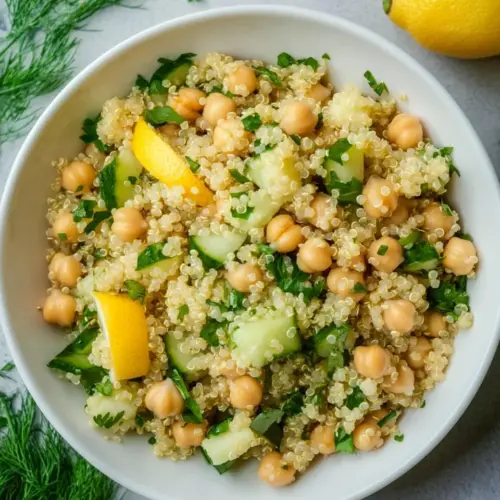
Lemony Quinoa Chickpea Salad
Lemony Quinoa Chickpea Salad is a bright, creamy and easy plant based salad that combines fluffy quinoa, tender chickpeas, fresh dill and zesty lemon. This light, protein rich dish makes a perfect easy weeknight lunch or make ahead side for gatherings, offering refreshing citrus notes and satisfying texture. Try it for a healthy, flavorful option that improves after chilling.
Equipment
- Small pot
- Bowl
- Whisk
- Colander
Ingredients
- 1/2 cup uncooked quinoa (rinsed with cold water (about 1 1/2 cups cooked)) Rinse and cook to fluffy tenderness; provides a light, slightly nutty base and bulk for the salad while absorbing dressing flavors to bind components together.
- 15 -ounce can chickpeas (a.k.a. garbanzo beans) (about 1 1/2 cups cooked), drained and rinsed Drain and rinse before using; supplies creamy, hearty protein and a pleasant bite, contributing texture and satiety while balancing the salad's acidity.
- About 6 scallions (sliced (about 1/2 cup)) Slice thinly to add a mild oniony crunch; offers fresh, bright notes and a green color contrast while distributing subtle sharpness throughout each bite.
- 1/4 cup chopped fresh dill (1 generous handful) Chop finely to impart an aromatic, slightly sweet herbal lift; contributes fresh, citrusy undertones and visual vibrancy while complementing lemon and olive oil flavors.
- 1/4 cup extra virgin olive oil Whisk into the dressing to add smooth, fruity richness; functions as the primary fat that coats ingredients and helps carry flavors for a cohesive mouthfeel.
- 1/4 cup freshly squeezed lemon juice (from about 2 medium lemons) Squeeze freshly for bright acidity and citrus aroma; provides tartness that balances oil and richness while enhancing herbs and elevating overall freshness.
- 1 teaspoon Dijon mustard Emulsify with lemon and oil for balanced tang; contributes a gentle sharpness and stabilizes the dressing so flavors meld and cling to the salad ingredients.
- 1/2 teaspoon kosher salt + more to taste Season to enhance and elevate all flavors; helps bring out the natural tastes of quinoa, chickpeas, and herbs while allowing adjustment to personal preference.
Instructions
- Cook the quinoa. Rinse quinoa under cold water and drain. Place in a small pot on the stove and add 3/4 cup water. Bring to a boil. Reduce heat to a simmer and cover. Cook about 15 minutes, just until tender and translucent, with the white tail removed from the seed. Remove from heat and pour into a large bowl. Stir and spread a bit to let cool some (but it does not need to cool completely).: When you put the pot on the heat, you will hear a gentle rise to a quiet simmer, and soon you will see tiny tails appear as the seeds become translucent, a key visual cue that the quinoa is tender. The steam will smell faintly nutty, and the surface will show small, separated grains rather than a gluey mass, which means the water to grain ratio and simmering are correct. A common mistake is boiling too hard, which can cause uneven cooking and mushy edges. If that happens, lower the heat, keep the lid slightly ajar to control evaporation, and check earlier next time. Letting the cooked grains sit spread in a bowl helps them cool and stop steaming, preventing them from turning sloppy in the dressing.
- Add the chickpeas, scallions, and dill. Stir gently to combine.: A cool rinse immediately after cooking removes excess starch and any lingering papery bitterness, leaving a cleaner flavor and a lighter texture. You will feel the grains firm slightly when they have been properly drained, and they will take on a faint sheen. Pouring them into a colander and shaking gently helps release trapped water. Avoid pressing or mashing the grains, which can make them gummy; instead, let gravity do the work to keep the texture airy.
- In a small bowl, whisk together the olive oil, lemon juice, Dijon mustard, and 1/2 teaspoon salt until combined. Pour over the quinoa mixture. Stir to combine.: Starting with the right amount of water sets the stage for even cooking, and you will notice the pot steam as it warms, indicating that the moisture is ready to be absorbed. Use a snug fitting lid to trap steam for gentle cooking. One trap to avoid is adding too much water, which leads to soggy grains, so measure carefully and adjust the heat if the pot is boiling too aggressively.
- Taste and add more salt if desired. Flavors will develop more after the salad chills.: As the heat rises, watch for the surface to break into lively bubbles, and listen for a steady, rolling sound that signals the water is fully active. This moment is transient, so reduce the heat promptly to avoid toughening the grains. Letting the pot roar at high heat can evaporate water too fast and scorch the bottom, so be ready to lower the flame when you see that vigorous bubble stage.
- Cover and refrigerate until it’s time to eat. Best flavor is achieved after about 24 hours but it’s still delicious right after mixing! Keeps about 4 days in the fridge.: At simmer, you will see gentle movement on the surface and feel a soft, warm steam when you lift the lid briefly. This gentle environment cooks the quinoa evenly and helps the grains stay separate. A frequent error is lifting the lid too often, which lets heat escape and increases cooking time. Trust the process and peek only once or twice to check the tail formation.
- Cook about 15 minutes, just until tender and translucent, with the white tail removed from the seed: Listen for a quieter pot and watch for the translucent change in the seed, which is your signal that the texture has shifted from raw to tender. Taste a small pinch, it should be tender through with a slight bite, not chalky. Overcooking will collapse the grain and make the salad pasty, so stop when you see that tiny white spiral tail and the grain is tender.
- Remove from heat and pour into a large bowl: Transferring the hot quinoa into a room temperature bowl spreads the heat and allows the grains to cool faster, preventing residual cooking. As you stir it out, you will notice steam evaporating and a pleasant, toasty scent. If you leave it in the pot, trapped steam can continue to soften the grains, so move it promptly to control texture.
- Stir and spread a bit to let cool some (but it does not need to cool completely): Spreading the cooked grain helps release heat quickly and keeps it from steaming itself into a softer texture. The surface will lose some gloss and become more matte as it cools. A pitfall is adding chilled dressing to piping hot quinoa, which can wilt the herbs and change the texture; let it cool until it is warm but not hot.
- Add the chickpeas, scallions, and dill: When you fold in the chickpeas , scallions , and dill , you will feel the contrast of textures, the round firmness of the chickpeas against the fluffy quinoa and the feathery dill. The aroma becomes herbaceous and lively. Stir gently so you distribute ingredients without crushing the chickpeas. A common mistake is overly vigorous stirring that breaks down the chickpeas and makes the salad pasty; use a soft folding motion.
- Stir gently to combine: Gentle mixing allows the components to marry while keeping textures intact. You should hear a soft rustle rather than a slosh, and visually see even distribution of green flecks and beans. If the mixture looks dry, it may simply need the dressing, so avoid adding water or extra oil prematurely, which can unbalance the flavor.
- In a small bowl, whisk together the olive oil, lemon juice, Dijon mustard, and 1/2 teaspoon salt until combined: Whisking creates an emulsion that will cling to the grains and beans, producing a silky coating and a harmonious flavor. Watch as the dressing thickens slightly and takes on a uniform pale gold color, and inhale the bright citrus and piquant mustard aroma. A common error is underwhisking, which leaves oil separated; vigorous whisking until the dressing looks homogeneous prevents this.
- Pour over the quinoa mixture: As the dressing hits the warm salad, you will notice the aroma lift and the surface glisten as the vinaigrette coats each piece. Pour in a steady stream to encourage even coverage, and reserve a little if you want to adjust later. Avoid dumping everything in one spot, which can overconcentrate flavor in one area; a steady pour helps distribute it evenly.
- Stir to combine: After adding the dressing, stir until you see a uniform sheen on the quinoa and the beans. The salad should look cohesive, not dry, with herbs and scallions dispersed. If the mixture seems underseasoned, wait a few minutes and taste again because flavors settle; premature extra salt can make it overly seasoned once chilled.
- Taste and add more salt if desired: Tasting is the final calibration, and you will notice how the lemon and mustard shift flavors. Add small pinches of salt, tasting between additions, because salt can quickly overpower. One mistake is over-salting before chilling; flavors concentrate as the salad rests, so err on the side of slightly under-seasoned.
- Flavors will develop more after the salad chills: Once refrigerated, the lemon and dill infuse the quinoa and chickpeas, rounding out sharp edges and creating deeper cohesion. The texture will soften slightly, and the salad will taste more integrated. Avoid reheating, which can flatten the brightness; this salad is best served chilled or at room temperature.
- Cover and refrigerate until it’s time to eat: Chilling firms the salad and allows flavors to marry, and you will notice a tightened texture as it cools. Store it in an airtight container to preserve freshness. A common error is leaving it uncovered in the fridge, which dries the surface; keep it sealed for best results.
- Best flavor is achieved after about 24 hours but it’s still delicious right after mixing: Patience rewards you with fuller, more harmonious flavors, though the salad is perfectly pleasant immediately. If you plan to serve it later, make it ahead to save time and elevate taste. Keep in mind that delicate herbs may darken slightly, which is normal and does not affect flavor significantly.
- Keeps about 4 days in the fridge: Stored properly, this salad holds up well and remains a reliable option for lunches through the week. Check aroma and texture before serving later in the week, and stir gently to revive the dressing. A common mistake is leaving it too long, beyond recommended storage time, which can lead to dull flavors or textural decline.
Notes
- Toast the quinoa for extra depth When you briefly toast the dry quinoa in the pot over medium heat before adding water, it releases a warm, nutty aroma that enhances the final flavor, but avoid browning it too much which can turn bitter.
- Whisk the dressing until emulsified Vigorously whisking the olive oil, lemon juice, and Dijon mustard creates a cohesive vinaigrette that clings to the grains; if the dressing separates, whisk it again just before tossing to recombine.
- Slice scallions thinly Thinly sliced scallions distribute evenly and invite quick flavor integration, whereas large pieces can overwhelm bites; slice on a slight bias for pretty presentation.
- Chill to let flavors meld Refrigerating the salad allows the acidic and herby notes to integrate with the quinoa and chickpeas, often improving the taste after a few hours versus serving immediately.
- Reserve a bit of dressing Hold back a small portion of the vinaigrette to adjust seasoning later, this prevents overdressing and keeps the salad lively after chilling.