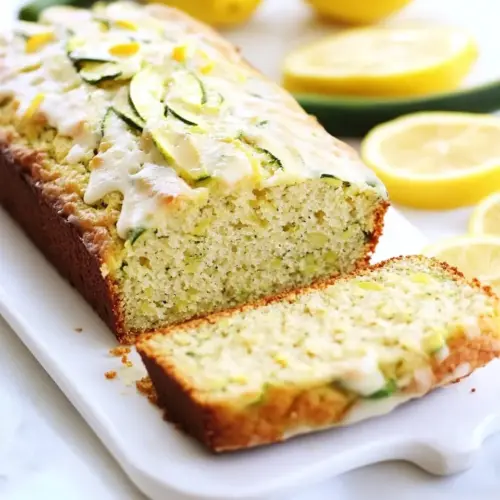
Lemon Zucchini Bread
Lemon Zucchini Bread is a bright, tender loaf that combines citrusy zing with moist green vegetable richness. The bread is fluffy yet substantial, with a silky lemon glaze that adds a sweet tang, perfect for easy weeknight baking or lazy weekend brunch. Make it when you have summer zucchini and lemons, it's an effortless way to turn produce into a crowd pleasing treat.
Equipment
- 8 x 4 Loaf Pans
- Box grater
Ingredients
- 3 cups all-purpose flour Provide structure and bulk to the bread by forming the dough matrix; all-purpose flour balances tenderness and chew while helping the loaf rise when combined with leaveners. Sift or measure properly to ensure even texture and prevent a dense, gummy crumb.
- 1 teaspoons salt Enhance overall flavor and balance sweetness by controlling seasoning levels; salt also strengthens the gluten network slightly for improved texture. Dissolve evenly into the batter to avoid pockets of concentrated saltiness.
- 1 teaspoon baking soda Act as a chemical leavener that releases carbon dioxide when reacting with acids, contributing to lift and airy crumb in the loaf. Combine with wet ingredients quickly to maximize rising power before gas escapes.
- 1 teaspoon baking powder Provide additional leavening and a gentler rise to complement baking soda, ensuring the bread achieves good volume and a light texture. Mix with the dry ingredients so it is evenly distributed and activates properly with heat.
- 2 cups granulated sugar Sweeten the batter while contributing moisture and tenderness; granulated sugar also aids in browning the crust through caramelization. Cream or dissolve it well with fats and eggs to incorporate air and improve crumb structure.
- Zest of 2 large lemons Brighten flavor with concentrated citrus oils and aromatic compounds in the peel, imparting a vibrant lemon aroma that complements the zucchini. Zest sparingly and avoid white pith to prevent bitterness, distributing it evenly in the batter.
- 3 large eggs Bind ingredients while adding richness and moisture; eggs provide structure through coagulation and help trap air for lift during baking. Beat eggs to incorporate air and ensure they are at room temperature for optimal emulsification.
- 1 cup light olive oil, not extra-virgin Moisten the batter and add richness while contributing to tenderness by coating flour proteins and inhibiting excessive gluten development; light olive oil offers a mild fruitiness without overpowering. Use a neutral-flavored light olive oil to maintain balance and prevent an oily aftertaste.
- 1 tablespoon fresh lemon juice Introduce bright acidity and pronounced lemon flavor that reacts with leaveners and balances sweetness; fresh lemon juice offers a fresher, cleaner citrus note than bottled alternatives. Add it measured and strained to avoid seeds and to integrate evenly into the batter.
- 1 1/2 teaspoons vanilla extract Contribute warm, rounded vanilla aroma that amplifies other flavors and provides depth; vanilla extract complements the citrus and enhances perceived sweetness. Use pure vanilla extract for best flavor and add according to strength to avoid overpowering.
- 2 cups grated zucchini Add moisture, light texture, and subtle vegetal flavor while increasing volume; grated zucchini melts into the batter and helps keep the loaf tender. Squeeze out excess moisture if zucchini is particularly wet to prevent a soggy crumb and distribute evenly when folding in.
- 2 cups powdered sugar Create a smooth, sweet glaze base that adds shine and concentrated sweetness when combined with lemon juice; powdered sugar dissolves readily, providing a silky finish. Whisk thoroughly to remove lumps and adjust thickness with liquid for desired glazing consistency.
- 3 tablespoons fresh lemon juice Provide concentrated tartness to balance the powdered sugar glaze and tie the lemon flavor through the loaf; fresh lemon juice offers bright acidity and a clean finish. Add incrementally to powdered sugar to reach preferred glaze thickness and taste balance.
Instructions
- Preheat oven to 325 degrees F. Grease and flour two 8 x 4 inch loaf pans and set aside.: The kitchen will warm and the faint smell of heat will signal readiness, which matters because a cold oven can ruin the loaf's rise. Use a light oil spray and dust with flour so the crust releases easily, you should hear a slight sizzle when the pans first hit the heat if preheating on a stovetop oven indicator, but mainly you want the pans to feel warm to the touch before batter goes in. This step ensures even baking and a uniform crust. One common mistake is skipping the flour after greasing which can cause sticking; take a moment to do both.
- In a large bowl, whisk together the flour, salt, baking powder, and baking soda. Set aside.: You'll notice the dry mixture looks airy and uniform, and whisking incorporates the leaveners evenly so you get a consistent lift during baking. The combination of baking powder and baking soda gives balanced rise and fine crumb. If you skip thorough whisking, pockets of leavening can create uneven texture, so make sure the mixture looks homogenous and there are no lumps.
- In a large bowl, combine sugar and lemon zest. Rub together with your fingers until fragrant.: Right away you'll smell intense citrus oils as the zest melds with the sugar, releasing a bright, perfumed aroma that quietly perfumes the whole batter. This fragrant step infuses the loaf with lemon essence without adding more liquid, which keeps the batter body intact. Be careful not to include the bitter white pith while zesting, which can give an unpleasant edge to the flavor.
- Add the eggs, olive oil, lemon juice, vanilla to the lemon sugar mixture and stir until smooth. Add in the dry ingredients and stir until just combined, the batter will be thick. Stir in the zucchini and pour the batter into the prepared loaf pans.: As you stir, the mixture will become glossy and slightly ribboned because of the oil and eggs, and that sheen indicates the batter is well emulsified. The dry ingredients will disappear into the wet, forming a thick batter; you want minimal strokes to avoid overdeveloping gluten, which keeps the crumb tender. When folding in zucchini , watch for even distribution of green flecks; the batter should remain lumpy but cohesive. A frequent misstep is overmixing after adding flour, which causes a tough loaf, so stop as soon as you no longer see streaks of flour.
- Bake for 60-65 minutes, or until tester inserted in the center comes out clean.: During baking you will see the tops turn a warm golden brown and the aroma will shift from citrus to toasted sweetness. The loaves will rise with a gentle dome, and a toothpick or cake tester should emerge clean or with a few moist crumbs. If the tops brown too quickly, tent with foil for the last portion of baking. Pulling the loaves too early will result in a gummy center, so rely on the tester rather than clock time alone.
- Place the loaves on a cooling rack and let cool for 15 minutes in the pans. Loosen the sides of the bread with a knife. Carefully remove the loaves from the pans. Let cool completely on rack.: As they cool, the crumb firms and the internal steam settles, so this resting period prevents collapse. The loaves will give a soft sigh as they release from the pan when cooled slightly; use a thin knife around the edges to free them gently. A common error is removing loaves immediately, which can cause them to break apart, so be patient and let them rest.
- While the bread is cooling, make the lemon glaze. In a small bowl, combine powdered sugar and lemon juice. Whisk until smooth. Drizzle the glaze over the loaves. Slice and serve.: The glaze should be glossy and pourable, with a scent of bright citrus that complements the baked loaf. Drizzling when loaves are still slightly warm helps the glaze set into the nooks of the crust without melting away. If the glaze is too thick, add a little more lemon juice ; if too thin, add a touch more powdered sugar. Drizzle slowly to control coverage; pouring too quickly will result in runoff and uneven coating.
Notes
- Add nuts sparingly. Fold in a half cup of chopped toasted nuts for crunch, but be mindful that nuts can speed up browning so tent with foil if needed.
- Make mini loaves. Use mini loaf pans and reduce baking time, checking often with a tester to avoid overbaking, this gives delightful individual portions for gifting.
- Boost lemon intensity. Increase the zest to three lemons for a stronger citrus profile, keeping the juice quantities the same to avoid thinning the batter too much.
- Simplify the glaze. Use a thinner glaze with a touch more lemon juice for a translucent sheen rather than a thick coating, which highlights the crumb and keeps slices neater.
- Make ahead and freeze. Wrap cooled loaves tightly and freeze for up to three months, thaw overnight in the fridge and finish with fresh glaze before serving.
- Adjust sweetness. Reduce the granulated sugar by a quarter cup if you prefer a less sweet loaf, but remember this will slightly alter crust color and texture.