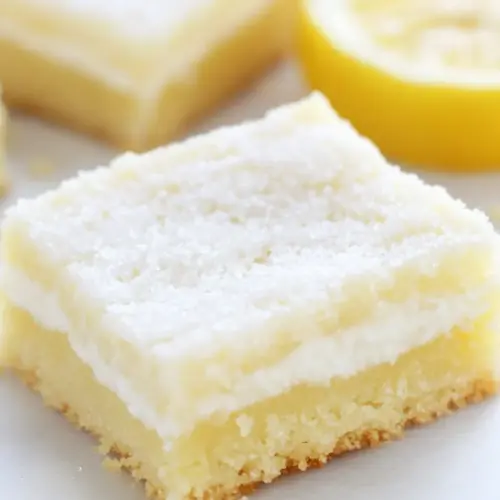
Lemon Sugar Cookie Bars
Lemon Sugar Cookie Bars are tender, zesty bars topped with a creamy, tangy lemon cream cheese frosting. The bright lemon zest and fresh juice balance the sweet powdered sugar for a refreshingly light dessert, perfect for gatherings and easy weeknight baking. They slice neatly for sharing and look cheerful on any dessert table, making them a must try for anyone who loves citrus sweets.
Equipment
- Stand mixer
- 9 x 13 pan
- Spatula
- Mixing Bowls
Ingredients
- 2 1/4 cups all-purpose flour Provide structure and bulk to the dough, creating a tender, yet sturdy base for the bars; combines with leaveners to set the crumb and hold moisture during baking.
- 1 teaspoon baking powder Lighten and aerate the batter by producing tiny gas bubbles during baking; balances texture so bars rise slightly without becoming cakey.
- 1/2 teaspoons salt Enhance and balance flavors while strengthening gluten slightly to control the final texture; prevent the bars from tasting flat or overly sweet.
- 3/4 cup granulated sugar Sweeten the dough and promote a tender crumb by dissolving into the batter; helps with browning and contributes to a pleasant mouthfeel.
- Zest of 1 large lemon Impart bright citrus aroma and concentrated lemon oil to the dough; intensify lemon flavor without adding extra liquid that could change texture.
- 3/4 cup butter at room temperature Create richness and contribute to a soft, tender crumb by adding fat that coats flour proteins; helps with spreading and mouthfeel.
- 1/4 cup powdered sugar Add a touch of sweetness and help smooth the frosting or dough; contributes to a delicate melt-in-the-mouth texture in the filling.
- 2 large eggs Provide structure, lift, and richness by binding ingredients and adding moisture; help set the bars as they bake and contribute to a tender interior.
- 1 tablespoon fresh lemon juice Contribute bright acidic lemon flavor and moisture; react with baking powder to slightly enhance lift and reinforce lemony taste.
- 1/2 teaspoon vanilla extract Add warm, rounded background flavor and aromatic complexity; balance the tartness of lemon and enhance overall flavor depth.
- 1/2 cup unsalted butter at room temperature Add additional richness and creaminess to the filling or frosting layer; help create a smooth, spreadable texture and richer mouthfeel.
- 8 ounce package cream cheese at room temperature Provide tangy, creamy neutrality and body to the filling; help stabilize and thicken frostings while adding a soft, silky texture.
- Zest of 2 lemons Deliver concentrated lemon aroma and intensify the citrus profile in the topping; brighten the cream cheese layer without adding liquid.
- 2 tablespoons fresh lemon juice Contribute pronounced lemon tang and balance sweetness in the filling; help thin and flavor the frosting for spreadability.
- 5 cups powdered sugar Sweeten and thicken the frosting to a spreadable consistency; provide structure, smoothness, and help preserve the topping's shape once chilled.
- Colored sugar or sprinkles optional Offer optional decorative sparkle and color to the finished bars; add visual appeal and a slight textural contrast when sprinkled on top.
Instructions
- Preheat oven to 375 degrees F. Spray a 9 x 13 pan (I use a glass Pyrex dish) with cooking spray and set aside.: The oven warming fills the kitchen with a faint toasty scent that signals readiness, and preparing the pan ensures a smooth release later. When using a glass pan, it holds heat differently than metal, so you may notice the edges brown slightly earlier. A common mistake is skipping the spray, which can make the bars stick and tear when you slice them, so take a moment to coat the pan evenly.
- In a medium bowl, whisk together flour, baking powder, and salt. Set aside.: As you whisk, the flour takes on a lighter appearance and the baking powder disperses so every bite rises uniformly. You should see a uniform pale mixture without streaks of baking powder. If lumps remain, they will create uneven pockets in the baked bars, so break them up thoroughly before proceeding.
- In a small bowl, combine granulated sugar and lemon zest. Rub together with your fingers until fragrant.: Rubbing releases the lemon oils, and soon the sugar smells bright and citrus forward. The sugar will look slightly damp as it absorbs the zest, which helps spread lemon flavor throughout the dough. Avoid zesting too much of the white pith, because that can add bitterness and dull the fresh aroma.
- In the bowl of a stand mixer, beat butter and lemon sugar mixture together until combined. Slowly add the powdered sugar and beat until light and fluffy, about 3 minutes. Add in the eggs, lemon juice, and vanilla. Beat until smooth. Slowly add the flour mixture and beat until just combined.: You will notice the butter lighten in color and the mixture grow airy as air is incorporated, making the base tender. The fragrance will be intensely lemony and sweet. When adding flour slowly, you keep the dough soft; overmixing develops gluten and yields a tougher texture, so stop as soon as the flour disappears into the batter. A common pitfall is adding too much flour when scraping the bowl, which can dry the dough, so scrape carefully and measure precisely.
- Evenly spread the cookie dough into the prepared pan with a spatula. Bake for 12-14 minutes, or until the bars are slightly set in the middle. You don't want the bars to brown. Remove from the oven and let the bars cool completely.: The surface should look set and not glossy in the center, while the edges may feel just firmer. Smell a warm lemon and butter aroma as they bake. If you bake until browned, the bars will lose their tender quality and become firmer than intended, so check at the lower end of the time range and watch the center for doneness. Allowing them to cool fully ensures the frosting will not slide off when applied.
- While the bars are cooling, make the lemon cream cheese frosting. In the bowl of a stand mixer, beat the butter and cream cheese until smooth. Add the lemon zest and lemon juice. Slowly add the powdered sugar, 1 cup at a time. Mix until smooth.: The texture should transform into a glossy, velvety frosting that holds its shape but is still spreadable. The lemon zest will give fresh aromatic pops, and the frosting should taste balanced between sweet and tangy. If the frosting seems runny, add more powdered sugar a little at a time to thicken; if it is too stiff, a small splash of milk can loosen it, but add sparingly to avoid watering it down.
- Frost the cooled cookie bars with lemon cream cheese frosting. I always have a little frosting leftover, but use as much as you like! Decorate with colored sugar or sprinkles, if desired. Cut the bars into squares and serve.: When you spread the frosting, you should feel it glide smoothly and see a creamy sheen. The contrast between cool, tangy frosting and the tender cookie base is delightful. If you attempt to frost warm bars, the frosting will melt and become messy, so always wait until completely cooled. Use a sharp knife wiped between cuts for clean edges.
- Note-store bars in an air tight container in the fridge for up to 2 days.: Stored chilled, the frosting stays firm and flavors meld overnight, often improving the taste. You will notice the lemon scent becomes subtler after refrigeration, while the texture remains pleasant. A misstep is leaving them uncovered, which leads to drying and loss of that fresh mouthfeel, so always use an airtight container.
Notes
- Use fresh lemons: Freshly zested and juiced lemons give the brightest flavor, far superior to bottled alternatives.
- Room temperature ingredients: Bringing butter, cream cheese, and eggs to room temperature ensures smooth mixing and a silky frosting.
- Control frosting thickness: Add powdered sugar slowly to reach your desired texture, and if needed, thin with a teaspoon of lemon juice rather than liquid to keep the lemon intensity.
- Decorate thoughtfully: Use colored sugar or sprinkles sparingly to add charm without overpowering the lemon flavor or texture.
- Store properly: Keep the bars in an airtight container in the refrigerator to maintain frosting integrity and freshness for up to two days.