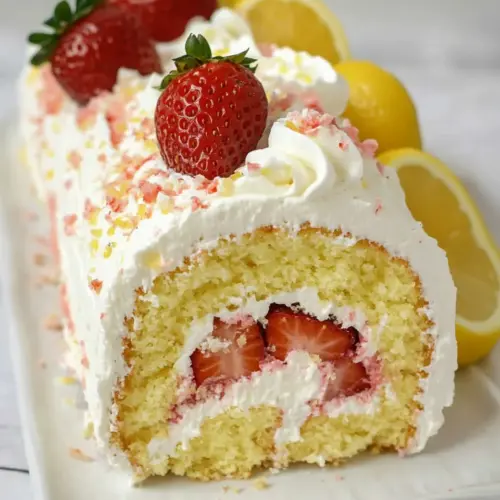
Lemon Strawberry Shortcake Cake Roll
Lemon Strawberry Shortcake Cake Roll is a light, creamy sponge swirled with whipped cream and fresh strawberries, brightened by zesty lemon. This airy, visually striking dessert combines tender cake and fluffy filling for an easy springtime showstopper and is perfect for weekend brunches or casual gatherings. Try it for a simple yet elegant sweet that tastes like sunshine.
Equipment
- Jelly Roll Pan
- Stand mixer or hand mixer
- Spatula
- Mixing Bowls
- Kitchen Towel
- Plastic Wrap
- Serrated Knife
Ingredients
- 3 large eggs Whisk vigorously to incorporate air and provide structure to the sponge, ensuring a light and flexible cake roll; eggs also help bind the ingredients and contribute moisture during baking.
- 3/4 cup (150 g) granulated sugar Dissolve thoroughly to sweeten the batter and help stabilize the whipped texture, aiding in browning and improving mouthfeel of the cake roll.
- 2 tablespoons (30 ml) lemon juice Squeeze freshly to add bright acidity and balance sweetness while tenderizing the crumb; lemon juice also reacts with leavening for a subtle lift.
- Zest of one lemon Zest finely to impart concentrated citrus aroma and essential oils that intensify lemon flavor without adding extra liquid; adds freshness and depth to the dessert.
- 1/4 teaspoons salt Season sparingly to enhance overall flavors and balance sweetness, while also strengthening gluten slightly to improve cake texture.
- 1 teaspoon baking powder Leaven gently to provide a small rise and added lightness to the sponge; baking powder helps produce an even, tender crumb suitable for rolling.
- 3/4 cup (93 g) all purpose flour Sift or fold carefully to maintain a delicate structure and provide the primary bulk of the cake; all purpose flour contributes starch and protein for crumb formation.
- Powdered sugar to aid in rolling Dust lightly on a towel or the cake surface to prevent sticking during the rolling process and to absorb any excess moisture while maintaining a neat appearance.
- 2 cups (474 ml) cold heavy whipping cream Chill thoroughly before whipping to achieve maximum volume and stability; cold heavy cream whips into a rich, stable filling that holds shape inside the roll.
- 3 tablespoons (21 g) powdered sugar Sprinkle gradually while whipping to lightly sweeten and stabilize the cream, improving texture and helping it hold peaks for filling and decoration.
- 1 teaspoon vanilla extract Add sparingly for subtle warmth and depth of flavor that complements the lemon and strawberry notes; vanilla enhances aromatic complexity in the filling.
- 1 -2 cups chopped strawberries Chop uniformly to provide fresh bursts of fruity sweetness and texture inside the roll; strawberries add color contrast, juicy pockets, and seasonal flavor.
Instructions
- Preheat oven to 350°F. Line a jelly roll (10×15”) pan with foil and spray with cooking spray (I like to use the spray with flour).: You will notice the kitchen warming and a faint metallic smell as the oven comes up to 350°F , which sets the stage for an even bake. Preparing a jelly roll pan with foil and a flour containing spray ensures the delicate sponge releases cleanly; this step is crucial because any sticking will make rolling difficult. I always press the foil into the corners so the batter spreads evenly, and I also smooth the spray into a thin, even layer to avoid pooling. If you skip lining or spraying properly the cake may cling and tear during unrolling. A common mistake is preheating to the wrong temperature, so double check your oven dial and consider an oven thermometer for accuracy.
- Beat eggs at high speed for 5 minutes, until frothy and dark yellow. Beat in sugar, lemon juice, and zest.: As you beat, the mixture transforms into a lively, frothy mass that smells faintly of fresh lemon and warmed egg. High speed whips in air creating volume, and you should see ribbons form when you lift the beater, signaling ready structure. When you add the sugar , it dissolves into the foam, giving a glossy sheen and a stable batter. The aroma of citrus becomes more pronounced after the lemon juice and zest are folded in, and that bright scent indicates a good balance of flavor. Underbeating here leads to a flat sponge and possible cracking, so resist the urge to move on early. If your mixture looks pale but not airy, keep beating in 30 second bursts until you get the right lift.
- Whisk together salt, baking powder, and flour. Stir into wet ingredients just until blended.: The dry mix should be pale and evenly combined, smelling faintly of flour and a trace of chemical lift from the baking powder . When you fold the dry ingredients in, you will see the batter lose some of its gloss as the flour hydrates. The crucial sensory cue is a uniform, ribbonlike batter with no streaks of dry flour remaining. Stirring just until blended prevents gluten overdevelopment, which would make the sponge tougher and harder to roll. Avoid vigorous mixing, and if you overmix, you will notice a denser, less flexible batter and potential cracking later.
- Spread in prepared pan. Batter will be in a very thin layer and you will need to use a wooden spoon or spatula to spread it to all the corners of the pan. Bake for 10-15 minutes (mine took 11).: As you spread the thin batter across the jelly roll pan , it should look even and glossy. The thinness helps the cake bake quickly and stay pliable. In the oven you will see the top set and turn a pale golden color, and the aroma will shift to a warm, baked note with citrus hints. Start checking around 10 minutes to avoid overbaking. Overbaking dries the sponge and makes it likely to crack during rolling. When done, the surface should spring back slightly to the touch and have a uniform, lightly golden color.
- While the cake is baking, set a clean kitchen towel out on a large work surface. Sprinkle liberally with powdered sugar (about 1/4 cup). As soon as the cake comes out of the oven, turn it over on the kitchen towel sprinkled with powdered sugar. Remove foil carefully.: The towel preparation is tactile and a bit ritualistic; the powdered sugar creates a barrier that prevents sticking and adds a sweet note to the outer layer. When you invert the hot cake onto the towel, steam will rise and the cake surface will look glossy. Removing the foil must be done gently so the sponge does not tear. If the foil clings, use a thin knife edge between the foil and cake to help lift it off slowly. Not dusting enough powdered sugar is a common error that can lead to sticking and tearing during the next rolling step.
- Working at the short end, fold the edge of the towel over the cake. Roll tightly, rolling up the cake into the towel. Let cool completely while rolled, at least one hour.: Rolling while hot allows the cake to form the memory of the spiral, which prevents cracking later. You will feel the warmth dissipate as it cools, and the towel will hold the shape. Letting it cool fully is critical because rolling a warm filled cake can cause the whipped cream to melt and the roll to lose definition. A common misstep is not rolling tightly enough, which creates large air pockets; aim for a snug roll that still has a gentle give.
- While the cake is chilling, make the filling. Beat the heavy whipping cream and powdered sugar until stiff peaks form. Chill until ready to use.: Cold cream whips up into a creamy cloud, and you will hear a subtle change in the mixer sound as the texture transforms from liquid to soft and then to stiff peaks. The mixture should hold a peak that stands upright but still feels light, and the powdered sugar will melt gently into the cream, smoothing it and adding stability. If the cream is too warm it will not thicken properly, so keep everything chilled. Overbeating will turn the cream grainy and eventually into butter, so stop as soon as firm peaks appear.
- When cake is cool, carefully unroll the towel. Spread the whipped cream over the cake. (You will have some whipped cream left over.) Sprinkle with chopped strawberries. Gently but tightly, re-roll the cake and wrap it in plastic wrap. Chill until it firms up a bit, at least one hour or overnight.: Unrolling reveals the delicate inner surface of the sponge, which should be slightly matte and soft. Spreading the whipped cream should feel silky under your spatula, and the chopped strawberries introduce juicy bursts that contrast the airy cream. Re rolling should be done with a steady hand; the log should be compact without squeezing out the filling. Wrapping and chilling lets the flavors meld and firms the shape for clean slicing. A frequent error is overfilling, which makes sealing the roll messy and causes leakage when slicing.
- If desired, use the rest of the whipped cream to frost the outside. Garnish with berries.: Smearing a thin crumb coat of remaining whipped cream gives the roll a polished look and adds extra creaminess. The surface should be smooth and cool to the touch, and bright strawberries on top create an attractive contrast. Keep decorations minimal so the spiral remains the focal point. If you try to frost with warm cream it will slide off, so ensure the cake is well chilled first.
- Slice and serve. Store in refrigerator. Once frosted with the whipped cream, it’s best served the same day. You can make the cake up to 2 days ahead.: Slicing reveals the spiral, and you should see defined layers of sponge, cream, and fruit. A serrated knife and gentle sawing motion help preserve the swirl. The cake tastes brightest the day it is frosted because whipped cream can soften over time, but storing covered in the refrigerator keeps it safe for up to 48 hours. Common mistakes include slicing with a dull knife, which squashes the roll, so use a sharp serrated blade for clean pieces.
Notes
- Classic strawberry focus, use a full 2 cups of chopped strawberries for a bolder berry presence, making each slice bursting with texture and freshness.
- Extra lemon lift, increase the lemon zest by half a lemon for a more aromatic and citrus forward profile, which brightens each bite.
- Light frosting, use a thin layer of the remaining whipped cream as a delicate outer coat to keep the presentation clean and add creaminess without overwhelming the spiral.
- Advance prep, bake the sponge up to two days ahead and keep tightly wrapped, then whip the cream and assemble on the day you serve for the best texture.
- Texture contrast, fold a small handful of finely chopped strawberries into part of the whipped cream to create pockets of jam like fruit in the filling.