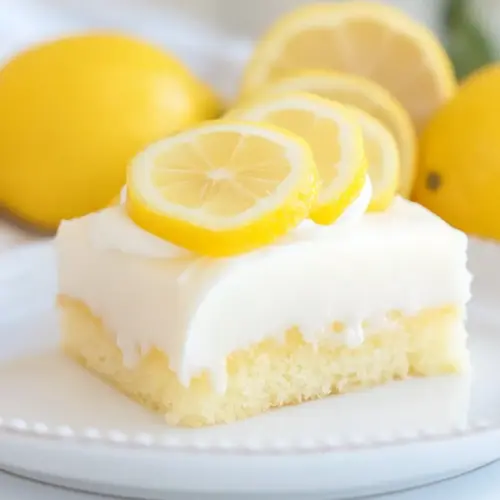
Lemon Sour Cream Cake
Lemon Sour Cream Cake is a tender, creamy, citrus kissed sheet cake with a silky lemon glaze and a moist crumb. The blend of sour cream and butter keeps it soft, while fresh lemon zest and lemon juice brighten each bite, making it perfect for brunches and easy gatherings. Bake it for a crowd pleasing, easy dessert that tastes like sunshine and comfort.
Equipment
- 13 x 9 inch pan
- Electric Mixer
- Wire Rack
- Large Bowl
- Medium Bowl
- Rubber spatula
Ingredients
- 3 cups all purpose flour Provide structure and bulk to the cake batter, developing gluten that gives the crumb its framework; sift for a lighter texture and measure by spooning into the cup for accuracy. Combine with the leavening agents to ensure even rise and tender crumb during baking.
- 2 cups granulated white sugar Add sweetness and moisture to balance tart and rich flavors; dissolve into the batter to help tenderize by interfering with gluten formation. Adjusts browning and flavor depth while contributing to a soft mouthfeel.
- 2 teaspoons baking powder Leaven the cake by producing carbon dioxide when reacting with wet ingredients, helping the cake rise and become airy. Distribute evenly through the dry mixture to avoid uneven pockets and ensure consistent lift.
- 1 teaspoon salt Enhance overall flavor balance by amplifying sweetness and suppressing bitterness; also strengthens gluten slightly and contributes to dough handling. Dissolve into the dry mix for even seasoning throughout the cake.
- 1/2 teaspoon baking soda React with acidic components to create additional leavening and tenderize the crumb; use measured amounts to avoid metallic or soapy off-flavors. Combine with the sour cream and lemon juice to ensure proper chemical reactions for rise.
- 4 large eggs, at room temperature Provide structure, richness, and emulsification while trapping air for a light crumb when whipped; bring to room temperature for better incorporation into batter. Beat with sugar to create a ribbon stage that improves cake volume.
- 1 cup sour cream Contribute moisture, tangy flavor, and acidity that reacts with baking soda to aid leavening; adds richness for a tender, velvety crumb. Fold gently into the batter to maintain aeration and prevent deflating.
- 1 cup (2 sticks) unsalted butter, at room temperature Provide fat for tenderness, flavor, and structure; cream with sugar to incorporate air and create a smooth batter. Use at room temperature to ensure proper emulsification and even distribution throughout the cake.
- 1 tablespoon finely grated lemon zest Impart concentrated citrus aroma and bright flavor without additional liquid; finely grate only the colored outer peel to avoid bitterness. Distribute evenly to maximize fragrance and balance against the sweetness.
- 1/4 cup freshly squeezed lemon juice Add acidic citrus juice for bright, tangy flavor and to react with baking soda for additional lift; strain if seeds are present to avoid bitterness. Balance quantity to prevent overly wet batter while enhancing lemon character.
- 3 cups powdered sugar Sweeten and thicken the glaze or frosting while lending a smooth, powdery texture that dissolves easily; sift to avoid lumps and achieve silky consistency. Add gradually to control sweetness and achieve the desired glaze thickness.
- 3/4 cup sour cream Provide additional tang, moisture, and a creamy base for the frosting or glaze while enhancing spreadability; its acidity also brightens the overall flavor of the topping. Whisk with powdered sugar and butter to achieve a stable, creamy finish.
- 6 tablespoons unsalted butter, melted and cooled slightly Add richness and a glossy texture to the glaze while helping it set and mouthfeel to be silky; melt and cool slightly to prevent melting other components when combined. Whisk in gradually to create a smooth, emulsified frosting.
- 2 teaspoons finely grated lemon zest Deliver concentrated citrus aroma and brightness to the glaze, enhancing lemon notes and complementing sweetness; finely grate only the yellow peel to avoid pith. Stir into the frosting to evenly distribute fragrant oils.
- 3 tablespoons freshly squeezed lemon juice Introduce fresh lemon acidity and bright flavor to the glaze, balancing sweetness and thinning to a spreadable consistency; use freshly squeezed for the best taste. Add incrementally to reach the preferred glaze viscosity and flavor intensity.
Instructions
- Preheat the oven to 350 degrees F. Spray a 13 x 9-inch pan with nonstick baking spray.: You will smell the oven warming as it reaches temperature, a faint dry heat that signals readiness. Preheating ensures even rise and proper baking time, so start this first. A well greased pan prevents sticking and creates clean edges. Common mistake to avoid, skipping full preheat, will lead to uneven texture and longer bake time.
- In a large bowl, whisk together the flour, sugar, baking powder, salt and baking soda.: At this stage you will notice the dry ingredients looking uniform and slightly aerated, with pale tones blending together. Whisking distributes leaveners and salt so pockets of power do not create uneven rise. This step matters because even dispersion prevents metallic or salty bites and ensures consistent crumb. Avoid under mixing here, which can result in dense spots.
- Use an electric mixer to mix in the eggs, sour cream, butter, lemon zest and lemon juice. On low speed, beat for 1 minute, until blended. Scrape the sides and the bottom of the bowl with a rubber spatula. Beat on medium speed for 1 minute.: The batter will first look shaggy then smooth, with a pale, creamy sheen and a fresh citrus scent lifting gently from the bowl. The initial low speed ensures ingredients emulsify without splashing, while the short medium speed adds lightness. Scraping the bowl is crucial so all pockets are incorporated, preventing streaks of flour or butter. If you over beat, the gluten can develop too much and make the cake tough, so resist the urge to extend mixing.
- Spread the batter evenly into the prepared pan.: As you transfer the batter, it will feel dense yet supple, and you will see the surface settle into the pan with a slightly glossy finish. Even spreading encourages uniform rise and browning. Use an offset spatula for a smooth top, tapping the pan gently on the counter to release air bubbles. Putting the batter in too thick at one end can make that area underbaked, so take time to level it.
- Bake for 40 to 45 minutes, or until a toothpick inserted into the center comes out with a few moist crumbs attached. Let the cake cool completely in the pan on a wire rack.: In the oven the kitchen scent will shift as the top gains a light golden color, and you might hear a faint settling sound. The toothpick test shows the interior is set but still tender, and cooling in the pan stops carryover heat from overcooking. A wire rack prevents a soggy bottom by allowing air circulation. Common error is removing the cake too soon and icing while warm, which causes the glaze to run, or leaving it too long and making slicing difficult.
- In a medium bowl, whisk together the powdered sugar, sour cream, butter, lemon zest and lemon juice until blended and smooth. Spread the icing over the top of the cooled cake.: The glaze comes together into a glossy, velvety mixture with a heady lemon perfume and a silky texture that spreads easily. Whisking dissolves the powdered sugar into the sour cream so the finish is smooth rather than gritty. Using slightly cooled melted butter gives sheen without liquefying the icing. If the cake is still warm the glaze will slide off, so ensure it is fully cooled. Watch for over thinning the glaze, which can prevent it from setting properly on top.
Notes
- Boost lemon aroma: Increase the lemon zest in the batter or glaze by up to one teaspoon to intensify fragrance without adding extra acidity.
- Adjust sweetness: Reduce the glaze powdered sugar slightly if you prefer a less sweet finish, balancing with a touch more lemon juice to keep brightness.
- Sour cream swap: Use full fat sour cream for a richer crumb; lower fat will produce a slightly drier texture so monitor baking time.
- Buttery richness: Browning the butter lightly before cooling adds nutty complexity to both batter and glaze, but cool fully so it does not loosen the mix.
- Make ahead: Bake a day ahead and store the unglazed cake tightly wrapped, then glaze the next day for a fresher looking finish and easier transport.