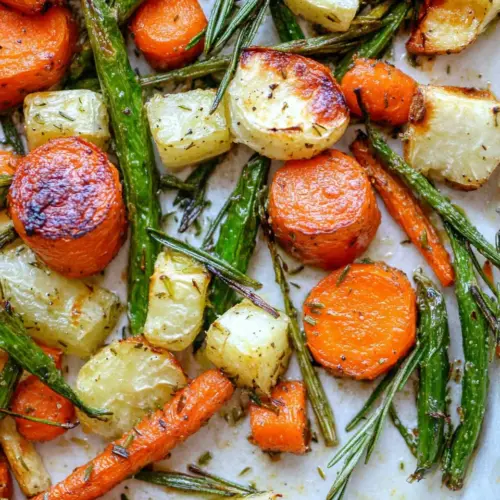
Lemon Rosemary Coconut Oil Roasted Vegetables
Lemon Rosemary Coconut Oil Roasted Vegetables are an easy weeknight side that becomes irresistibly caramelized, crispy, and bright. This simple tray roast uses fresh rosemary and a squeeze of lemon to lift the natural sweetness of carrots, Brussels sprouts, green beans, and broccoli. Ideal for spring market produce, it delivers an effortless, flavorful addition to any meal and is convincing enough to make again and again.
Equipment
- Baking Sheet
- Silpat or parchment
- Oven
- Tongs
Ingredients
- 2 cups baby carrots or trimmed carrots Provide natural sweetness and tender texture when roasted, offering a pleasant contrast to savory herbs; can be left whole if small or halved for quicker cooking and even caramelization. Help absorb flavors from oil, lemon, and rosemary while adding color and nutritional beta-carotene to the dish.
- 1 cup Brussels sprouts, halved Add a slightly bitter, nutty flavor and crisp-tender bite when halved and roasted; caramelize at the cut edges to develop depth and texture. Pair well with lemon and rosemary, contributing visual interest and leafy, green nutrients.
- 1 cup green beans, trimmed Contribute a fresh, bright snap and earthy flavor when trimmed and roasted briefly to remain crisp; maintain a vibrant green color that complements the medley. Work as a textural contrast to softer vegetables while soaking up aromatic oil and seasonings.
- 1 cup broccoli florets Deliver a hearty, slightly grassy flavor and tender florets that roast to golden-brown edges, providing bulk and umami-like richness. Absorb the lemon-rosemary oil well, enhancing the overall savory profile and adding fiber and vitamins.
- about 4 tablespoons coconut oil, divided; melted or softened Coat vegetables for roasting while imparting a subtle coconut aroma and rich mouthfeel; divide amounts to use some for tossing and some for finishing if desired. Melted or softened form allows even distribution of herbs and citrus, aiding caramelization and preventing sticking.
- 2 tablespoons fresh rosemary, chopped Infuse robust, pine-like aroma and savory earthiness when finely chopped and mixed into the oil; release volatile oils during roasting to perfume the vegetables. Provide a fragrant herbal backbone that balances citrus brightness and sweet caramelized vegetables.
- half of one lemon, squeezed for the juice Brighten and acidify the dish with fresh citrus juice squeezed over the vegetables before or after roasting, enhancing overall flavor balance and cutting through richness. Offer a hint of floral citrus aroma and help lift the rosemary and coconut notes.
- salt and pepper, to taste Season to enhance and balance flavors, used sparingly to avoid overwhelming the natural sweetness and acidity; black pepper adds heat while salt brings out savoriness. Adjust to taste to achieve a harmonious roasted vegetable profile.
Instructions
- Preheat oven to 425 F. Line a baking sheet with a Silpat Non-Stick Baking Mat, parchment, or spray with cooking spray. Place vegetables on tray (choice of vegetables is mix-and-match and amounts approximate; use what you have on hand or prefer). Drizzle with 2 tablespoons melted coconut oil or if solid, sprinkle small pea-sized pieces haphazardly over the vegetables and toss vegetables to coat. Sprinkle with rosemary, salt, pepper, or any additional herbs and spices desired. Squeeze the juice from the lemon over the vegetables, and bake for about 25 minutes, flipping them over midway through cooking. Add 1 to 2 additional tablespoons coconut oil, or as necessary, if they look dry when flipping.: As the oven warms to 425 F , you will smell a faint clean heat that primes the pan. The lined surface prevents sticking and encourages even browning. A common mistake is overcrowding the pan, which traps steam and prevents crisping, so give pieces breathing room.
- Bake until vegetables are fork-tender and browned. Keep an eye on any cruciferous vegetables, especially broccoli, as it's prone to burning and pull it in advance of the other vegetables if necessary. Serve immediately. Extra vegetables can be stored in an airtight container in the refrigerator for up to 4 days.: You will notice different textures and colors across the tray, which gives visual interest after roasting. Spreading items evenly ensures hot air can circulate. Avoid piling vegetables into a mound, because that causes steaming instead of roasting.
- Drizzle with 2 tablespoons melted coconut oil or if solid, sprinkle small pea sized pieces haphazardly over the vegetables and toss vegetables to coat.: Right away you should feel the oil slick the vegetables, making them glisten. The oil helps conductive heat transfer and encourages the edges to brown. If you skip oil, vegetables may dry out and won’t caramelize as well.
- Sprinkle with rosemary, salt, pepper, or any additional herbs and spices desired.: The aroma of rosemary releases as it heats, adding an herbal top note. Seasoning distributes flavor into the vegetable surfaces. A typical error is under seasoning before roasting, which leaves the final dish flat, so be generous and taste as you go.
- Squeeze the juice from the lemon over the vegetables, and bake for about 25 minutes, flipping them over midway through cooking.: The lemon juice provides a bright counterpoint that prevents the rich notes from feeling heavy. You should smell citrus mingling with roasted aromatics as the tray bakes. Flip them at the midpoint to promote even caramelization; forgetting to flip can yield uneven doneness, with one side too dark and the other pale.
- Add 1 to 2 additional tablespoons coconut oil, or as necessary, if they look dry when flipping.: When you flip and see dry surfaces, adding more coconut oil reintroduces fat for browning and prevents dryness. The sizzle and renewed gloss indicate moisture and fat are returning. A mistake is adding too little oil early, which can leave some pieces underbrowned.
- Bake until vegetables are fork tender and browned.: Watch for golden edges and a tender bite when pierced with a fork, those are your cues. The sound is subtle, a quiet roasting whisper rather than a loud sizzle, and the color should darken without burning. If you overbake, cruciferous pieces may become dry or bitter, so pull them when they show crisped edges and a tender center.
- Keep an eye on any cruciferous vegetables, especially broccoli, as it's prone to burning and pull it in advance of the other vegetables if necessary.: Broccoli florets can transition from toasted to charred quickly, and you will see deepening browning at the tips. Removing florets early preserves their flavor and prevents bitterness. A common oversight is treating all vegetables as equal; monitor and remove smaller or more delicate pieces sooner.
- Serve immediately.: Immediately after roasting, aromas are most vivid and textures best. The contrast between caramelized edges and tender interiors is at its peak. Letting the tray sit too long will soften crisp edges, so serve while hot for the best experience.
- Extra vegetables can be stored in an airtight container in the refrigerator for up to 4 days.: Cooling and storing changes textures, but the flavors remain delicious and concentrated. Reheat briefly in a hot skillet or oven to regain some crispness. A typical mistake is reheating in the microwave only, which can make them limp.
Notes
- Switch oil sparingly Use coconut oil as written for its browning qualities and subtle flavor, but if you need a neutral swap, choose an oil with a high smoke point and similar quantity.
- Mix vegetable ratios Adjust quantities to suit preference, adding more of what you love while keeping total volume similar so roasting time stays predictable.
- Go heavier on rosemary Increase chopped rosemary slightly for a punchier herbal note, but chop fine so it distributes without overwhelming single bites.
- Add citrus at the end If you want brighter top notes, finish with extra squeezed lemon after roasting rather than before to preserve fresh acidity.
- Use room temperature oil If your coconut oil is solid, soften or melt slightly so it coats vegetables more evenly and prevents clumping.
- Trim and size veggies consistently Cut vegetables into similar thicknesses to ensure everything reaches fork tenderness together.