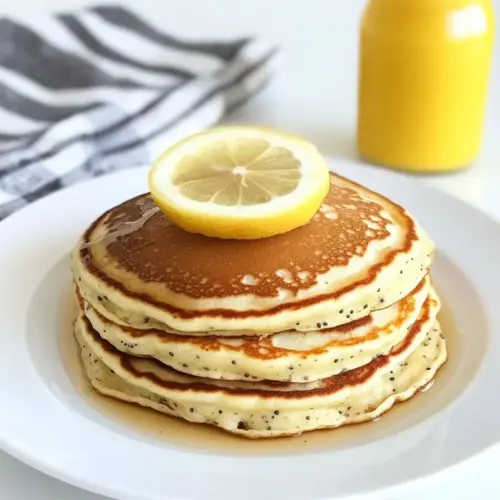
Lemon Poppy Seed Yogurt Pancakes
Lemon Poppy Seed Yogurt Pancakes are bright, tangy, and tender with a delightful pop from the seeds, perfect for easy weekend brunches or a special weekday breakfast. Creamy Greek yogurt keeps the texture moist while fresh lemon zest lifts every bite, making these pancakes feel both fresh and comforting. Try them for a simple, crowd pleasing morning treat that feels a little indulgent.
Equipment
- Large Bowl
- Small Bowl
- Medium Bowl
- Whisk
- Griddle pan
- Measuring Cups
Ingredients
- 1 1/2 cups white whole wheat flour Provide structure and bulk to the batter while keeping pancakes a bit heartier than all-purpose flour; white whole wheat flour contributes a mild, nutty flavor and tender crumb. Measure accurately and sift if lumpy to ensure even mixing with leavening agents. Use as the primary dry ingredient to balance wet components for proper texture.
- 2 teaspoons baking powder Create lift and aeration in the batter so pancakes become light and fluffy; baking powder reacts with liquids and heat to produce bubbles. Ensure it is fresh for effective rising and evenly distribute through the dry ingredients. Combine with flour to control crumb and thickness.
- 1/2 teaspoons salt Season and enhance the overall flavor profile by subtly balancing sweetness and acidity; salt amplifies other flavors and controls fermentation. Dissolve evenly into the dry mix to avoid pockets of concentrated salt. Use measured amount to prevent over-salting delicate pancake batter.
- 3 tablespoons granulated sugar Sweeten the batter and contribute to browning and caramelization on the pancake surface; granulated sugar also helps tenderize the crumb. Whisk into the dry ingredients to distribute sweetness uniformly. Adjust slightly if serving with very sweet toppings.
- 3 teaspoons lemon zest Provide bright citrus aroma and concentrated lemon oils that elevate flavor without adding liquid; lemon zest adds fresh, intense lemon character. Finely grate only the yellow outer layer to avoid bitter pith. Sprinkle into the batter to infuse throughout.
- 1/2 cup plain Greek yogurt Add creaminess, tang, and moisture while contributing protein that helps tenderize pancakes; plain Greek yogurt also adds slight acidity to react with leavening. Whisk with eggs and milk for a smooth wet mixture, ensuring no lumps. Use full-fat or reduced-fat depending on desired richness.
- 1 cup milk Thin the batter to the right consistency and provide additional moisture and mild dairy flavor; milk hydrates dry ingredients and influences tenderness. Warm slightly for better mixing with yogurt, then whisk into the wet ingredients to reach pourable texture. Adjust amount slightly for thicker or thinner pancakes.
- 2 tablespoons fresh lemon juice Introduce fresh citrus flavor and acidity that brightens the batter and interacts with yogurt and baking powder for subtle lift. Strain if seeds are a concern, then stir into wet ingredients for even distribution. Balance with zest to achieve a lively lemon profile.
- 2 large eggs Bind ingredients together and add richness and structure through proteins and emulsification; large eggs contribute to lift and golden color. Whisk until slightly frothy before adding to other wet ingredients to integrate air. Use room-temperature eggs for better incorporation.
- 1 tablespoon canola oil Provide a neutral fat that adds moisture, prevents sticking, and contributes to tender texture; canola oil has a mild flavor that won’t overpower lemon notes. Combine with wet ingredients to emulsify and distribute fat evenly. Use measured amount to keep pancakes light rather than greasy.
- 1 teaspoon vanilla extract Contribute warm, rounded sweetness and enhance other flavors; vanilla extract deepens the overall flavor profile of the batter. Add to wet ingredients and mix thoroughly to infuse. Use pure extract for best flavor impact.
- 2 tablespoons poppy seeds Add subtle crunch and visual interest while imparting a mild, nutty poppy flavor; poppy seeds also complement the lemon notes. Fold in near the end of mixing to avoid overworking the batter and ensure even distribution. Measure carefully as small seeds are potent in texture.
Instructions
- In a large bowl, whisk together the flour, baking powder, and salt. In a small bowl, combine the sugar and lemon zest. Rub together with your fingers until fragrant. Whisk into the dry ingredients.: You should notice a faint flour dust scent and the mixture should look uniform and pale, with no visible clumps of baking powder. Whisking aerates the dry mix, helping pancakes be lighter when cooked. A common mistake is under mixing the dry ingredients, which can produce uneven rise. If you detect lumps, sift or whisk longer to ensure even distribution, because that prevents dense pockets later.
- In a medium bowl, whisk together the yogurt, milk, lemon juice, eggs, oil, and vanilla. Add the wet ingredients to the dry ones, mixing only until combined. Stir in the poppy seeds.: As you rub them together with your fingers, the air fills with sharp, citrus perfume and the sugar takes on specks of zest. This step blooms the lemon oils, intensifying aroma and ensuring the citrus flavor is well incorporated. Avoid using pregrated or dried zest, which lacks the same fragrance. If you skip rubbing, the lemon flavor may be less pronounced and more patchy in the batter.
- Heat a griddle pan or non-stick skillet over medium heat. Spray with cooking spray. Pour about 1/4 of a cup of pancake batter onto the hot griddle pan, spacing out the pancakes a few inches from each other. When the pancakes start to bubble up, flip and cook until pancakes are slightly golden brown. Serve warm with butter, maple syrup, fresh fruit, or jam if desired.: When the mixture smells bright and floral, you have released the essential oils. This tactile step matters, because aroma is a huge part of perceived flavor. A trap is overdoing it and incorporating pith, which can bring bitterness, so just focus on the outer zest.
- Whisk into the dry ingredients: Once added, the lemon scented sugar should be fully distributed through the flour mix, visible as tiny specks. This ensures each bite contains lemon pockets, rather than all flavor concentrated in one area. Mixing thoroughly avoids uneven flavor, but don’t overwork the mixture at this dry stage.
- In a medium bowl, whisk together the yogurt, milk, lemon juice, eggs, oil, and vanilla: The bowl should feel slightly cool, and the mixture will smell tangy and sweet, with a creamy sheen from the oil. Whisking integrates proteins and fats, creating a smooth emulsion that helps batter hold together. A common error is combining cold eggs directly, so bring ingredients to room temperature for more consistent emulsification.
- Add the wet ingredients to the dry ones, mixing only until combined: The batter should look shaggy, with streaks of dry flour just moistened; small lumps are okay. This minimal mixing preserves air and prevents gluten overdevelopment, resulting in tender pancakes. Overmixing will make them chewy, so resist the urge to chase out every lump.
- Stir in the poppy seeds: The seeds will dot the batter and add a faint nutty aroma when cooked. Fold gently to distribute them evenly without deflating the batter. Be careful not to over stir at this point, which causes denser pancakes. If seeds clump, give a light additional fold to separate them.
- Heat a griddle pan or non-stick skillet over medium heat: Preheating until the surface is warm will produce that satisfying sizzle when batter hits the pan. You want a steady medium temperature so pancakes brown without burning. If the pan is too hot, they will darken outside while remaining undercooked inside, so adjust heat as needed.
- Spray with cooking spray: A light coating prevents sticking and helps achieve even browning, giving a gentle sheen on the cooking surface. Excess oil can cause greasy edges, so spray sparingly or wipe with a paper towel if needed. Using butter instead can deepen flavor, but watch for smoking.
- Pour about 1/4 of a cup of pancake batter onto the hot griddle pan, spacing out the pancakes a few inches from each other: Each drop should spread slightly and then set around the edges, creating a small mound that will cook through evenly. Keep space between them to allow for easy flipping. If batter runs too thin, your measuring may be off or the batter needs a touch more milk .
- When the pancakes start to bubble up, flip and cook until pancakes are slightly golden brown: Look for bubbles forming across the surface and edges that look set, this indicates the interior is set enough to turn. After flipping, a short cook time finishes the inside while creating a golden exterior. A common error is flipping too early, which yields gummy centers; wait for a consistent bubble pattern.
- Serve warm with butter, maple syrup, fresh fruit, or jam if desired: The pancakes should be tender, slightly tangy, and flecked with tiny crunches from the poppy seeds . Serving immediately preserves the best texture and warmth. If holding for a short period, keep them loosely tented in a low oven to maintain heat without drying them out.
Notes
- Ricotta Boost Add a few tablespoons of ricotta to the batter for extra creaminess and a silkier crumb, taking care to fold gently so the batter retains air.
- Whole Fruit Fold Fold in small diced berries just before cooking to add bursts of juiciness; tip them in lightly so the batter does not become too wet.
- Citrus Swap Replace half the lemon juice with orange juice for a sweeter, floral citrus note that pairs beautifully with maple syrup.
- Toasted Seed Finish Lightly toast the poppy seeds in a dry pan to amplify their nuttiness before folding into the batter, watching carefully so they do not burn.
- Gluten Sensitive Substitute a cup of a lighter gluten free blend while keeping some whole wheat for structure, and expect a slightly different texture that is still delicious.