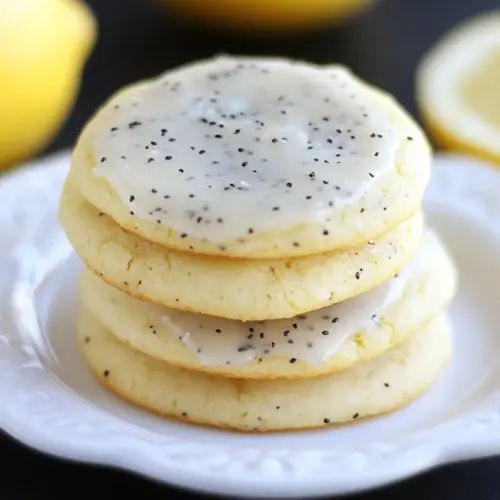
Lemon Poppy Seed Cookies
Lemon Poppy Seed Cookies are tender, bright, and lightly glazed, offering a citric pop and delicate crunch. This easy cookie recipe yields a soft center with a crisp, sugary shell, ideal for brunch or an easy weeknight treat. The balance of fresh lemon and poppy seeds makes them irresistible, and they come together quickly for a reliable, crowd pleasing bake.
Equipment
- Electric Mixer
- Mixing Bowls
- Baking Sheets
- Parchment Paper
- Cooling rack
Ingredients
- 2 1/4 cups all-purpose flour Provides the structural base and bulk for the cookies, forming gluten when mixed to give chew and tenderness; sifts or measures properly for consistent texture and to avoid dense cookies.
- 1/2 teaspoon baking powder Acts as a leavening agent to give slight lift and lightness, helping cookies spread less and maintain a tender crumb; measure accurately to balance rise without metallic flavor.
- 1/2 teaspoon salt Enhances overall flavor balance and strengthens dough structure while controlling fermentation and leavening reactions; aids in highlighting sweetness and citrus notes when used in correct amounts.
- 3/4 cup granulated sugar Sweetens the dough and contributes to texture by promoting spread and slight crispness at the edges; creaming with butter incorporates air for a lighter cookie and dissolves into the batter for even sweetness.
- 2 tablespoons lemon zest Imparts concentrated citrus aroma and bright flavor that defines the lemon character, adding both scent and slight bitterness to balance sweetness; finely grate only the yellow zest to avoid bitter pith.
- 1 cup unsalted butter at room temperature Provides fat for richness, tenderness, and flavor while aiding in creaming to incorporate air for a light texture; bring to room temperature to ensure even mixing and proper emulsion with sugars and eggs.
- 2 large eggs Adds moisture, structure, and richness to the dough through proteins and emulsifying properties, helping bind ingredients and contribute to a tender crumb; beat in gradually for even incorporation.
- 2 teaspoons fresh lemon juice Contributes fresh acidic lemon flavor and aromatic brightness that amplifies the zest, while its acidity can slightly tenderize dough and balance sweetness; use freshly squeezed for best flavor.
- 1 teaspoon vanilla extract Provides depth of flavor and a sweet, aromatic background note that rounds out the lemon; use pure extract sparingly to avoid overpowering the delicate citrus.
- 2 tablespoons poppy seeds Adds nutty texture and visual contrast while providing a subtle pop and crunchy bite; distribute evenly through the dough to ensure pockets of seed throughout each cookie.
- 1 cup powdered sugar Used to make a smooth, sweet glaze or dusting that adds a tender sweetness and slight sheen to finished cookies; sift before mixing to avoid lumps and ensure a silky finish.
- 4 -5 teaspoons fresh lemon juice Delivers concentrated tartness and bright acidity for the glaze, balancing powdered sugar and enhancing the lemon profile; add gradually to reach desired glaze consistency and tang.
Instructions
- Preheat the oven to 350 degrees F. Line two baking sheets with parchment paper or a silicone baking mat. Set aside.: The oven warming gives you that immediate feeling of readiness, and you may notice a faint warmth in the room as it reaches temperature. Preheating ensures cookies bake evenly, producing uniform color and texture, rather than one side overbrowning while the other remains pale. A common mistake is skipping the lining, which can cause cookies to stick and spread irregularly, so take the extra minute to line your sheets. If your oven runs hot or cool, an oven thermometer helps you trust that 350 degrees is accurate, avoiding overbaked edges.
- Combine flour, baking powder, and salt in a small bowl. Whisk and set aside.: The dry ingredients smell faintly of toasted grain once combined, and whisking aerates the mix so you get a light lift. This step is all about even distribution, so pockets of baking powder do not create uneven rises. A typical error is adding these straight to wet ingredients without mixing first, which can lead to lumpy spots or tiny bursts of leavening in finished cookies. Use a fork or whisk until the mixture looks uniform and pale.
- In a small bowl, add granulated sugar and lemon zest. Rub the sugar and lemon zest together with your fingers, until fragrant.: Rubbing releases aromatic oils from the zest into the sugar, and you will smell a bright citrus perfume that signals concentrated flavor. This technique ensures the lemon is present throughout each bite, not just as a separate note. Avoid using too much pressure that would include bitter pith, and take care to wash hands afterward to prevent transferring oils to other surfaces. If the sugar does not smell noticeably lemony, you may not have used fresh zest.
- Using an electric mixer, beat butter and sugar mixture together until light and fluffy. Beat in eggs, lemon juice, and vanilla extract. Mix until smooth.: As you beat, the bowl warms slightly and the mixture becomes pale and airy, trapping tiny pockets of air that give a delicate crumb. When you add the eggs and liquid lemon juice , the batter smooths out and glossy ribbons indicate proper emulsion. Overbeating after adding eggs can thin the dough too much, causing excess spread, so stop when it looks homogenous and silky. A common pitfall is using cold butter , which won't cream well and leaves lumps, so ensure it is truly at room temperature.
- Slowly mix in dry ingredients on low speed until just combined. Stir in the poppy seeds. Drop dough by tablespoon onto prepared baking sheets, spacing 2 inches apart.: You may hear only a soft whir as the mixer incorporates the flour, and the dough will change from shiny to matte as structure forms. Adding the dry mix slowly prevents pockets of flour and preserves the air you creamed into the butter. When you fold in the poppy seeds , they should be visible and evenly distributed. Avoid overmixing, which tightens gluten and yields tougher cookies. If your dough becomes sticky or loose, chill it briefly for easier scooping and to control spread during baking.
- Bake for 12-14 minutes or until cookies are just set and slightly golden brown. Cool cookies on baking sheet for 2 minutes and transfer to cooking racks. Cool completely.: During baking the kitchen fills with a warm citrus and baked butter aroma, and the tops will set while edges gain a hint of golden color. The small resting period on the sheet lets the cookies firm so they transfer cleanly, avoiding breakage. A common mistake is leaving them too long on a hot sheet, which continues cooking and creates overdone bottoms; move them promptly after the two minutes. Watch the color closely, since even a minute can shift the final texture from tender to dry.
- While the cookies are cooling, make the lemon glaze. In a medium bowl, whisk together powdered sugar and lemon juice. Dip each cookie top into the lemon glaze. Let cookies sit until glaze has set.: Whisking the powdered sugar with lemon juice turns it into a glossy, syrupy glaze that smells bright and sweet. When you dip each cookie, you get a thin, even coat that hardens to a delicate shell, offering a slight crack when you bite it. If the glaze is too thin it will run off, so add juice gradually until it holds on the cookie surface; if too thick, a few drops of lemon juice will loosen it. A typical blunder is glazing while cookies are too hot, causing the glaze to melt and pool, so ensure they are completely cool before dipping.
Notes
- Boost lemon flavor: Increase the lemon zest by up to 1 tablespoon for more citrus perfume, taking care not to include the bitter white pith which would add harshness.
- Firm dough for neat cookies: Chill the scooped dough for 15 to 20 minutes if it feels too soft, which helps the cookies maintain shape and prevents excess spreading.
- Glaze consistency: Add lemon juice slowly to powdered sugar until the glaze coats the back of a spoon, adjusting thickness to control drip and sheen.
- Make ahead: You can form the dough into a log, wrap it tightly, and chill overnight. Slice and bake directly for fresh cookies with minimal prep time.
- Storage: Keep cookies in an airtight container at room temperature for up to three days, layering with parchment to prevent sticking and preserve the glaze.