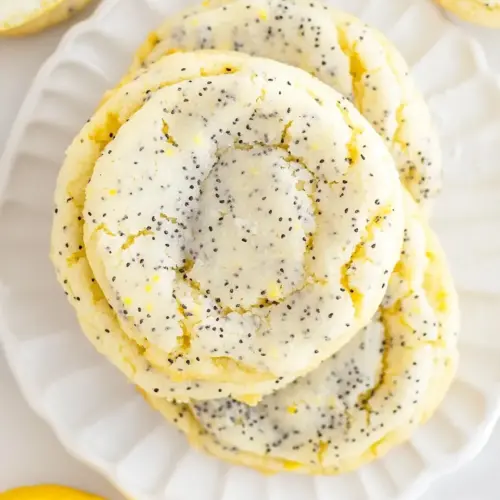
Lemon Poppy Seed Cookies
Lemon Poppy Seed Cookies are tender, citrus bright, and lightly crisp at the edges with tiny poppy seed crunch in every bite. This easy cookie recipe yields delicate, flavorful cookies perfect for spring gatherings or quick gifts, and they come together quickly for an effortless baking win. Make them to add a fresh, sunny touch to any table.
Equipment
- Mixing Bowls
- Whisk
- Electric Mixer
- Baking Sheets
- Parchment Paper
- Wire Rack
- Cookie Scoop
Ingredients
- 1 1/3 cup (265 g) granulated sugar Sweeten and tenderize the dough while contributing to browning during baking; granulated sugar also helps dissolve into the butter for a smooth, stable cookie texture and balances the lemon’s tartness.
- Zest of 1 lemon Provide bright, concentrated citrus aromatic oils that elevate flavor; lemon zest adds intense lemon fragrance without extra liquid and balances sweetness with fresh acidity.
- 1 cup (226 g) unsalted butter, room temperature Add richness, moisture, and structure to the cookies; room-temperature unsalted butter creamily incorporates with sugar to create air pockets that yield a tender, flaky crumb.
- 2 large egg yolks, room temperature Enrich the dough and improve texture by adding fat and protein; room-temperature egg yolks contribute to chewiness and help emulsify the batter for even mixing.
- 3 -4 Tablespoons fresh-squeezed lemon juice, 1-2 lemons Impartment of fresh lemon flavor and acidity to the dough; fresh-squeezed lemon juice also adjusts moisture and pH, enhancing overall brightness and tenderizing gluten slightly.
- 3 cups (380 g) all-purpose flour, spooned and leveled Provide the primary structure and bulk to the cookies; spooned-and-leveled all-purpose flour builds the crumb and absorbs liquids, determining thickness and chew.
- 1 teaspoon baking powder Leaven the cookies gently to create lightness and slight lift; baking powder releases gases during baking and helps balance density from the butter and flour.
- 1/2 teaspoon baking soda React with acidic components to produce carbon dioxide for subtle rise and tender texture; baking soda pairs with lemon juice to neutralize acidity and aid browning.
- 1/2 teaspoons salt Enhance and balance flavors while strengthening gluten slightly; salt heightens sweetness and lemon notes, ensuring the final cookie tastes well-rounded.
- 2 tablespoons poppy seeds Introduce subtle crunch and visual interest with nutty, slightly bitter seeds; poppy seeds contribute texture and a classic lemon-poppy flavor contrast in each bite.
- 1 cup (130 g) powdered sugar Provide a smooth, sweet coating for glazing or dusting; powdered sugar dissolves easily when mixed into the glaze to create a silky finish that complements the cookie.
- 2 tablespoons lemon juice Concentrate lemon flavor in the glaze and supply acidity for balance; lemon juice thins the powdered sugar to the right consistency while reinforcing the cookie’s citrus profile.
- 1 tablespoon milk Adjust glaze consistency and add slight creaminess; milk helps create a spreadable glaze that sets to a tender sheen without overpowering the lemon taste.
- Pinch of salt Brighten overall flavor and balance the glaze’s sweetness with a hint of savory contrast; a pinch of salt in the glaze sharpens lemon notes and rounds out sweetness.
Instructions
- Infuse the sugar: In a large bowl, combine the sugar and lemon zest. Use your fingers to rub the zest into the sugar until it smells fragrant.: The sugar and lemon zest will release a burst of citrus perfume as you rub them together, a fragrant sign that the cookie will taste lively. You should feel the sugar slightly dampen from the oils, and the aroma should become noticeably brighter. If the scent is weak, you may not have enough zest, or the zest may be from a thick pithy peel which carries less oil; avoid scraping white pith into the sugar. A common mistake is using pre zested fruit that has lost its oils, so always zest fresh. The tactile feedback of coarse sugar softening under your fingers is the cue that this step is complete.
- Cream the butter: Add the softened butter to the lemon sugar and beat until light and fluffy, about 2 minutes. Then add in egg yolks and lemon juice.: When you beat the room temperature butter into the lemon infused sugar, it should become pale and airy in about 2 minutes. You will hear a soft change in the mixer sound as the mixture lightens, and the texture will look visibly whipped. This trapped air contributes to lift in the final cookie. If the butter is too cold, it will remain chunky and not incorporate, if it is too warm the mixture will be greasy, so aim for a pliable but cool feel. Overbeating can cause breakdown of the butter, so stop once light and fluffy.
- Mix dry ingredients: In a separate medium bowl, whisk together the flour, baking soda, baking powder, salt, and poppy seeds.: Adding the two large egg yolks and 3 to 4 Tablespoons of fresh lemon juice brings silkiness and tang, and the mixture will smell brighter and look glossy. Mix until the yolks just blend in, creating a smooth, cohesive batter. If the mixture separates or looks curdled, it likely means the butter was too soft; chilling briefly and then re mixing gently helps. Do not overmix here because excess air can change the cookie texture.
- Combine: Slowly add the dry ingredients to the wet, mixing just until no dry streaks remain. Don’t overmix! Add an extra Tablespoon or two of lemon juice or milk if dough is crumbly.: Whisk together the flour , baking soda, baking powder, salt, and poppy seeds in a separate bowl until the color and speckles are uniform. The dry blend should smell lightly bready, with the poppy seeds evenly distributed. This pre mixing avoids pockets of leavening or salt, which could create uneven rise or salty bites. A common error is dumping dry into wet without whisking, which leads to streaks and uneven distribution; whisking prevents that.
- Preheat the oven: Preheat your oven to 350°F and line 2 baking sheets with parchment paper.: As you slowly fold the dry ingredients into the wet mixture, watch for the moment when dry streaks disappear and the dough comes together with a soft, slightly tacky texture. If the dough appears crumbly, add another Tablespoon or two of fresh lemon juice or milk to bring it together, but add sparingly so the dough does not become overly wet. The correct texture should hold together when pressed but not feel greasy. Overworking will develop gluten and make cookies tough, so stop mixing the instant you see no dry flour.
- Bake: Scoop out dough balls with a medium cookie scoop (or 1 1/2 Tablespoons) and roll into a ball. Place 2 inches apart on the prepared baking sheets. Bake for 8-10 minutes, or until the edges are barely set. Do not let brown or they'll be dry.: Setting the oven to 350°F readies it for even baking and creates the right environment for a gentle rise and tender crumb. Proper preheating ensures the cookies begin cooking immediately, producing set edges and soft centers. You should wait until the oven reaches temperature, indicated by the oven's ready signal, because placing dough into an underheated oven can cause excess spreading. A common oversight is skipping preheat, which yields flat, dense cookies, so allow the oven to fully come to temperature.
- Cool: Allow the cookies to cool on the baking sheet for a few minutes before transferring to a wire rack to cool completely.: When you scoop dough balls roughly 1 1/2 Tablespoons each and place them about 2 inches apart on parchment lined sheets, listen for the quiet settling as they spread slightly in the heat. Bake for 8 to 10 minutes until the edges are just set and the centers still look slightly soft, which keeps them tender once cooled. Avoid letting them brown, as that leads to a dry texture; the cookies will finish cooking on the sheet. If they brown quickly, your oven may run hot, so rotate sheets or lower the temperature slightly next time.
- Make the glaze: Whisk together the powdered sugar, lemon juice, milk, and a pinch of salt until smooth.: Let cookies rest on the baking sheet for a few minutes, during which they firm without over drying, then transfer to a wire rack to cool completely. You will note a change in texture as steam escapes and the crumb stabilizes; the surface should feel set and not tacky. Moving them too soon can cause them to collapse, while leaving them too long on the hot sheet can dry them out. The right timing preserves tenderness and shape.
- Decorate: Use a spoon to drizzle glaze over cooled cookies. Garnish with lemon zest or poppy seeds if desired.: Whisk the powdered sugar with 2 Tablespoons of lemon juice , 1 Tablespoon of milk , and a pinch of salt until smooth, watching for a glossy, pourable consistency. The aroma of sugar and citrus will be bright, and the glaze should coat the back of a spoon without running straight off. If it is too thin, add powdered sugar a teaspoon at a time, and if too thick, add a little more lemon juice or milk . Lumpiness indicates unsifted sugar, so whisk vigorously or strain.
- Decorate: Drizzle the glaze over fully cooled cookies with a spoon, creating ribbons or light coating, and optionally top with extra lemon zest or poppy seeds for contrast. The final appearance should be glossy and appetizing, and the glaze should set but remain slightly tacky to the touch. If the cookies are warm, the glaze will melt and run, losing definition, so ensure they are fully cool. A common misstep is glazing too early, which produces a thin washed look rather than bright ribbons.
Notes
- Meyer lemon swap Use Meyer lemons for a sweeter, floral profile; reduce added lemon juice slightly if you prefer a milder tartness.
- Extra glaze Make a thicker glaze by reducing milk and adding more powdered sugar for bold ribbons that hold their shape on top of the cookies.
- Poppy seed boost Add an extra teaspoon of poppy seeds to intensify the crunch and visual speckling without changing structure.
- Glaze infusion Fold finely grated lemon zest into the glaze for flecks of color and an extra pop of citrus aroma.
- Lemon juice tweak If your dough is crumbly, stir in another Tablespoon of fresh lemon juice or milk to bring it together, adding slowly to avoid over wetting.