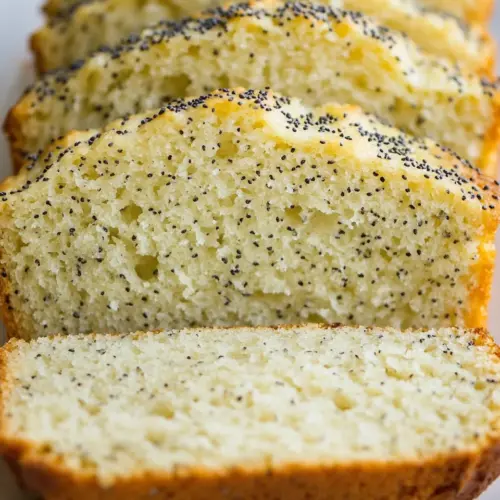
Lemon Poppy Seed Bread
Lemon Poppy Seed Bread is a tender, bright loaf with a zesty lemon punch and tiny crunchy poppy seeds, perfect for breakfast or a casual brunch. The creamy, moist crumb and glossy lemon glaze make it feel bakery worthy, yet it remains an easy, approachable bake for any home cook. Try it for a sunny spring morning and discover why it becomes a fast favorite.
Equipment
- Stand mixer
- Paddle attachment
- Loaf Pan
- Wire Rack
- Measuring Cup
- Microwave
- Mixing Bowls
- Brush
Ingredients
- 1 2/3 cups all-purpose flour Provide structure and bulk to the batter, creating the crumb and holding air bubbles during baking; sift or whisk to remove lumps and ensure even incorporation with dry ingredients.
- 2 tbsp poppy seeds Add small crunchy pops and a subtle nutty flavor throughout the loaf; toast lightly beforehand for a deeper aroma if desired.
- 1 1/2 tsp baking powder Lighten the texture and help the bread rise by releasing carbon dioxide when heated; evenly distribute with the flour to prevent pockets of rising agent.
- 1/8 tsp baking soda Contribute additional leavening and help tenderize the crumb in coordination with baking powder; measure precisely due to its concentrated raising power.
- 1/2 tsp salt Enhance overall flavor balance by accentuating sweetness and controlling bitterness; dissolve thoroughly into the dry mix to ensure even seasoning.
- 1 cup granulated sugar Provide sweetness and moisture while aiding in browning of the crust during baking; cream with butter to incorporate air for a lighter texture.
- 2 tbsp lemon zest (from about 3 lemons) Impart bright citrus oil and strong lemon aroma to the batter, intensifying lemon flavor; finely grate only the yellow peel to avoid bitter pith.
- 1/2 cup unsalted butter, at room temperature Add richness, moisture, and flavor while contributing to the cake's tender crumb; cream with sugar to trap air for a lighter loaf.
- 3 large eggs, at room temperature Bind the batter, add moisture, and enrich flavor while helping with emulsion; bring to room temperature to ensure smooth incorporation and even texture.
- 1/2 tsp vanilla extract Contribute a subtle background warmth and enhance other flavors; add with wet ingredients to distribute aroma evenly.
- 1/4 cup + 2 tbsp sour cream Provide tanginess and extra moisture while tenderizing the crumb through mild acidity; fold in gently for an even batter consistency.
- 1/4 cup milk Adjust batter consistency and add additional moisture to produce a tender crumb; use room-temperature milk for smoother mixing and even texture.
- 2 tbsp fresh lemon juice Introduce fresh bright lemon acidity and enhance overall lemon flavor; mix with other wet ingredients to distribute the citrus evenly.
- 1/4 cup granulated sugar Create a glossy, sweet finish or simple syrup component that adds extra sweetness; dissolve into warm liquid if making a glaze or brush onto the loaf.
- 3 tbsp fresh lemon juice Offer intense lemon juice for a finishing glaze or drizzle to boost acidity and brightness; use fresh juice for the cleanest flavor and vibrant aroma.
Instructions
- Preheat oven to 350 degrees. Butter and flour an 8 by 4-inch baking dish, set aside.: The warm, steady heat is essential for a uniform rise and a golden top, you should hear a soft hum from the oven as it stabilizes. The oven should feel like a cozy, consistent heatwave when you open it, not bursty or wildly hot, which would brown the top too quickly. If your oven runs hot, reduce the temperature by a few degrees or rotate the pan halfway through baking. A common error is skipping preheat which can make the loaf dense, since the leaveners get less immediate lift.
- In a mixing bowl whisk together flour, poppy seeds, baking powder, baking soda and salt for 20 seconds, set aside.: The dry mixture should look evenly speckled with poppy seeds and free of lumps, and you should catch a faint wheaty scent from the all purpose flour . Whisking distributes small pockets of leavening and seeds so you get a consistent rise and texture. Avoid overwhisking which can introduce too much air into the flour, causing a drier crumb, and be careful not to add wet ingredients before this mixing is complete.
- Add sugar and lemon zest to the bowl of an electric stand mixer fitted with the paddle attachment. Rub lemon zest with sugar using your fingertips, until the mixture becomes moist and pale yellow.: When you rub the lemon zest into the granulated sugar the sugar will turn moist and pale yellow, releasing citrus oils that create an aromatic, sunny base. The smell should be bright and floral, hinting at the flavor to come. If you skip this rubbing step you lose a big layer of aroma, so take the minute to do it thoroughly.
- Add butter to sugar mixture and whip on medium speed until pale and fluffy. Mix in eggs one at a time, adding in vanilla with last egg.: As you cream in the unsalted butter , the bowl will fill with a light, billowy mass that looks almost whipped cream like, and you should hear a steady, rhythmic whir. This creaming traps tiny air pockets that give the loaf lift and tenderness, and the color will shift to a lighter, pale yellow. Overcreaming can lead to collapse in the oven, and undercreaming leaves a dense crumb, so aim for a soft, pale texture.
- In (microwave safe) liquid measuring cup used to measure milk, whisk together the milk with sour cream. Heat mixture in microwave just until no longer cold (about room temp).: Each egg should be incorporated fully so the batter looks smooth and glossy, emitting a rich, warm aroma. Adding eggs one at a time ensures the batter emulsifies properly, preventing separation. If the mixture looks curdled after an egg, slow the mixer and scrape the bowl, then gently continue, since rushing can cause a split batter that affects texture.
- Working in three separate batches, beginning and ending with flour mixture, add 1/3 of the flour mixture (to the butter/sugar mixture) alternating with 1/2 of the milk mixture and 1 tbsp lemon juice (each time), and mixing just until combined after each addition.: The mixture should be homogenous and slightly thick, and after gentle warming it will feel closer to room temperature and easier to incorporate. Heating just until no longer cold helps keep the batter smooth and prevents sudden solidification of the butter. Do not overheat, or you risk breaking the emulsion and creating lumps in the batter.
- Bake in preheated oven 45 - 55 minutes, tenting with foil at 40 minutes (don't let foil touch loaf), until toothpick inserted into center comes out clean (or with a few small crumbs).: This rhythm yields a silky batter, and you should stop mixing as soon as streaks disappear to avoid developing too much gluten. The batter will look glossy, and you will notice the lemon peeking through in pale flecks. Overmixing here is the common pitfall, leading to a tight, chewy loaf, so fold or mix on low speed until just combined.
- Remove from oven and allow to cool 5 minutes in loaf pan, then invert loaf onto a wire rack.: During baking the top will turn a deep golden color and the kitchen will fill with a warm citrus scent. At around 40 minutes I tent with foil to prevent the top from overbrowning while the center finishes rising and setting. You want the toothpick to come out clean or with a few moist crumbs, not wet batter, which indicates underbaking. A common misstep is opening the oven too often which causes the middle to sink, so limit peeks to the tent moment.
- Combine lemon juice and sugar in a bowl and heat in microwave on HIGH power and heat in 15 second intervals, whisking between intervals until sugar has dissolved and mixture is hot.: The loaf will settle and continue to set as it cools slightly, and you might notice a faint steam rising from the top as residual heat escapes. This short rest helps the crumb firm enough so it does not tear when inverted. If you rush and invert immediately the loaf may stick or crumble, so give it these few minutes.
- Brush top of bread with the lemon glaze (it will take several coats but use it all. Give it a second between coats to absorb as needed).: The act of flipping releases the loaf cleanly, and you should hear a slight sigh as it detaches, revealing a golden underside. Cooling on a rack prevents the bottom from trapping steam and becoming soggy, keeping the crust pleasantly textured. Leaving it in the pan too long can create excess moisture at the base.
- Let loaf cool on wire rack (I also recommend covering it with an extra large bowl if you have one to seal in some of the moisture), then cut into slices. Store in an airtight container.: The glaze should be clear and glossy with a bright lemon aroma, not cloudy or gritty. Warming helps the sugar dissolve quickly so the syrup penetrates the loaf. Overheating can caramelize the sugar and change the flavor, so use short intervals and whisk between each stint.
- Brush top of bread with the lemon glaze: When you brush the first thin coat the loaf will glisten and you may hear a soft sizzle as the warm syrup meets the warm bread. Apply several thin coats, allowing absorption time between each, to avoid soaking the crumb unevenly. Too generous a single pour can make the loaf soggy, so patience yields the best glossy finish.
- Let loaf cool on wire rack then cut into slices: As it cools the crumb firms just enough to slice neatly, and the aroma will mellow slightly into a comforting lemon note. I often cover with a large bowl to trap a bit of moisture if I prefer an especially tender slice. Cutting while too warm risks gummy slices, so wait until mostly cooled for clean cuts.
- Store in an airtight container: Proper storage keeps the loaf soft and prevents it from drying out, especially if you plan to keep it several days. The stored loaf will stay moist and flavorful for up to a few days at room temperature, or it can be wrapped and frozen for longer preservation. Leaving it exposed to air is the usual culprit for stale, dry slices.
Notes
- Room temperature ingredients: Make sure the eggs, butter, and dairy are at room temperature so they combine into a smooth, homogenous batter, which leads to a tender crumb.
- Measure flour correctly: Spoon and level the all purpose flour into your measuring cup instead of scooping, or better yet, weigh for accuracy to prevent a dry, dense loaf.
- Don’t overmix: Once you add the flour mixture, mix just until combined to avoid developing excess gluten which makes the bread chewy rather than tender.
- Fresh leavening matters: Ensure your baking powder and baking soda are fresh, stale leavening can result in a flat, heavy loaf.
- Warm the milk and sour cream slightly: Bringing the dairy mixture close to room temperature helps it incorporate smoothly and prevents the butter from seizing when combined.
- Multiple glaze coats: Brush the warm syrup onto the hot loaf in thin layers, waiting briefly between coats so the glaze sinks in without saturating the crumb.
- Storage suggestion: Keep the loaf in an airtight container at room temperature for up to three days, or freeze wrapped slices for longer storage.