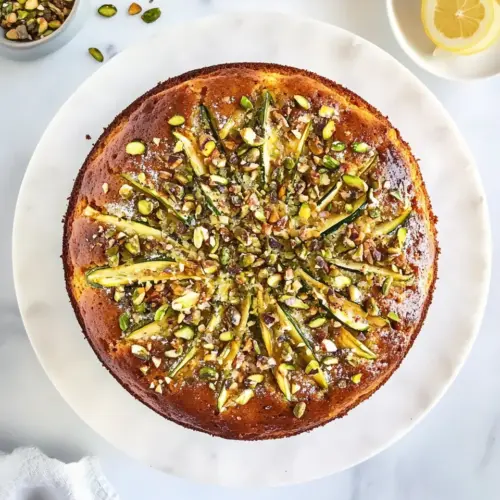
Lemon Pistachio Zucchini Cake
Lemon Pistachio Zucchini Cake is a tender, moist bundt cake where bright lemon zest and juice mingle with nutty pistachios and grated zucchini for a surprisingly light yet indulgent treat. This easy springtime bake is perfect for weekend brunches or gifting, offering a balance of creamy glaze and crunchy topping that tempts everyone to reach for another slice.
Equipment
- Bundt Pan
- Mixing Bowls
- Whisk
- Spatula
- Grater
Ingredients
- 2 1/2 cups all-purpose flour Provide structure and bulk to the cake batter, creating a tender crumb when properly combined with the wet ingredients. Sift or whisk before measuring to ensure even distribution of leavening agents and avoid dense spots in the cake. Use room-temperature ingredients for best incorporation and consistent texture.
- 1/4 cup finely crushed pistachios Add a subtle nutty flavor and gentle crunch dispersed throughout the cake, complementing the zucchini and lemon notes. Finely crush to integrate smoothly into the batter without creating large pockets of nuts. Toast lightly before crushing to deepen the pistachio aroma if desired.
- 2 1/2 teaspoons baking powder Leaven the cake by producing gas bubbles during baking, helping the cake rise and achieve a light texture. Measure carefully and distribute evenly through the dry ingredients to prevent uneven rising or bitter pockets. Combine with mechanical leavening from beaten eggs for optimal lift.
- 1/2 teaspoons salt Enhance overall flavor balance by slightly elevating sweetness and rounding out other flavors while strengthening gluten formation control. Dissolve into the wet ingredients or sift with the flour to ensure even seasoning. Use iodized salt sparingly to avoid altering delicate flavors.
- 1/2 teaspoon cinnamon Contribute a warm, aromatic note that complements lemon and pistachio flavors without overpowering them. Measure precisely as cinnamon can quickly dominate delicate batter profiles. Pair with lemon zest for an interesting citrus-spice interplay.
- 12 tablespoons unsalted butter melted Provide richness, moisture, and a tender mouthfeel while helping to carry flavor throughout the cake. Melt before combining to create an even distribution and easier incorporation with sugar and eggs. Use unsalted butter to control overall salt level and adjust seasoning separately.
- 1 1/2 cups sugar Sweeten the cake and help with structure by interacting with butter and eggs to create a tender crumb. Cream with melted butter or whisk into wet ingredients until fully dissolved to avoid graininess. Adjust slightly for personal taste but maintain balance with lemon acidity.
- 3 large eggs Contribute to structure, moisture, and emulsification while trapping air for lift when beaten with sugar. Use large eggs at room temperature for better incorporation and to maximize volume. Beat until combined but avoid overmixing to prevent toughness.
- 4 lemons zest freshly grated Brighten the cake with intense citrus aroma and fresh, zesty flavor that pairs well with pistachios and zucchini. Grate just the outer yellow layer to avoid bitter white pith. Stir into batter to release essential oils for fragrant results.
- 1 teaspoon vanilla extract Introduce a rounded, sweet vanilla note that enhances overall flavor and harmonizes citrus and nut components. Add to the wet ingredients for even distribution and to deepen the cake's aromatic profile. Use pure vanilla extract for best natural flavor.
- 1/2 teaspoon almond extract Provide a subtle almond-like undertone that complements pistachios and enriches the cake's nutty profile without overwhelming the lemon. Use sparingly as a concentrated flavor that can quickly become dominant. Add alongside vanilla to layer flavors.
- 2 1/2 cups freshly grated zucchini Contribute moisture and tenderness while adding mild vegetal flavor and natural sweetness, helping prevent the cake from drying out. Squeeze out excess liquid if very wet to avoid affecting batter consistency. Fold gently into the batter to retain some texture.
- 1/4 cup freshly squeezed lemon juice I used the lemons I zested! Add fresh citrus acidity that balances sweetness and enhances the lemon flavor throughout the cake. Use juice from the zested lemons to maintain flavor continuity and avoid added acids that could alter texture. Mix into the wet ingredients to distribute evenly.
- 2 cups powdered sugar Create a smooth, sweet glaze that adds visual appeal and additional sweetness when drizzled over the cooled cake. Whisk with lemon juice to reach desired consistency for pouring or spreading. Allow glaze to set slightly before slicing for cleaner presentation.
- tiny drop of almond extract Enhance the glaze with a delicate almond nuance that reinforces the cake's nutty profile and complements pistachio topping. Use only a tiny drop to avoid overpowering the lemon and vanilla flavors. Stir in thoroughly to evenly flavor the icing.
- 1/3 cup coarsely chopped pistachios for topping Provide a crunchy, colorful finishing touch and concentrated pistachio flavor that contrasts the cake's soft crumb. Coarsely chop to maintain noticeable texture without creating hard bites. Sprinkle on top after glazing for decorative and textural appeal.
Instructions
- Preheat the oven to 325 degrees F. Butter and flour a bundt pan (mine is a 7 cup) generously – this is the ONLY thing that I find works in removing a cake successfully from the bundt pan. Do not use baking spray – butter and flour!: When you start, the warm, dry heat of a fully preheated oven ensures consistent rise and even baking, which is especially important for a bundt cake that bakes longer. You should hear the faint hum of the oven and notice the temperature stabilizing, which prevents the edges from setting too quickly while the center remains raw. A common mistake here is not preheating long enough, leading to uneven texture. If your oven runs hot, consider using an oven thermometer to confirm accuracy.
- In a small bowl, whisk together the flour, pistachios, baking powder, salt and cinnamon. In a large bowl, whisk together the butter, sugar, eggs, lemon zest, vanilla extract and almond extract until combined and smooth. Stir in the zucchini. Stir in the dry ingredients until a batter forms.: Coating the pan with butter and flour helps the cake release cleanly, and it also creates a slight crust on the exterior that adds a pleasant texture. The smell of warm butter spreading across the pan is subtle reassurance you are building a nonstick barrier. Avoid baking spray, as the recipe warns, because it can cause uneven release. One pitfall is applying too much flour which can clump; tap out excess to get an even, thin coating.
- Scoop the batter into the greased and floured bundt pan. Bake the cake for 60 minutes, or until a toothpick inserted in the center comes out clean. Let the cake cool for 15 minutes in the pan, then gently turn the cake out and let it cool completely.: Combining the dry ingredients first promotes even distribution of leavening and flavor. Whisking aerates the mixture slightly and breaks up any small clumps, producing a lighter crumb. You will notice the faint nutty flecks from the crushed pistachios spread throughout the pale flour, which is a good visual cue that things are balanced. A common error is adding leavening directly to the wet mix without sifting or whisking, which can create pockets of uneven rise.
- Once cool, drizzle it with the glaze and top with the crushed pistachios. Slice into wedges and serve!: Emulsifying the melted butter with the sugar and eggs creates a shiny, cohesive batter base. As you whisk, you should see the mixture lighten slightly and emit fragrant citrus and nutty aromas from the zest and extracts. This step sets the stage for proper texture, so avoid rushing; if the butter is too hot it can cook the eggs, so let it cool a touch. A mistake to watch for is under mixing here, which can leave streaks of egg or unmixed butter bits.
- Whisk together the lemon juice, sugar and extract until smooth. If the glaze is too runny, you can add a bit more sugar about 1/3 cup at a time. If it’s too thick, add in more lemon juice one teaspoon at a time. Drizzle over the cake and cover with the pistachios!: Fold in the freshly grated zucchini so it disperses evenly. At this point you will notice the batter taking on tiny green flecks and a moist sheen. The zucchini adds moisture without making the batter watery when integrated properly. Over stirring can shred the zucchini too much and cause the batter to lose structure, so fold gently until just incorporated.
- Stir in the dry ingredients until a batter forms: Gradually incorporate the dry mix into the wet bowl to form a smooth batter, stopping as soon as no streaks of flour remain. The sound will shift from a thicker whisking noise to a softer folding rhythm, and the visual cue is a uniform pale batter dotted with pistachio pieces and zucchini. Working quickly but gently is key, because overmixing activates gluten and can make the cake dense. If lumps remain, a few more gentle folds will bring it together without overworking.
- Scoop the batter into the greased and floured bundt pan: Use a spatula or large ice cream scoop to transfer batter evenly into the prepared pan, smoothing the top lightly so the cake bakes level. You should see the batter glossy and slightly thick, settling into the pan with a satisfying weight. One common oversight is uneven distribution leading to lopsided baking; rotate the pan slightly and tap once on the counter to release air bubbles and level the surface.
- Bake the cake for 60 minutes or until a toothpick inserted in the center comes out clean: As it bakes, the kitchen will fill with buttery, citrus, and nutty steam. Look for a pale golden exterior and a slight pull away from the pan edges, which indicate doneness. Testing with a toothpick is essential, because baking times vary with pan size and oven characteristics. A typical mistake is removing the cake too early, resulting in a gummy center. If the top browns too quickly, loosely tent with foil for the remaining time.
- Let the cake cool for 15 minutes in the pan then gently turn the cake out and let it cool completely: Cooling in the pan allows the crumb to stabilize so the cake does not crack or fall apart when inverted. After 15 minutes, run a thin knife around the edges if needed, then invert onto a rack. The cake will still feel slightly warm and fragrant; cooling completely ensures the glaze sets properly instead of melting away. A mistake is trying to glaze a hot cake, which causes the glaze to slide off.
- Once cool drizzle it with the glaze and top with the crushed pistachios: The glaze should be glossy and pourable, pooling in the bundt grooves for visual appeal. The contrast of sticky glaze and crunchy pistachios is a key sensory point, adding both sound and texture. Drizzle slowly to control coverage, and sprinkle the chopped pistachios while the glaze is wet so they adhere. If glaze is too thin it can run off; if too thick it will sit clumped on the surface, so adjust as needed.
- Slice into wedges and serve: When you cut into the cooled cake, you want clean slices with visible pockets of green zucchini and flecks of pistachio. The texture should be tender and moist, with a bright lemon lift in every bite. Use a sharp serrated knife and wipe the blade between cuts for neat slices. A small pitfall is serving too soon, which can yield messy slices; patience rewards the best presentation.
- Whisk together the lemon juice sugar and extract until smooth: For the glaze, combining the fresh lemon juice , powdered sugar , and a whisper of almond extract creates a bright, silky finish. Whisk until no sugar granules remain, and adjust consistency by adding more sugar if too runny or more lemon juice if too thick. The aroma will be intensely citrus forward, and this step is forgiving as small adjustments refine the texture. Over thinning the glaze will prevent it from setting nicely on the cake.
- If the glaze is too runny you can add a bit more sugar about 1/3 cup at a time: Thickening with extra powdered sugar will give a shinier, more stable glaze that clings to the bundt surface. Add small increments and whisk fully between additions, watching for the right pour consistency. A common mistake is dumping in large amounts of sugar, which can make the glaze clumpy and overly sweet; patience ensures smoothness.
- If it’s too thick add in more lemon juice one teaspoon at a time: Thinning with small amounts of fresh lemon juice preserves the bright flavor while making the glaze pourable. Each teaspoon changes consistency noticeably, so add slowly and taste as you go. Too much juice will create a runny glaze that does not set, so move cautiously.
- Drizzle over the cake and cover with the pistachios: Apply the glaze in a controlled stream so it settles into the bundt ridges, then scatter the coarse pistachios on top to anchor the glaze and add crunch. The final look should be glossy with an inviting nutty crown. A last misstep to avoid is waiting too long to add the pistachios, which may not adhere if the glaze has already set.
Notes
- Room temperature eggs matter Beating room temperature eggs with the sugar helps them incorporate more fully, creating a smoother, more homogeneous batter which contributes to an even rise.
- Cooling time before glazing Always let the cake cool completely before applying the glaze if you want it to set and shine rather than melt into the crumb, which keeps the presentation neat.
- Adjust glaze consistency carefully Add powdered sugar in small increments if the glaze is runny, and a teaspoon of lemon juice at a time if it is too thick, tasting as you go for balance.
- Bundt pan prep is crucial Butter and flour the pan generously, tapping out excess flour; this classic method helps the cake release cleanly without tearing.
- Store properly Keep the cake covered at room temperature for up to three days, or refrigerate if your kitchen is warm; bring back to room temperature for the best flavor before serving.
- Toast nuts for extra depth Lightly toasting the chopped pistachios enhances their aroma and provides a more pronounced contrast to the sweet glaze.