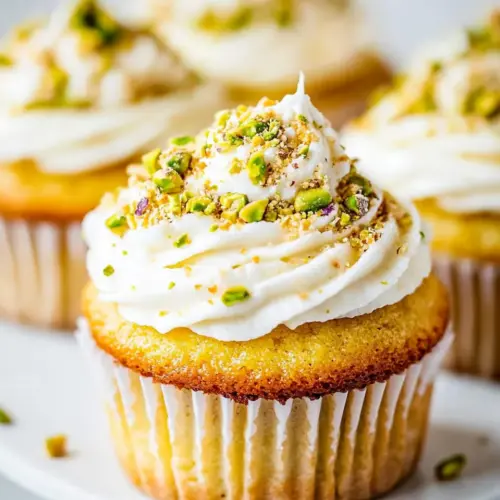
Lemon Pistachio Cupcakes
Lemon Pistachio Cupcakes are tender, nutty cupcakes topped with bright lemon buttercream and crunchy pistachios, offering a creamy yet crisp bite. This easy springtime dessert balances citrus zing with buttery texture, making it a lovely choice for brunch or a casual gathering. Make a batch to impress guests with minimal fuss and memorable flavor.
Equipment
- Food Processor
- Stand mixer
- Muffin Tin
- Mixing Bowls
Ingredients
- 3/4 cups shelled unsalted pistachios Ground and lightly toasted to deepen flavor, provides a nutty base and texture when folded into batter and sprinkled as garnish for bright contrast.
- 1 2/3 cup all-purpose flour Sifted to ensure lightness and combined with leavening agents to create the cupcake structure and tender crumb while balancing wet ingredients.
- 1 teaspoon baking powder Whisked with dry ingredients to provide lift and a gentle rise, ensuring cupcakes bake evenly and achieve a soft, airy texture.
- 1/2 teaspoon kosher salt Measured precisely to enhance flavor balance, strengthens gluten slightly and controls overall seasoning in both batter and frosting.
- 1/4 teaspoon baking soda Activated with acidic components to contribute additional rise and counteract any density from nuts or yogurt, ensuring tender cupcakes.
- 1 cup granulated sugar Creamed with butter and sugar to create aeration in the batter, providing sweetness and structure while promoting even browning during baking.
- 1 tablespoon lemon zest, from 2 or 3 lemons Finely grated into the batter and frosting to infuse vibrant citrus oils and aromatic brightness; adds fresh, zesty flavor throughout the cake.
- 1/2 cup unsalted butter, at room temperature Beaten until creamy to incorporate air and fat, contributes richness and moisture while helping to dissolve sugar for a smooth crumb.
- 2 large eggs, at room temperature Brought to room temperature and whisked in to add structure, moisture, and richness while helping to bind ingredients together.
- 1 teaspoon pure vanilla extract Added for aromatic warmth and rounded flavor, enhances the overall profile and complements lemon and pistachios without overpowering.
- 1/2 teaspoon almond extract Blended sparingly to impart a subtle nutty-almond note that enhances the pistachio flavor and adds complexity to both cake and frosting.
- 1/3 cup buttermilk Stirred in to add acidity and moisture, tenderizing the crumb and balancing richness from butter and yogurt for a soft texture.
- 1/3 cup plain Greek yogurt (or sour cream) Folded into batter to increase tenderness and moisture; contributes a slight tang that brightens the lemon and pistachio flavors.
- 1 cup unsalted butter, at room temperature Softened and creamed with sugar to form the base of the frosting, providing stability, richness, and a smooth texture when whipped.
- 4 and 1/2 cups confectioners' sugar Sifted into the frosting and beaten to create a silky, sweet, and spreadable buttercream that holds peaks and can be piped decoratively.
- 2 tablespoons fresh lemon juice Freshly squeezed and mixed into frosting to add bright acidity and lemon flavor, thinning and flavoring the buttercream to cut sweetness.
- 2 tablespoons heavy cream or whole milk Poured in small amounts to adjust frosting consistency, lending creaminess and helping achieve a glossy, spreadable texture.
- 2 teaspoons lemon zest Zested finely to boost lemon fragrance and provide concentrated citrus notes in both batter and frosting for pronounced flavor.
- 1/2 teaspoon almond extract Added to frosting for a subtle nutty lift that echoes the pistachio element, enhancing complexity without dominating the lemon.
- Pinch of salt Sprinkled in a tiny amount to sharpen flavors and balance sweetness, helping to elevate both cake and frosting profiles.
- Finely chopped pistachios, for garnish Chopped and used as a finishing touch to add crunch, color, and nutty flavor as a visual and textural contrast on each cupcake.
- Drizzle of honey, optional Lightly drizzled over finished cupcakes to add a glossy sheen and a touch of floral sweetness that complements the nutty and citrus notes.
Instructions
- Preheat oven to 350 degrees F. Place cupcake liners in a standard muffin tin and set aside.: You should feel the comforting warmth as the oven comes to temperature and notice the faint scent of heating metal when it reaches 350 degrees F, which is a reliable sign the environment is ready for baking. This step matters because a properly preheated oven ensures even rise and consistent texture across all cupcakes. A common mistake is placing batter in an oven that is still warming, which can cause uneven baking and dense centers. Make sure you wait until the oven indicates it has reached the target temperature, and line the muffin tin evenly so each cup bakes the same.
- Place the pistachios in a food processor. Secure the lid and pulse until finely ground. Transfer to a medium bowl.: As you pulse the pistachios , the room fills with a toasty, slightly sweet nut aroma and you can see the pieces change from coarse to a fine grain, which will blend into the batter. Grinding is important for distribution of flavor without large chunks that could weigh down the crumb. Avoid over-processing into a paste, which will release oils and make the batter greasy. If the nuts start to clump, pause and scrape down the sides, pulsing in short bursts to preserve the right texture.
- Add the flour, baking powder, salt, and baking soda. Whisk until well combined.: Whisking dry ingredients together produces a uniform powdery mixture with no visible streaks of leavening, so the cupcakes rise evenly. The visual cue is a consistent pale blend where you no longer see separate specks of baking powder or soda. This step matters because uneven leavening can cause some cupcakes to under-rise while others over-expand. One pitfall is vigorous whisking that aerates too much, so whisk just until combined.
- In a small bowl, combine the sugar and lemon zest. Rub together with your fingers until fragrant.: Rubbing lemon zest into the granulated sugar releases bright citrus oils, and you will smell an immediate burst of lemon, signaling maximum flavor extraction. This technique infuses the sugar itself, deepening the lemon presence throughout the batter. If you skip this, the lemon will feel less integrated. Be careful not to include the bitter white pith when zesting, as that will introduce an unwanted edge.
- Using a stand mixer fitted with a paddle attachment (can use handheld mixer), beat the butter on high speed until smooth and creamy, about 1 minute. Add the sugar mixture and beat on high until creamed together, about 1 to 2 minutes. Scrape down the sides and up the bottom of the bowl with a spatula as necessary. Add the eggs, vanilla extract, and almond extract and beat on medium-high speed until smooth and combined.: The butter whipping creates a pale, airy base that you can see change from dense to whipped and slightly glossy, with tiny air pockets that contribute to lift. After adding the lemon sugar, there is a fragrant citrus perfume and the texture becomes lighter, which is the sign you want before the eggs go in. Adding eggs at room temperature helps them emulsify smoothly without curdling, resulting in a uniform batter. A common error is overbeating after the eggs, which can incorporate too much air and lead to doming or collapse. Scrape the bowl well so no pockets of butter or sugar remain.
- In a small bowl, whisk together the buttermilk and Greek yogurt.: As you whisk, the mixture becomes silky and slightly tangy, a creamy liquid that will tenderize the batter and react with the baking soda. Combining them first ensures even distribution through the batter and prevents lumps of yogurt. This matters because uneven acidity can cause irregular rise and texture. One mistake is adding cold dairy straight from the fridge which can chill the butter and cause curdling, so aim for room temperature when possible.
- With the mixer on low, alternate adding in the dry ingredients and the buttermilk/Greek yogurt mixture, beginning and ending with the dry ingredients. Don’t over mix.: The batter will look lusciously smooth and thick, with streaks disappearing as you alternate additions. This folding technique maintains air while ensuring everything is incorporated, and ending with dry ingredients helps the batter hold structure. The texture should be cohesive and slightly ribbon like when lifted, not gluey. Overmixing is the usual trap here, which tightens the gluten and yields dense cupcakes, so stop mixing as soon as streaks are gone.
- Divide the cupcake batter evenly among the muffin cups. Bake for 18 to 22 minutes, or until a toothpick inserted in the center comes out clean. Allow the cupcakes to cool completely before frosting.: As they bake, the kitchen fills with a gentle lemon and butter aroma, and you may see the tops turn a light golden hue with slightly domed centers. A clean toothpick indicates a set crumb, while a few moist crumbs are fine, letting you avoid dry overbaked cupcakes. Cooling completely is critical because warm cupcakes will melt the frosting and ruin the finish. A common mistake is removing them from the tin too soon, which can cause them to sink as they cool.
- Using a stand mixer fitted with the paddle attachment, beat the butter on medium speed until creamy, about 2 minutes. Add confectioners' sugar, lemon juice, heavy cream, lemon zest, almond extract, and pinch of salt. Mix on low and then increase to high speed and beat for 3 full minutes or until frosting is smooth.: The buttercream transforms from pale and silky to cloud like and spreadable, with a fresh lemon perfume and a sheen that indicates it is fully whipped. Mixing low first avoids a sugar puff up, then whipping high creates loft and a smooth texture that pipes beautifully. The frosting should hold soft peaks and not look grainy; if it does, beat longer or add a splash of cream. Watch out for overheating the bowl from prolonged beating, as that can make the frosting too soft.
- Frost the cooled cupcakes with the buttercream. Garnish with pistachios. You can even add a little drizzle of honey, if desired.: The final act is satisfying as the creamy frosting spreads or pipes into elegant swirls and the green of the chopped pistachios pops against the pale lemon color. The contrasting textures and the hint of floral honey on top create a memorable bite that sings of spring. Apply the garnish just before serving so the nuts stay crisp, and resist adding too much drizzle which can weigh the frosting down. If the frosting seems loose, chill briefly before piping for cleaner shapes.
Notes
- Make them gluten free by swapping a one to one gluten free flour blend for the all-purpose flour, and check the texture, as some blends absorb more liquid so you may need a splash more buttermilk.
- Increase pistachio intensity by folding in a few tablespoons of finely ground pistachios into the frosting to echo the cake flavor, but pulse gently so the frosting remains smooth for piping.
- Adjust frosting sweetness by reducing confectioners' sugar slightly and increasing the fresh lemon juice by a quarter teaspoon to maintain balance without losing spreadability.
- Make mini cupcakes by using a mini muffin tin and shortening the bake time to about 10 to 12 minutes, watching closely as smaller cakes brown and set faster.
- Gift presentation wrap cooled, unfrosted cupcakes individually and include a small tub of frosting and chopped pistachios for fresh decorating at the recipient's home.