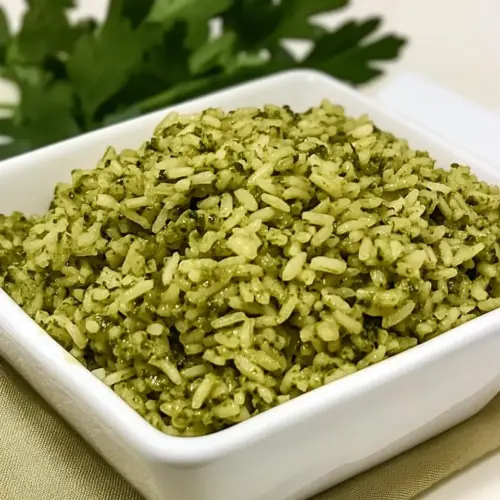
Lemon Pesto Rice
Lemon Pesto Rice is a bright, creamy and herbaceous side that combines tender, toasted grains with fresh lemon and basil pesto for an easy weeknight dinner hit. The toasty rice and savory chicken broth create depth while the citrus and pesto lift every bite, making it perfect for quick meals or special gatherings. Try it when you want simple but impressive flavor.
Equipment
- Dutch oven or heavy pan with lid
- Small saucepan or microwave safe bowl
- Fork
Ingredients
- 1 T extra-virgin olive oil Sauté gently in the pan to provide a fruity, peppery base and help cook aromatics; enhances mouthfeel and prevents sticking. Use at the start to bloom flavors and carry fat-soluble aromatics into the rice for depth.
- 1 T butter Meld with oil over heat to add a rich, creamy finish and subtle nuttiness; helps brown the rice slightly and builds a silky texture. Incorporate early to balance the olive oil and contribute rounded, savory notes.
- 1 cup Ben’s Original Converted Rice Rinse if desired and simmer to absorb flavors, offering a neutral, fluffy grain base that carries the pesto and lemon. Use as the main starch component to provide bulk and soak up the seasoned cooking liquid for cohesive texture.
- 1/2 tsp salt Season the cooking liquid to enhance and balance all flavors, preventing the dish from tasting flat while drawing out the rice's natural sweetness. Adjust to taste to ensure the final rice is properly seasoned and bright.
- 3 T fresh-squeezed lemon juice (see notes) Brighten and acidify the dish to cut through richness and lift flavors; adds citrus aroma and fresh zip that complements basil and butter. Add toward the end or to the cooking liquid per notes to preserve its fresh character.
- 2 cups chicken broth (see notes) Simmer with rice to impart savory depth and concentrated flavor, serving as the primary cooking liquid that infuses the grains. Choose low-sodium varieties or adjust salt accordingly to control overall seasoning.
- 4 T basil pesto (see notes) Fold in near the end to coat the rice with herbaceous, garlicky richness and vibrant basil flavor; provides umami and a glossy finish. Stir through off heat or briefly on low to preserve pesto brightness and color.
Instructions
- Heat the homemade chicken stock or canned chicken broth in the microwave or in a small pan until it is just starting to boil: The aroma of warming chicken broth will rise quickly, and you want it nearly bubbling so it stays hot when added to the rice , which helps maintain an even cooking temperature. If the broth is too cool you will lengthen the cooking time and risk uneven grains. A common mistake is adding cold liquid, which causes the pot to sit too long while everything comes back up to heat.
- In a dutch-oven type pan with a tight-fitting lid, heat olive oil and butter over medium heat until butter is melted. Then add the rice and cook 2-3 minutes, or until rice is starting to get lightly browned, stirring a few times.: You should hear a gentle sizzle as the rice hits the fat, and within a minute the grains will begin to take on a pale golden tone, giving off a toasty, nutty scent. Stir a few times to ensure even toasting so the final texture becomes more complex. Avoid letting the butter brown darkly, which can lend a bitter note; lower the heat if you smell burning.
- Add the salt and lemon juice and cook 1 minute. (The lemon juice will sizzle and maybe bubble up in the pan.): Expect a bright pop of citrus scent as the lemon juice hits the hot pan, and a brief bubbling is normal. This quick cook allows the acid to mellow slightly and integrate with the toasted rice . A frequent slip is using bottled lemon that can be dull, so use fresh juice for the best aromatic lift.
- Add the hot chicken stock or broth and bring rice mixture to a very low boil: Pouring hot chicken broth onto the toasted rice will create a gentle steam and a few rolling bubbles. You should see the liquid move steadily, not violently, which indicates the heat is high enough to cook but not so high that it will evaporate too fast. If it roils too vigorously, reduce the heat to prevent uneven cooking and spilled liquid.
- Once it is barely boiling, lower heat to the lowest possible heat that will keep the mixture barely simmering, cover the pan and let the rice cook for 22 minutes without lifting lid: This stage is mainly patience, because trapped steam does the work. You will no longer hear much noise from the pot aside from a soft whisper of simmering. Do not lift the lid, because that releases precious steam and interrupts the gentle, even finish you need for tender grains. A common error is peeking too early, which cools the pot and extends the time.
- Then remove lid and check to see that liquid is mostly absorbed and rice is tender. (Cook a few minutes longer with pan covered if needed.): When you lift the lid, the surface should glisten and show very little free liquid, and a fork should easily separate the grains. If you find a few grains are still firm, replace the lid and cook a few minutes more. Avoid stirring vigorously right now, which can make the rice gummy; gentle checks are best.
- When rice is tender, fluff the rice with a fork, and stir in the basil pesto. (I like a generous amount of pesto, but you can definitely use less if you want just a hint of basil flavor.): As you fluff with a fork, the rice will release steam and become light and airy; folding in the basil pesto while the rice is hot allows the oil and herb paste to melt into the grains, coating them in glossy, fragrant flavor. Smell will be distinctly herbal and bright. One pitfall is adding the pesto when the rice is too wet, which dilutes the flavor, so ensure the surface is mostly dry first.
- Put the lid back on and let the rice stand for 5 more minutes.: Resting lets residual heat finish marrying flavors, and the texture evens out into a cohesive, tender bowl. You will notice the aroma intensify during this short rest, and the pesto will meld into the warm rice . Resist stirring immediately after uncovering, which can make the dish seem looser than intended.
- Serve Lemon Pesto Rice hot and enjoy! Leftovers will keep well in the fridge or can be frozen, so you might want to double the recipe.: Serve while warm so the comforting steam carries the herb and citrus notes. Leftovers maintain flavor if stored airtight, and reheating gently with a splash of water or broth brings the grains back to life. A common mistake is drying the leftovers in the microwave without moisture, which can make the rice tough.
Notes
- Swap oils carefully: If you do not have extra-virgin olive oil, use a neutral oil plus a touch more butter for flavor, but keep in mind that the fruity notes of good olive oil contribute to the dish character.
- Broth alternatives: If you need to replace chicken broth, a low-sodium vegetable broth can work, but the final flavor will be less savory, so taste and adjust salt before adding the pesto.
- Adjusting lemon intensity: If you prefer a subtler citrus note, reduce the lemon juice to 2 tablespoons and finish with a small squeeze at the table to brighten each portion.
- Pesto amount: Start with 2 tablespoons of basil pesto and add more to taste; adding too much at once can overwhelm the balance, so fold incrementally.
- Storage and reheating: Store leftovers in an airtight container in the fridge up to four days. Reheat gently with a splash of water or broth to return moisture without making the rice soggy.