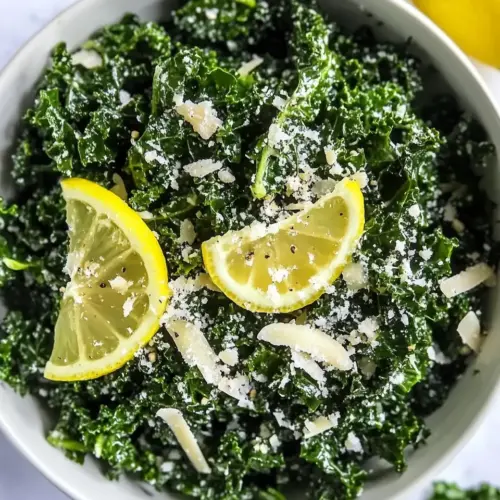
Lemon Parmesan Kale Salad
Lemon Parmesan Kale Salad is a bright, crunchy green tossed with a zesty lemon dressing, savory parmesan, and toasty pine nuts. This easy, flavorful salad is perfect for quick weeknight dinners or spring lunches, delivering creamy umami and crisp texture in every bite. Make it when you want something simple that still feels elevated, and enjoy a reliable crowd pleaser.
Equipment
- Colander
- Salad spinner
- Large Bowl
- Skillet
- Whisk
Ingredients
- 5 cups Kale Leaves, washed and chopped Provides a sturdy, earthy base with robust texture and nutrients; massages well to soften and absorb dressing for better flavor distribution. Adds vibrant green color and a slightly bitter note that balances bright lemon and salty cheese.
- 2 tbsp Lemon Juice Adds bright acidity and freshness to brighten the kale, helping to tenderize the leaves slightly when massaged. Enhances overall flavor balance by cutting through richness from oil and cheese.
- 2 tbsp Olive Oil Emulsifies with lemon juice to create a simple dressing while adding fruity, savory richness. Helps coat the kale evenly and carry flavors from garlic and seasonings throughout the salad.
- 1/2 tsp Garlic, minced Imparts a gentle aromatic bite and savory depth when minced finely; melds into the dressing to boost umami and complexity. Small amounts provide noticeable flavor without overwhelming the greens.
- 1/4 tsp Kosher Salt Seasoningly enhances all components by elevating natural flavors and controlling bitterness; aids in balancing acidity from lemon and richness from parmesan. Dissolves readily into the dressing for even distribution.
- 1/8 tsp Cracked Black Pepper Adds a subtle peppery heat and aromatic lift that contrasts the creamy parmesan and nutty pine nuts. Cracked texture disperses quickly to provide small bursts of spice in each bite.
- 1/4 cup Parmesan Cheese Contributes salty, nutty umami and a creamy mouthfeel when grated over the salad; binds flavors together and adds savory richness. Melts slightly into the warm dressing to create a cohesive flavor profile.
- 3 tbsp Pine Nuts (Any nut works) Provides crunchy texture and toasty, nutty flavor that complements the kale and parmesan; optional alternatives retain similar crunch and richness. Sprinkled on top to add visual appeal and satisfying bite.
Instructions
- Remove the rib and stem from the kale leaves. Chop into bite-sized pieces.: The sound of a knife on a cutting board is rhythmic, and you will notice the leaves change from rigid to more flexible as you remove the tough center ribs. This step matters because the ribs are fibrous and will detract from a pleasant chew, especially when eating raw. If you skip removing the ribs you may get stringy bits that are hard to bite through. Aim for pieces that are easy to spear with a fork, and notice the leafy texture soften as you work.
- Add the chopped kale to a colander and rinse with warm water.: Rinsing releases soil and softens the leaves slightly, and the warm water brings a faint fresh herb fragrance that reads as clean. The gentle rustle of leaves under running water signals they are thoroughly washed. Over soaking can wash away some vibrant flavor, so a quick warm rinse is best. Be mindful not to bruise the leaves by rubbing too vigorously under the stream.
- Transfer the washed kale to a colander to drain or a salad spinner and spin.: The spinning makes a decisive whirring sound as water flecks free, and the leaves emerge noticeably drier and more receptive to the dressing. Dressing adheres best when leaves are not waterlogged, so this step ensures the dressing will bind rather than slide off. If the greens stay too wet the dressing will dilute and the salad may become soggy, so give it a good spin or let it drain well.
- Transfer the kale to a large bowl.: When the leaves tumble into the bowl you can see the volume and start envisioning the final plating. A large bowl gives room to massage the dressing in without spilling, and it helps you combine ingredients evenly. Using a bowl that is too small makes tossing messy and uneven, so choose a roomy vessel to allow for comfortable hand mixing.
- If you desire, toast the nuts in a skillet on medium heat until fragrant, stirring often. Set aside. Toasting nuts always brings out the flavor, but it isn't necessary.: As the pine nuts warm, they release a toasty, buttery aroma, and tiny golden flecks appear almost immediately. Toasting tightens the nut’s texture and intensifies flavor, which pairs beautifully with the salty parmesan . A common error is leaving them unattended, which leads to burning and a bitter taste, so keep them moving in the pan and remove as soon as they smell fragrant.
- To a bowl, add olive oil, lemon juice, garlic, salt, and pepper. Whisk until combined and pour over salad.: The whisking creates a glossy dressing, and droplets catch the light as the oil and juice emulsify. Pouring it over the kale should glisten the leaves with a thin, even coat. If the dressing is not well mixed the oil may float and not season every piece, so ensure a smooth emulsion. Taste before adding more seasoning because a little adjustment can make a big difference.
- Using clean hands, gently massage the dressing into the salad mixture.: As you massage, the leaf edges become visibly softer and slightly wilted, and the aroma of lemon and garlic becomes more pronounced. This tactile step breaks down fibers and helps the dressing penetrate, producing a tender but still textured leaf. Over massaging can turn the leaves limp and pasty, so be gentle and stop when the kale becomes noticeably more pliable.
- Top the salad with parmesan cheese and toasted nuts. Serve and enjoy!: The final sprinkle of finely grated parmesan melts slightly against the warm nut oils, adding a savory perfume and a creamy mouthfeel. The crunch of the pine nuts provides contrast, and the salad presents with a bright, balanced aroma. A common pitfall is adding too much cheese, which can overpower the citrus notes, so use the suggested amount for a perfect balance.
Notes
- Use fresh lemon: Freshly squeezed lemon juice is brighter and more aromatic than bottled, which helps the dressing sing and gives the salad a crisp, clean edge.
- Pick the right kale: Curly kale is classic for texture, while lacinato yields a slightly sweeter, less fibrous leaf; choose based on how tender you want the final salad.
- Massage gently: Use clean hands to rub the dressing into the leaves until they soften but still hold shape, which improves tenderness without turning them mushy.
- Toast nuts carefully: Keep them moving in a dry skillet on medium heat, and remove once they are fragrant and lightly golden to avoid bitterness from burning.
- Grate parmesan finely: Fine shavings or freshly grated parmesan distribute evenly and melt slightly on contact, adding a creamy umami note without clumping.
- Serve promptly: For best texture serve soon after dressing so the pine nuts retain their crunch and the leaves remain pleasantly tender.