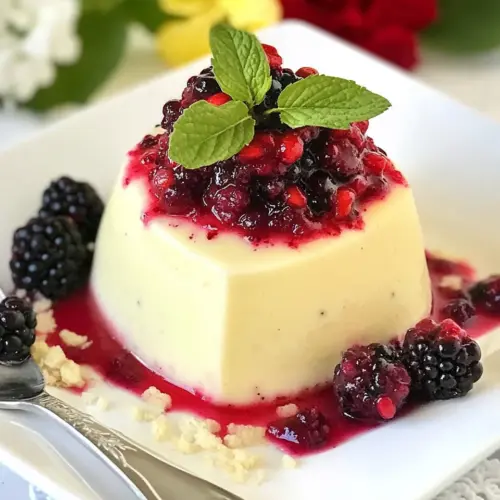
Lemon Panna Cotta with Driscolls Berries Compote
Lemon Panna Cotta with Driscolls Berries Compote is a creamy, silky dessert with bright citrus lift and a glossy fresh berries compote. This easy, elegant treat combines smooth dairy and tangy lemon for a light finish perfect for summer gatherings or simple weeknight celebrations, and it comes together quickly with minimal fuss.
Equipment
- Saucepan
- Whisk
- Ramekins
- Small Saucepan
Ingredients
- 1/4 cup fresh lemon juice Provide bright, tart acidity that balances the panna cotta sweetness and lifts the overall flavor; use freshly squeezed juice for best brightness and clarity in the final custard. Incorporate into the warm cream mixture after dissolving gelatin so the lemon flavor remains vibrant and not cooked off.
- 1/4 oz unflavored gelatin 1 envelope Stabilize and set the panna cotta into a silky, spoonable texture by melting and blooming properly in cold water before adding to warm cream. Measure accurately to ensure a delicate wobble rather than an overly firm gel.
- 1 tbsp lemon zest Add concentrated citrus aroma and intensified lemon flavor to complement the juice; zest released oils give a fragrant top note that enhances the panna cotta. Finely grate only the yellow part to avoid bitterness from the pith.
- 1/2 cup granulated sugar Provide sweetness that balances the lemon and cream while aiding texture and mouthfeel; dissolve fully into the warm liquid to prevent graininess. Adjust slightly if using very tart berries for the compote to maintain harmony between components.
- 2 cups half and half Contribute creamy body and a rich mouthfeel that forms the base of the panna cotta; gently warm rather than boil to preserve dairy texture. Combine with gelatin and other ingredients so the custard sets with a smooth, luxurious consistency.
- 1 cup 2% Greek yogurt Add tangy creaminess and slight thickness to the panna cotta, enhancing overall flavor complexity and contributing to a silky texture. Fold in gently after tempering so yogurt integrates without breaking the custard structure.
- 2 tsp vanilla extract Provide subtle warm floral notes and deepen vanilla character in the panna cotta; add to the warm cream mixture to infuse flavor throughout. Use pure extract for clean, consistent vanilla aroma without overpowering the lemon.
- 2 to 2 1/2 cups fresh berries Offer fresh, juicy fruitiness and bright color for the compote; choose ripe berries for maximum flavor and texture contrast with the creamy panna cotta. Lightly macerate or simmer briefly with sugar to release juices and create a saucy topping.
- 2 to 3 tbsp granulated sugar Sweeten the berry compote and help draw out fruit juices for a glossy, balanced sauce; adjust amount within the range depending on berry sweetness. Dissolve fully when cooking so the compote achieves a smooth, slightly thickened consistency.
- 2 tbsp honey Add natural sweetness and floral depth to the compote, rounding out tartness while contributing a sticky, glossy finish. Stir in toward the end of cooking to preserve honey aroma and avoid overheating which can mute delicate flavors.
- 1 tbsp fresh lemon juice Brighten the compote with added citrus lift and balance the sweetness; a small splash at the end sharpens the overall fruit flavor. Use fresh juice for clarity and a clean, zesty finish that complements the panna cotta.
Instructions
- Pour lemon juice into a bowl and sprinkle gelatin over the top. Let stand just until gelatin softens - approximately 5 minutes. Do NOT let the gelatin harden.: The moment you sprinkle the gelatin onto the lemon juice you will notice the powder darken slightly as it absorbs liquid, a tactile clue that the gelatin is blooming properly. This step is crucial because bloomed gelatin dissolves evenly into warm dairy, preventing lumps and ensuring a smooth set. If you skip blooming or let the gelatin sit too long, it can form clumps that never fully dissolve. Watch the gelatin for about five minutes, and avoid letting the mixture sit until it forms a film, which is a sign it has started to gel too much.
- Whisk together sugar and lemon zest in a medium saucepan.: As you rub the granulated sugar and lemon zest with a whisk, you will smell the citrus oils releasing and see the sugar take on flecks of yellow. This aromatic step builds a fragrant foundation that perfumes the entire dessert. The friction temporarily softens the zest and helps integrate the citrus oils into the sugar. A common mistake here is rushing and not breaking up zest pieces, which can lead to uneven distribution of flavor.
- Add half and half and Greek yogurt.: Pour in the half and half and spoon in the Greek yogurt , then stir gently to combine. Visually the mixture will become creamy and uniform, and the yogurt will lend a slight opaqueness that hints at the final texture. This careful incorporation prevents lumps and ensures the dairy heats evenly. Avoid adding cold yogurt in large clumps without whisking, which can create pockets that are hard to smooth out later.
- Whisk together over medium high heat just until sugar dissolves and mixture is simmering. 2-3 minutes. (Do NOT boil.): As the pan warms, listen for a gentle whisper of steam and watch tiny bubbles form at the edge, the visual cue that the mixture is nearing a simmer. This stage usually takes a couple of minutes, and the goal is to dissolve the sugar entirely without bringing the mixture to a full boil. Boiling can break down the dairy proteins and change the texture, so keep the heat controlled. If you notice foaming or rapid bubbling, reduce the heat immediately.
- Add gelatin mixture and vanilla and continue whisking until gelatin has dissolved and is fully incorporated.: When you pour the bloomed gelatin into the warm dairy, you will see it melt away almost instantly if the temperature is right, leaving the liquid glossy. Stir in the vanilla extract off heat to preserve its aroma. Fully dissolving the gelatin ensures a uniform set and a silken mouthfeel. A common error is adding gelatin to a mixture that is too cool, which can result in visible threads or undissolved specks.
- Carefully pour into six ramekins or cups and refrigerate until firm. At least 4 hours.: As you portion the mixture into six containers, the panna cotta should look glossy and pour with a smooth ribbon. Place them on a flat tray before refrigerating so they set level. Chill for at least four hours, during which the texture transforms from liquid to a delicate, wobbly custard. Placing them in the coldest part of the fridge too close to the back can risk over chilling on one side, so give them space.
- Combine all ingredients in a small saucepan. Cook over medium heat until sugar dissolves and berries begin to break down, approximately 3 minutes.: For the compote, place the berries , sugar , honey , and final lemon juice in a small pan. As they heat, you will first notice the fruit release juices and the aromas will become deeply fruity and floral. Combining ingredients before heat allows the sugar to dissolve evenly and the fruit to begin softening uniformly. Avoid tossing ingredients in individually once the pan is hot, which can cause uneven cooking.
- Reduce heat to low and continue cooking for another 4-6 minutes until compote slightly thickens.: Within a few minutes you will hear gentle bubbling and see the berries soften and burst, releasing vibrant juices that blend with the honey. The sound is a low simmer, and the smell becomes intensely fruity, a good cue that breakdown is happening. Stir occasionally to prevent sticking, and be mindful that over stirring can completely puree the berries, losing pleasant chunks.
- Transfer to a bowl and let cool.: Lowering the heat lets the juices concentrate without evaporating too quickly, resulting in a glossy compote that clings to a spoon. Watch for the liquid to coat the back of a spoon as the sign of slight thickening. A common pitfall is cooking too long, which will overly reduce the syrup and make the compote overly sticky when cooled.
- Refrigerate until panna cotta is set up.: Moving the compote off heat stops the cooking and preserves fresh berry brightness. As it cools, the mixture thickens further and the flavors round out. Cooling also prevents the panna cotta from warming when you spoon it on top. Leaving the compote uncovered to cool can form a thin skin, so cover lightly if you are worried about that.
- Spoon gently over panna cotta immediately before serving.: Ensure both components are chilled, especially the panna cotta which needs time to firm. You will notice the custard move from glossy liquid to a steady wobble when set. This rest is crucial because cutting chill time short will result in a too soft texture. Overcrowding the fridge with warm items can slow the set, so give them air space.
- Spoon gently over panna cotta immediately before serving: When you spoon the cooled compote over the firm panna cotta, the contrast of bright fruit against pale cream is visually appealing, and the initial spoon into the custard provides a satisfying tactile contrast. Spoon gently to keep the panna cotta intact and present a neat serving. Adding the compote too early can cause the panna cotta to weep slightly as the topping settles, so wait until serving.
Notes
- Use heavy cream for richer texture Swap some or all of the half and half for heavy cream to create an even silkier mouthfeel, but be mindful it increases richness and calories.
- Brighten with extra lemon zest Increase the lemon zest slightly for a more aromatic lift, being careful to avoid the bitter white pith when zesting.
- Adjust compote sweetness Tailor the compote by starting with the lower amount of sugar and adding more if the berries taste too tart once they break down.
- Serve in glasses for layered parfaits Alternate spoonfuls of panna cotta and compote in a clear glass for an attractive layered dessert that shows off colors and textures.
- Make ahead for easy entertaining Prepare both components a day ahead, refrigerate separately, and assemble just before serving to save time on the day of your event.