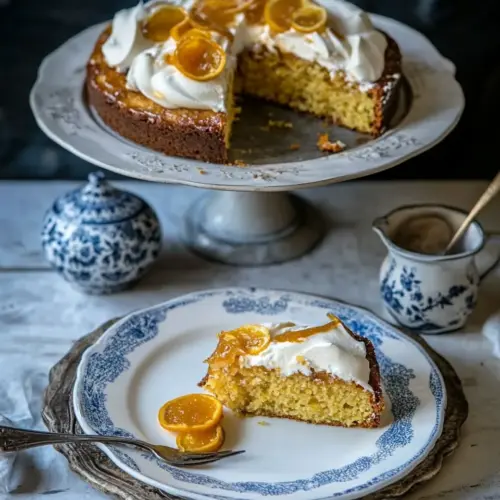
Lemon Marmalade Polenta Cake
Lemon Marmalade Polenta Cake is a bright, textured dessert boasting zesty citrus, a tender polenta crumb, and a glossy candied lemon topping. The combination of polenta and ground almonds gives a moist, slightly grainy bite while syrup and glazed lemon add concentrated flavor. Perfect for afternoon tea or an elegant dessert, it’s an easy, crowd pleasing cake to make and share.
Equipment
- Saucepan
- spring form tin
- Wire Rack
- Mixing Bowl
- Whisk
Ingredients
- 2 lemons thinly sliced Thinly slice and simmer to create translucent, tender rounds that lend bright citrus flavor and a decorative, textural element to the marmalade topping; simmered slices also help infuse the syrup with natural pectin for setting. Use evenly thin pieces so they soften uniformly and become glossy when preserved, enhancing both appearance and mouthfeel of the finished cake.
- 220 g sugar Provide granulated sweetness to the poaching liquid and cake batter, balancing lemon acidity while contributing to caramelization and structure; dissolve fully when making the lemon syrup to yield a smooth, glossy marmalade. Adjust quantity slightly only if dietary needs require, as sugar is central to both preservation and texture.
- 375 ml 1 1/2 cup water Combine with sugar to form the poaching syrup and to hydrate the polenta and almonds lightly; water controls syrup concentration and batter consistency while aiding steam during baking for tender crumb. Use accurately measured liquid to ensure proper setting of the marmalade and correct batter viscosity for even rise.
- 200 g soft butter Soften and cream with sugar to create an aerated fat base that imparts richness, moisture, and tender mouthfeel to the cake; temperature should be room-warm for easy creaming and better incorporation of eggs. Choose high-quality butter for superior flavor and a smoother, more velvety crumb in the finished loaf.
- 200 g castor sugar Cream with butter to incorporate air and sweetness into the cake batter while also contributing to structure and browning; castor sugar dissolves quickly, aiding even texture and fine crumb. Ensure it is well mixed to avoid gritty pockets and to help the cake rise evenly.
- 200 g ground almonds Provide moistness, nutty flavor, and structure as the primary dry bulk, replacing some flour while contributing a dense yet tender crumb; ground almonds also help prevent dryness and add a pleasant mouthfeel. Use evenly ground almonds to avoid pockets and to ensure uniform texture throughout the cake.
- 100 g fine polenta Deliver a delicate cornmeal texture and subtle corn flavor, contributing lightness and slight grit that distinguishes polenta cakes from flour-only counterparts; fine polenta mixes smoothly into the batter for a tender, crumbly finish. Measure precisely to maintain proper crumb and avoid overly coarse or dense results.
- 7.5 ml 1 1/2 tsp baking powder Act as a chemical leavening agent to help the cake rise by releasing gas when heated, producing a lighter, more tender crumb; distribute evenly through dry ingredients for consistent lift. Verify freshness for reliable rising and avoid overbeating once added to preserve aeration.
- 3 large eggs Bind ingredients, provide richness, and add structure through coagulating proteins when heated; eggs also contribute moisture, emulsification, and help trap air for lift. Use large eggs at room temperature to improve emulsification and achieve a smooth, homogenous batter.
- grated zest of 2 lemons Add concentrated citrus aroma and intense lemon flavor to the batter while boosting freshness and balance; grated zest releases essential oils that enhance aromatic complexity without adding acidity. Ensure zest is finely grated to avoid bitter pith and to distribute flavor evenly.
- juice of 2 lemons Supply bright acidity and liquid to intensify lemon flavor while reacting with baking powder for lift and tenderizing the crumb; fresh juice contributes natural brightness and balances sweetness in both marmalade and cake. Strain if desired to remove pulp and seeds for a smoother batter and syrup.
- 125 g icing sugar Dust over the finished cake or beat into a glaze to add a fine, melt-in-the-mouth sweetness and a smooth sugary finish that counters lemon tartness; icing sugar dissolves readily for glossy toppings and light finishes. Sift before use to prevent lumps and ensure an even, attractive coating.
- double cream to serve Serve alongside slices to introduce creamy richness and a silky mouthfeel that balances the cake's citrus brightness and slightly granular polenta texture; lightly whipped or poured, double cream rounds out acidity and enhances indulgence. Keep chilled until serving for best contrast with warm or room-temperature cake.
Instructions
- Preheat the oven to 160 °C. Line the bottom and sides of a 23 cm spring form tin with baking paper.: As you begin, you will notice the faint, warm metallic scent of the oven heating up, which signals consistent baking ahead. Doing a careful lining ensures the cake releases cleanly later; press the paper into corners so batter cannot leak, and grease the tin lightly if needed. A common mistake is skipping the paper on the sides which can cause the cake to stick; take the extra minute to secure it now so removal later is effortless.
- For the glazed lemon topping, place the lemon slices in a saucepan and cover with cold water. Bring to the boil and simmer for 30 minutes. Drain and add the sugar and water. Boil for 30 minutes or until a syrupy consistency.: You will hear a steady rolling simmer and smell bright citrus as the oils release into the pan, and the slices will become translucent, signaling they have softened. Reducing the syrup concentrates flavor, producing a glossy finish that clings to each slice. Avoid boiling too vigorously which can toughen the peel; a gentle simmer keeps the texture tender.
- Lift the lemon slices out of the syrup and allow to cool on baking paper.: As they cool, the slices will firm slightly and take on a jewel like sheen, making them easy to arrange on the cake. Cooling on paper prevents them from sticking and catches any excess syrup. A common oversight is trying to move them while still too hot, which can cause them to break; patience here preserves their shape.
- Reduce the leftover lemon syrup until halved and reserve for later.: You will notice the syrup thicken and the aroma sharpen as water evaporates, leaving concentrated lemon sweetness. Keep an eye on texture, as the syrup should coat a spoon and fall slowly. A trap is reducing too far so it becomes sticky and hard when cooled, so remove it from heat when it is noticeably syrupy but still pourable.
- For the cake, cream the butter and sugar until pale and creamy.: When you cream butter with sugar , the mixture should lighten in color and become fluffy, which incorporates air for a tender crumb. The texture when properly creamed is soft and airy, and you will hear a quieter churn from the mixer. Under creaming leaves the cake dense, while over creaming can make it too soft; aim for a pale, ribbon like consistency.
- Combine the almonds, polenta, and baking powder. While whisking, add the dry ingredients, alternating with the eggs.: These dry components should be evenly mixed so every spoonful of batter contains the same texture and lift. The nutty fragrance of ground almonds and the faint corn aroma from polenta will be noticeable, and a homogeneous mix prevents pockets of leavener. A common mistake is folding them in only partially, which leads to uneven crumb and texture; take a moment to ensure uniform distribution.
- Whisk in the lemon zest and spoon into the prepared tin. Bake for 40 minutes. The cake may seem unstable but is ready when a cake tester inserted into the center of the cake comes out clean. Remove from the oven. Place on a wire rack to cool in the tin.: Alternating helps maintain an emulsion and prevents the batter from splitting, producing a smooth, cohesive mixture that feels silky when stirred. You will sense the batter become thicker and glossier as the eggs are incorporated, and the aroma will shift toward a richer, more custardy scent. If you add everything at once you risk a curdled texture, so work steadily in portions for best results.
- For the syrup, bring the lemon juice and icing sugar to a boil. Prick the top of the cake with a cake tester and pour the warm syrup over the cake. Leave to cool before taking it out of its tin. Serve the cake topped with glazed lemons, extra lemon syrup, and double cream.: Fresh lemon zest releases fragrant oils that perfume the batter, giving an immediate citrus lift that you will smell distinctly. Spoon the batter gently into the lined tin, smoothing the top so it bakes evenly. A common error is overworking the batter while smoothing which can deflate incorporated air, so use a gentle motion to level the surface.
- Bake for 40 minutes. The cake may seem unstable but is ready when a cake tester inserted into the center of the cake comes out clean. Remove from the oven. Place on a wire rack to cool in the tin.: During baking you should see the top set and take on a light golden hue while the kitchen fills with warm, citrus and almond notes. The cake’s edges will pull slightly away from the tin when done. Resist opening the oven too often which may cause uneven rise; instead rely on the cake tester and the visual cues described.
- For the syrup, bring the lemon juice and icing sugar to a boil.: As the syrup warms you will smell bright, sharp lemon aroma and watch the icing sugar dissolve to create a glossy liquid. Bring it to the point where it is hot and pourable, not thick; this ensures it soaks into the crumb effectively. A typical mistake is making the syrup too thick which sits on the surface rather than penetrating; keep it pourable and warm for best absorption.
- Prick the top of the cake with a cake tester and pour the warm syrup over the cake. Leave to cool before taking it out of its tin.: Pricking creates channels for the syrup to sink into the crumb, so you will notice the cake darken slightly and feel weightier as it soaks up the liquid. Cooling in the tin helps the syrup set and keeps the cake intact. If you try to unmold too soon, the cake can break or lose its syrupy finish, so allow it to cool fully.
- Serve the cake topped with glazed lemons, extra lemon syrup, and double cream.: The final plating moment is aromatic, with the candied slices sparkling on top and the syrup adding a glossy sheen. Spoon a little chilled double cream alongside for contrast in texture and temperature. Avoid slicing the cake immediately after adding the syrup, as it will be softer and more likely to crumble; a rested cake yields clean slices and balanced flavor.
Notes
- Room temperature ingredients: Let your butter and eggs sit at room temperature for about 30 minutes so they emulsify smoothly when creamed, preventing a broken batter.
- Use fine polenta: Choose fine polenta rather than coarse so the crumb stays tender and the texture is pleasantly subtle, not sandy.
- Monitor the syrup closely: When reducing the lemon syrup, keep heat moderate and watch for a coating consistency on a spoon, so it remains pourable but concentrated.
- Zest before juicing: Grate the lemon zest first to capture fragrant oils, then juice the fruit; once juiced the peel is harder to zest effectively.
- Test doneness properly: Use a cake tester or skewer in the center, if it comes out clean the cake is done even if the top still looks slightly soft; visual cues and the tester together are reliable.
- Cool in the tin: Allow the cake to cool in its tin after baking while you pour the syrup; this helps the structure set and keeps slices neat when unmolding.