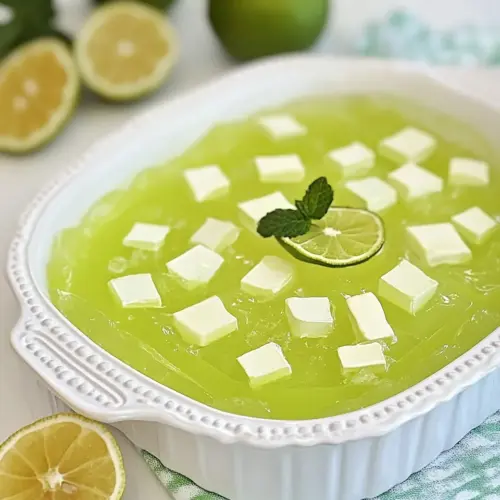
Lemon Lime Jello Salad
Lemon Lime Jello Salad is a creamy, citrusy, easy to make crowd pleaser with bright lemon and lime flavors, a soft set texture, and sweet pineapple notes. This make ahead, no bake salad is perfect for summer potlucks and backyard gatherings, offering a refreshing alternative to heavier desserts, and it stays simple to scale for many guests.
Equipment
- 9 X 13 baking dish
- Whisk
- Refrigerator
- Knife
Ingredients
- 3 oz lemon JELLO Dissolve to provide the base gelatin structure and vibrant lemon flavor; powder sets into a firm, jiggly layer when cooled and holds other ingredients together. Use hot water to bloom the gelatin and ensure even distribution for a smooth texture in the final salad.
- 3 oz lime JELLO Dissolve to contribute a complementary lime gelatin layer and bright citrus aroma; when combined with the lemon gel it creates a layered, colorful appearance. Prepare with hot water so it fully melts and blends seamlessly into the salad matrix.
- 25 oz unflavored gelatin Bloom to strengthen the overall gel beyond the flavored packets, giving the salad a firmer, more stable texture that supports added ingredients. Sprinkle into cold water first to avoid lumps before stirring into the warm gelatin mixture for even thickening.
- 2 cups hot water Mix to dissolve the gelatin packets and create the hot liquid base necessary for combining condensed milk and other components; temperature activates the gelling agents. Pouring measured hot water ensures both flavored and unflavored gelatin fully hydrate and set properly.
- 14 oz can sweetened condensed milk Sweeten and enrich to add creamy sweetness and body, balancing the tartness of the lemon and lime gelatins; condensed milk also contributes a silky mouthfeel. Stir into the warm gelatin carefully to avoid curdling and to achieve a uniform, sweet cream layer throughout the salad.
- 1 cup crushed pineapple not completely drained Add texture and fruity moisture to introduce tropical flavor and tiny pineapple pieces; retaining some juice keeps the salad moist and prevents it from becoming overly firm. Fold gently into the mixture to distribute fruit evenly without breaking up the fruit excessively.
- 1 pint cottage cheese Provide a mild, slightly tangy creaminess and soft curds that contribute body and a substantial, cottage-cheese bite to the salad. Drain or leave slightly damp depending on desired moisture level, then fold in to create a lusciously textured salad.
- 1 cup mayonnaise Bind and add richness with a tangy, creamy presence that rounds out sweetness and helps create a cohesive dressing-like component. Whisk with condensed milk and gelatin base to form a smooth, emulsified mixture that coats fruit and cheese evenly.
- lemon and lime zest for topping optional Garnish to add fresh citrus aroma and a pop of color on top of the salad; zest enhances visual appeal and sharpens the overall citrus profile. Sprinkle sparingly over the finished dish to avoid overpowering the balanced sweet and creamy flavors.
Instructions
- Lightly spray a 9 x 13 baking dish.: When you rub your fingers over a gently oiled surface you will notice a faint slip that helps the finished squares release cleanly, which matters for presentation. I prefer a light coat rather than heavy, because excess oil can pool and affect how the salad sets along the edges. A common mistake is using too much spray, which can create an oily ring on the bottom; wipe away any obvious globs before pouring in the mixture. This step sets you up for neat serving pieces and less stress when plating.
- Dissolve both boxes of JELLO and unflavored gelatin in hot water in baking dish.: As the powders hit the hot water , steam rises and a fragrant citrus scent will begin to fill the kitchen, signaling proper dissolution. Stir continuously with a whisk to make sure there are no gritty bits, and watch the liquid become clear and shiny, an indication the gelatin has fully bloomed. If you stop stirring too soon, you risk small lumps that will stay in the final salad, so keep mixing until silky. Avoid pouring water that is only warm, as it will not dissolve the powders fully and can leave a grainy texture.
- Stir in sweetened condensed milk, pineapple, cottage cheese and mayonnaise until thoroughly combined.: Once the gelatin base is smooth, adding the sweetened condensed milk mellows the tartness and creates a creamy sheen. As you fold in the pineapple , you will hear a slight glug from the fruit juice, and the cottage cheese curds will distribute into the glossy mixture, offering visual contrast. Use gentle strokes so the curds remain intact but distribute evenly; overmixing can break them down too much. A frequent error is adding cold dairy straight into very hot gelatin, which can shock the dairy; temper by stirring a little at a time so the temperature evens out.
- Chill until firm, at least 2 hours.: Place the dish in the refrigerator and resist the urge to peek often, because jostling while it sets can create uneven pockets. After around 2 hours the surface should have a gentle bounce, and a toothpick will come out with only a tacky residue when inserted. I like to chill it longer if possible, as overnight resting improves sliceability. Mistakes here include removing it too early, which results in runny slices; be patient and wait for a firm set.
- Sprinkle on lemon and lime zest if desired.: Fresh zests bring an immediate aromatic lift that contrasts with the sweet, creamy base. Use a microplane to grate only the colorful outer layer so you avoid bitter pith, and lightly dust the top just before serving to preserve fragrance. If you add zest too early it can disperse and lose its punch, so timing matters. A common slip is using too much zest, which can feel overpowering; a little goes a long way.
- Cut into squares and serve cold.: When the salad is fully chilled, the edges should separate cleanly from the dish. Use a sharp knife warmed briefly under hot water and wiped dry for cleaner cuts, wiping the blade between slices to maintain neat edges. Serve chilled for the best mouthfeel, because warmer pieces become softer and lose structure. One pitfall is slicing with a cold, residue coated knife which drags the set; keep the blade clean and warm for tidy portions.
Notes
- Bloom gelatin carefully: Stir the powdered gelatin with the hot water until completely dissolved and smooth to avoid any grainy bits in the finished salad.
- Temper cold ingredients: Add a small amount of the warm gelatin mixture to the cooler dairy first, then combine to prevent curdling or sudden texture changes.
- Do not overmix the curds: Fold in the cottage cheese gently to preserve the pleasing curd texture that balances the smoothness of the condensed milk.
- Chill overnight when possible: Longer resting time firms the salad more uniformly and improves slice quality for serving to guests.
- Use zest at the end: Grate lemon and lime zest right before serving to maintain vibrant aroma and avoid bitterness from the pith.