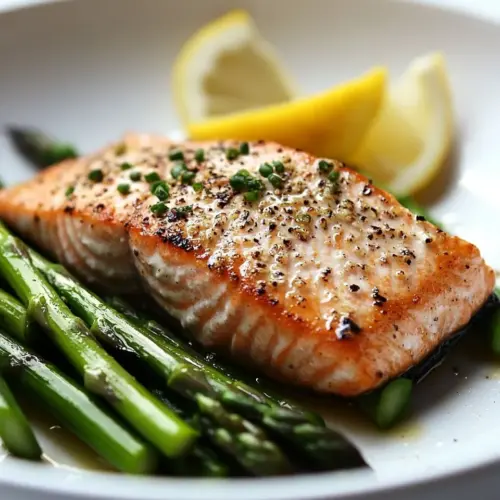
Lemon Garlic Pan Seared Salmon and Asparagus
Lemon Garlic Pan Seared Salmon and Asparagus is a bright, easy weeknight dinner with crispy seared salmon, tender crisp asparagus, and a buttery citrus sauce. The garlic and lemon create a fragrant lift while the sear adds savory depth, making it both elegant and approachable. Perfect when you want a fast, flavorful meal that still feels special, this recipe is worth making again and again.
Equipment
- Non-Stick Skillet
- Spatula
Ingredients
- 1 bunch asparagus trimmed Trimmed and vibrant, provides the primary vegetable component and a crisp, slightly bitter contrast when sautéed or roasted alongside the salmon. Offers fiber and vitamins while absorbing lemon and garlic flavors for balanced bites. Maintains texture when cooked quickly over high heat to complement the fish.
- 1 tablespoon salted butter Salted and creamy, contributes a rich mouthfeel and helps to create a glossy finish on asparagus and pan sauces. Melts into the pan to carry flavors and provide a slight savory depth. Balances acidity from lemon and bright aromatics from garlic.
- 1 tablespoon avocado oil or algae oil Neutral and heat-stable, supplies a high smoke point fat for searing and roasting without burning. Assists in achieving crisp edges on asparagus while preventing sticking. Enhances browning and contributes a subtle savory backbone.
- 2 cloves garlic minced Aromatic and pungent, releases savory, garlicky oils when minced to flavor both asparagus and salmon at the start of cooking. Integrates into butter and oil to distribute flavor evenly across the pan. Provides aromatic complexity and depth.
- zest of 1 lemon Fragrant and bright, delivers citrusy oils that enhance freshness and add a zesty top note to the finished dish. Zest infuses both vegetables and fish with concentrated lemon aroma without adding acidity. Balances richness from butter and oils.
- sea salt and cracked black pepper to taste Seasoning agents that enhance and balance all other flavors, offering necessary seasoning to both vegetables and fish. Salt heightens natural tastes while cracked black pepper adds a warming, piquant note. Use to taste to avoid overpowering delicate salmon.
- 1 -1/2 tablespoons salted butter Creamy and slightly salty, adds additional richness later in cooking to finish the sauce and enrich pan juices. Melts into a silky emulsion with lemon juice and oil to coat asparagus and salmon. Provides a luxurious mouthfeel and flavor continuity.
- 1 tablespoon olive oil Fruity and smooth, supplies a complementary oil for finishing or cooking with moderate heat and contributes healthy monounsaturated fats. Helps create a cohesive pan sauce with butter and lemon juice. Offers subtle flavor that doesn't overpower the salmon.
- 1 pound salmon cut into 2 or 3 fillets Lean and flavorful protein, forms the centerpiece of the dish and pairs well with bright lemon and garlic aromatics. Sear or pan-fry to develop a crisp exterior while keeping the interior moist and tender. Cut into fillets for even cooking and portioning.
- 2 cloves garlic Pungent and fresh, adds additional garlic intensity when used with the salmon for a more pronounced aromatic profile. Can be smashed or thinly sliced to infuse the cooking oil and butter with robust flavor. Enhances savory notes and pairs well with citrus.
- 1/2 tablespoon lemon juiced (about 2) Tangy and acidic, supplies bright lemon juice to balance richness and enliven the sauce and vegetables. Adds acidity to cut through butter and oil, helping to lift the overall flavor profile. Approximately two lemons worth adds freshness without overwhelming.
- sea salt Essential seasoning, provides basic salinity to bring out natural flavors of fish and vegetables when used appropriately. Helpful for finishing and adjusting seasoning after cooking to taste. Use sparingly during cooking and adjust at the end for best results.
Instructions
- Heat olive oil and butter in a non-stick skillet over medium heat. Add the asparagus and cook, stirring occasionally for 3 minutes. Add the garlic and lemon zest and continue cooking another 2 to 5 minutes, depending on your desired level of done-ness (I like my asparagus al dente). Sprinkle with sea salt and cracked black pepper to taste.: The moment the fats shimmer and the butter has melted and begun to foam you should smell a gentle, toasty aroma, which signals the pan is ready to receive the asparagus . This controlled heat allows the outside of the spears to develop slight browning while keeping their interior tender crisp. If the pan smokes heavily, lower the heat immediately, because overheated fats will impart a bitter, acrid flavor to the vegetables.
- Heat a medium-sized non-stick skillet to medium-high and add the butter and olive oil. Sprinkle the salmon fillet with sea salt and place on the hot skillet, skin-side up. Cook for 4 to 6 minutes (depending on thickness of fish), and carefully flip to the other side. Cook 3 minutes, add the garlic and lemon juice and cook another 2 to 3 minutes, until salmon is cooked through but still moist.: As the asparagus hits the pan you will hear brief sizzling, a sign of moisture searing away and surface caramelization beginning. Stir occasionally so the spears brown evenly and the tips do not overcook. For even cooking, arrange them in a single layer and avoid overcrowding, which causes steaming rather than browning and leaves them limp.
- Add the garlic and lemon zest and continue cooking another 2 to 5 minutes, depending on your desired level of done-ness: When you add the minced garlic and the fragrant lemon zest the aroma will lift, filling the kitchen with citrus and roasted garlic notes, and the asparagus will develop tiny browned spots. If you prefer al dente spears aim for the lower end of the time range, while for softer spears cook a bit longer. Watch closely once the garlic is in, because it can go from sweet and aromatic to bitter within seconds if left unattended.
- Sprinkle with sea salt and cracked black pepper to taste: Right after you remove the asparagus from heat, seasoning it will make the flavors pop, and the coarse texture of cracked pepper gives a pleasant contrast. Taste a spear before over salting, because the butter already adds saltiness. A common mistake is salting too early, which draws out moisture and makes the spears less crisp.
- Heat a medium-sized non-stick skillet to medium-high and add the butter and olive oil: Preheating a separate skillet until it radiates even heat ensures the salmon will sear quickly, producing a golden exterior. When the butter begins to foam and the oil glistens you should hear a pronounced sizzle as the fish touches the pan, which indicates a good Maillard reaction is about to occur. If the pan is not hot enough the fish will stick and fail to develop color.
- Sprinkle the salmon fillet with sea salt and place on the hot skillet, skin-side up: When the salmon hits the skillet you will hear an immediate sizzle and see the edges begin to change color, moving from translucent to opaque. Placing the fillet skin-side up first helps the initial sear set the proteins without curling, and it makes flipping easier. Resist the urge to move the fillet too soon, because early turning prevents a proper crust from forming.
- Cook for 4 to 6 minutes, depending on thickness of fish: During this interval the heat will travel through the fillet, and you should see the cooked color creep up the side. The top will lose its raw sheen, and you may notice small beads of oil collecting at the surface. Thicker fillets need closer to six minutes, while thinner pieces will finish faster. Avoid overcooking, which dries the fish and dulls its natural richness.
- Carefully flip to the other side: The flip is a tactile moment, and a confident, steady motion will keep the fillet intact. Once flipped, the previously exposed side will begin to form a light crust and scent the pan with warm, buttery notes. If the fish sticks, it likely needs another 30 seconds on the first side; forcing it will tear the flesh and reduce the plate's visual appeal.
- Cook 3 minutes: In these three minutes the interior will finish setting while the outside deepens in color. You can often tell doneness by pressing gently near the thickest part; it should give slightly and flake where the flesh separates. If it flakes apart excessively, that is a sign of overcooking and a drier mouthfeel will result.
- Add the garlic and lemon juice and cook another 2 to 3 minutes, until salmon is cooked through but still moist: When the additional garlic and bright lemon juice hit the hot pan they will deglaze residual brown bits and create a glossy, aromatic pan sauce that clings to the salmon . You will smell the citrus brighten the buttered aroma and see the sauce reduce slightly. Cook just until the center is opaque and flakes gently, because lingering in the pan will dry the fish. A common error here is adding too much acid too early, which can curdle the fats and produce a broken texture in the sauce.
Notes
- Preheat your skillet properly, because a truly hot pan gives you an immediate sizzle and a beautiful sear on the salmon. Heat the pan until the oil shimmers and the butter foams, then add the fish. If you add fish to a cool pan you will get a pale, steamed surface rather than a caramelized crust.
- Pat the salmon dry before seasoning to promote browning. Moisture on the surface converts to steam and prevents a crisp exterior. Use paper towels to blot gently and season immediately so the salt adheres.
- Trim asparagus uniformly so all spears cook at the same rate. If some stalks are much thicker, you may finish them briefly in the oven while the rest stay in the pan. Thick stalks need a bit more time, otherwise you risk a raw core while tips are perfectly done.
- Add garlic toward the end for sweet, mellow results. Minced garlic will brown and sweeten quickly, so adding it too early can produce sharp, bitter notes. Add garlic near the end of vegetable cooking and a little before finishing the fish to get the best aromatic lift.
- Use both zest and juice for layered citrus flavor. Zest adds essential oils and immediate perfume, while juice contributes bright acidity to cut the richness. Add the zest while cooking the vegetables and reserve the juice for a final splash to balance the pan sauce.
- Monitor doneness visually rather than relying only on time. The cooked color should creep up from the bottom toward the top of the fillet, and the flesh should flake gently. Overcooking is the most common mistake, so remove the fish just before you think it is done and allow carryover heat to finish it.
- Finish with a small knob of butter if you want a glossy finish to your pan sauce. Swirl it in off heat to emulsify the sauce and add silkiness. Don’t add too much or it will overpower the bright citrus notes.
- Season in layers because early and final seasoning let you control the balance. Taste a piece of asparagus and a small flake of salmon before serving so you can correct salt and pepper as needed.
- Use a non stick skillet for ease when cooking fish, as it reduces the risk of tearing during flips. A well preheated non stick pan yields a reliable sear with less sticking than some stainless pans.
- Let the fish rest briefly after cooking to settle the juices. A short rest of one to two minutes will keep the fillet moist while you finish plating. Too long a rest will cool the fish and dull the aroma.