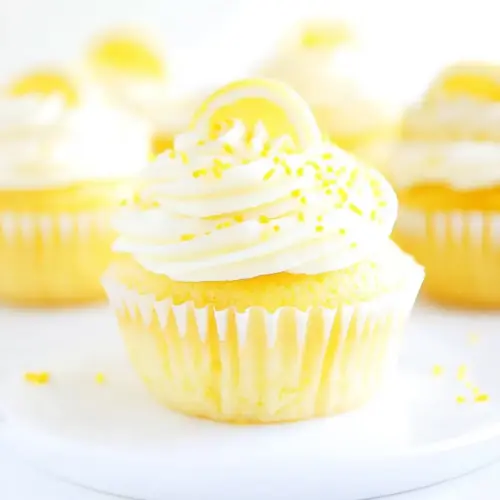
Lemon Curd Cupcakes
Lemon Curd Cupcakes are tender, zesty, and irresistibly bright with a silky lemon curd center and fluffy vanilla buttercream. These spring friendly treats combine citrusy zest, soft crumb, and creamy frosting for a perfect balance of tang and sweetness, ideal for brunches and gatherings. They're easy to make and rewarding to serve, offering a bakery quality bite that guests will keep reaching for.
Equipment
- Stand mixer
- Cupcake Pan
- Paper liners
- wire cooling rack
- Pastry bag
Ingredients
- 1 1/2 cups all-purpose flour Provide structure and bulk to the cupcakes, creating the base crumb; sift or whisk briefly to ensure even distribution and prevent lumps. Combine with leavening and liquids to form a smooth batter that holds moisture and shape. Use measured scoops to maintain consistent cupcake size and even baking.
- 1 1/2 teaspoons baking powder Lighten and leaven the batter by producing small air pockets that help cupcakes rise during baking. Whisk evenly into the dry ingredients to avoid clumping and ensure steady lift. Adjust distribution for consistent texture across all cupcakes.
- 1/2 teaspoons salt Enhance overall flavor balance by providing a subtle savory contrast that highlights sweetness and citrus notes. Dissolve uniformly into the batter to support gluten structure and control taste. Measure precisely to prevent overly salty outcomes.
- 1 cup granulated sugar Sweeten and tenderize the cupcakes while contributing to browning of the crumb and edges during baking. Cream with butter when called for to incorporate air, or dissolve with liquids for even sweetness. Use granulated sugar to achieve a classic cupcake sweetness and texture.
- Zest of 2 large lemons Infuse bright citrus aroma and concentrated lemon flavor to the batter; zest contains essential oils that add intense lemon character without extra acidity. Grate only the yellow portion to avoid bitterness from the pith and distribute evenly for uniform flavor. Adjust amount for desired lemon intensity.
- 1/2 cup unsalted butter at room temperature Add fat for tenderness, richness, and moisture while helping to trap air when creamed with sugar for a lighter texture. Soften to room temperature to ensure smooth creaming and even incorporation into the batter. Use unsalted to control overall salt level in the recipe.
- 2 large eggs Provide structure, moisture, and emulsification to bind ingredients and stabilize the batter while contributing to lift and richness. Beat until just combined to avoid overmixing, which can toughen the cupcakes. Use large eggs for consistent volume and texture.
- 1 teaspoon vanilla extract Contribute a warm, sweet aroma and depth to the batter while subtly enhancing other flavors; vanilla rounds out citrus and butter notes. Add with wet ingredients to distribute evenly. Use pure extract for best flavor clarity.
- 1/2 cup whole milk Adjust batter consistency and provide additional moisture and fat content to create a tender crumb; milk also aids in dissolving dry ingredients for a smooth batter. Use whole milk for richer flavor and slightly denser texture compared with lower-fat options. Warm slightly if needed to prevent butter from solidifying.
- 3 tablespoons fresh lemon juice Deliver bright, fresh acidity and concentrated lemon flavor to the batter, enhancing overall citrus profile without adding texture. Add with other wet ingredients to distribute flavor evenly. Use freshly squeezed juice for the best aromatic and tangy quality.
- 1/4 cup Lemon Curd Provide a concentrated burst of creamy, sweet-tart lemon flavor for the cupcake center or swirl; adds moisture and a distinctive filling contrast. Spoon or pipe into cooled cupcakes or incorporate gently into batter as directed for pockets of flavor. Use store-bought or homemade curd for best taste.
- 1 cup unsalted butter at room temperature Serve as the main fat component for the frosting, offering stability, richness, and a smooth texture when whipped with sugar. Soften to room temperature for easy creaming and to avoid lumps in the buttercream. Use unsalted butter to control sweetness and salt in the frosting.
- 4 cups powdered sugar Sweeten and stabilize the frosting while creating a silky, pipeable consistency; powdered sugar dissolves easily for a smooth finish. Add gradually while whipping to control thickness and prevent a grainy texture. Sift if clumpy to ensure a glossy frosting.
- 2 tablespoons whole milk Adjust frosting consistency to reach desired spreadability and pipeability while adding a touch of moisture for smoother whipping. Use whole milk for added richness and to prevent the frosting from becoming too stiff. Add sparingly until reaching the preferred texture.
- 1 teaspoon vanilla extract Enhance and round out the frosting flavor with sweet, aromatic notes that complement lemon and butter; vanilla adds depth without overpowering. Incorporate with wet ingredients for even distribution. Use pure vanilla for best clarity of flavor.
- Zest of 1 large lemon Provide a subtle fresh citrus aroma and visual brightness to the frosting, intensifying lemon flavor and offering a delicate aromatic accent. Grate only the colored peel to avoid bitterness and sprinkle or fold into frosting as desired. Use zest sparingly to maintain balance.
- Yellow sprinkles if desired Add a festive pop of color and a slight crunch for visual appeal and texture on top of frosted cupcakes, if desired. Sprinkle sparingly for an attractive finish and to avoid overwhelming flavors or texture. Choose yellow sprinkles to complement lemon theme.
Instructions
- Preheat oven to 350 degrees F. Line a cupcake pan (12 cups) with paper liners. Set aside.: Warm dry air and a faint smell of heated metal are the first clues that everything is ready. When the oven reaches 350 degrees F the internal thermometer will steady and the heating element will cycle quietly, signaling the proper environment for the cupcakes to rise evenly. If you skip preheating you risk uneven bake and dense centers, so always allow the oven a full ten to fifteen minutes to stabilize. A common mistake is placing the pan in too early, which can slow rise and yield flat tops.
- In a medium bowl, whisk the flour, baking powder, and salt together. Set aside. In a small bowl, combine the sugar and lemon zest. Rub together with your fingers until fragrant.: You should smell bright citrus oils as you rub the zest into the sugar , a sign the aromatic compounds are releasing. The dry mix should look uniform, with the baking powder evenly distributed so that each cupcake gets the same lift. If the dry mix is lumpy or has pockets of leavening, it causes uneven crumb and can form tunnels. A fine sift or thorough whisk eliminates that problem.
- In a stand mixer, beat the butter and sugar mixture together until light and fluffy and lightened in color. This will take about 8 minutes. Scrape down the sides of the bowl with a rubber spatula.: Listen for a gentle whir and watch the butter transform from pale to a lighter, airy texture. You should see tiny air pockets forming, and the mixture should look more voluminous. Proper creaming creates lift and tenderness in the batter. If you undercream, cupcakes will be dense, and if you overheat the butter the batter can separate, so keep the mixer speed moderate. Scraping down ensures no streaks of unmixed butter remain.
- Add the eggs one at a time, beating after each addition. Add in the vanilla.: As each egg incorporates, the batter should look smooth and glossy, with no broken curdled patches. Adding eggs one at a time helps maintain emulsion and yields a fine crumb. If you add them too quickly or at high speed the mixture can split, producing watery or curdled batter. If that happens, pause and beat in a tablespoon of the dry mix to help rebind the emulsion.
- Add the flour mixture and milk alternately, starting and ending with the flour. Mix until flour is just incorporated. Don't overmix. Mix in the lemon juice.: The batter should develop a velvety texture, not stiff, and you should still see a ribbon like flow when you lift the paddle. Overmixing activates gluten and makes cupcakes chewy, so stop as soon as no streaks of flour remain. When you fold in the lemon juice , the batter may brighten and smell tangier. If the batter looks curdled after adding juice, a brief stir usually brings it back; avoid prolonged mixing.
- Divide batter evenly in prepared cupcake liners, filling 2/3 full. Bake cupcakes for 18-20 minutes or until a toothpick inserted in the center comes out clean. Transfer pan to a wire cooling rack and cool completely.: As they bake you will see the tops set and edges pull slightly away from the liners, with a golden hue forming. A clean toothpick indicates set crumbs, not raw batter. Letting them sit in the warm pan too long can cause soggy bottoms from steam, so transfer to a wire cooling rack to prevent condensation. A frequent error is opening the oven early, which can make cupcakes collapse; wait until the minimum time has passed.
- While the cupcakes are cooling, make the frosting. Using a stand mixer, beat the butter until creamy. With the mixer on low, add 1 cup of powdered sugar at a time until all of the powdered sugar is added. Beat in the milk, vanilla extract, and lemon zest. Beat until smooth.: The butter will turn pillowy and pale as air is incorporated, and adding the powdered sugar gradually prevents a sugar cloud and ensures silky texture. When the frosting looks glossy and spreads without sagging, you have the right consistency. If it seems too stiff add a little milk , and if it seems too loose add more powdered sugar by small amounts. Overbeating can incorporate too much air and make the frosting appear frothy and fragile.
- To fill the cupcakes, using a knife, cut out a small hole in the center of the cupcake, about the size of a dime. Carefully remove the center piece and set aside. Fill each hole with about 1 teaspoon of lemon curd. Push the top of the cupcake piece you removed over the hole to cover up the lemon curd. A little lemon curd might squirt out and that is ok. Just wipe it off. You can leave the lemon curd showing if you wish and just eat the scraps. You will cover the hole with frosting. It works both ways.: When you press the small top piece back in place the texture contrast becomes clear the curd is glossy and dense against the soft crumb. If your lemon curd is too runny it will leak, so chill slightly or use a thicker curd to maintain a pocket. A common slip is cutting too large a hole which weakens the cupcake dome; aim for a modest cavity to preserve structure.
- Place the frosting in a pastry bag and frost. I used the 1 M Wilton tip. Decorate with yellow sprinkles, if desired. Serve!: The act of piping is visual and tactile you should feel gentle resistance as the frosting moves through the tip, producing defined swirls that hold their shape. The finished cupcakes should look clean and inviting with little peaks or ridges. If the frosting is too soft for piping chill briefly to firm up, and if it is too stiff warm slightly and rebeat. Serve at room temperature for the best flavor.
- Note - Frosting can be made up to 2 days ahead of time and stored in the refrigerator. Let it come to room temperature and beat briefly before using. The lemon curd can be made up to two weeks in advance. Store in the refrigerator until ready to use. You can store the finished cupcakes in the refrigerator for 1-2 days. Let the cupcakes come to room temperature before serving. They are best the day they are made.: Planning ahead reduces stress and often improves flavor as elements settle. When you rewhip chilled frosting it regains a smoother, more workable texture. Keep airtight containers to prevent refrigerator odors from migrating, and avoid prolonged cold storage which can dry the cupcake . A typical mistake is frosting cupcakes straight from the fridge which makes the frosting slide off; bring them to room temperature first.
Notes
- Adjust lemon intensity Try increasing or decreasing the amount of lemon zest or lemon juice in the batter and frosting to create a milder or bolder citrus profile based on your preference.
- Control frosting texture If your frosting seems too soft for piping, chill it briefly then beat again. If it is too stiff, add a teaspoon of milk at a time until you reach the desired consistency.
- Make frosting ahead The buttercream can be made two days in advance and stored chilled. Bring to room temperature and rewhip for a fresh finish before piping.
- Thicken runny curd If your lemon curd is loose, simmer it a little longer while stirring, then chill. Thicker curd holds better when filling the cupcakes.
- Evenly portion batter Use an ice cream scoop to fill liners uniformly. This results in consistent bake times and matching cupcake tops for pretty frosting.
- Store smartly Keep finished cupcakes in an airtight container in the refrigerator for one to two days. Bring to room temperature before serving for the best texture.
- Decorate with restraint A few specks of lemon zest plus a light sprinkle of yellow confetti achieves a spring look without masking the fresh citrus aroma.