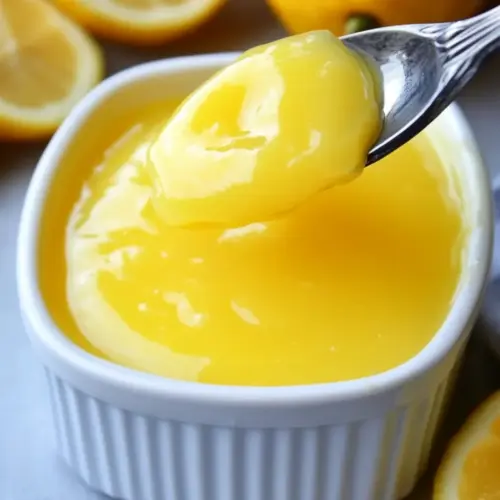
Lemon Curd
Lemon Curd is a bright and creamy citrus spread with a silky texture and concentrated lemon flavor. This easy, tangy curd is perfect for breakfast, desserts, or quick entertaining, offering a balance of tart lemon juice and rich butter that feels indulgent yet simple. Make it for a quick flavor boost and keep a jar on hand for many uses.
Equipment
- Saucepan
- Glass or metal bowl
- Whisk
- Fine-mesh strainer
Ingredients
- 3 eggs Whisk vigorously to provide structure and body; whole eggs coagulate when gently heated and help thicken the curd while adding richness and a silky texture. Use room-temperature eggs to ensure even incorporation and avoid curdling during the cooking process.
- 1 egg yolk Separate and whisk thoroughly to increase final creaminess and stability; the extra yolk adds concentrated fat and emulsifying properties that make the curd smoother and more velvety. Incorporate it gradually into the warm lemon mixture to help bind the custard without scrambling.
- 2 1/4 cups sugar Dissolve completely to balance tartness and provide sweetness; sugar not only sweetens but also helps stabilize the custard and control the coagulation temperature of the eggs. Adjust measurements carefully if altering batch size, as sugar affects both flavor and texture.
- 1/2 cup butter cubed (1 stick) Cut into small cubes and add gradually to melt evenly; butter contributes richness, glossy finish, and a silky mouthfeel when emulsified into the cooked curd off heat. Use unsalted butter to control salinity, and whisk until fully incorporated for a smooth, stable emulsion.
- 1 1/2 teaspoons lemon zest (see note 1) Grate finely to release essential oils and bright aromatics; lemon zest intensifies citrus flavor without adding extra acidity and provides fragrant high notes. Measure by packed zest volume and avoid the bitter white pith when zesting.
- 3 ounces lemon juice Measure precisely and strain if necessary to remove pulp; lemon juice supplies the tart acidity that sets the curd's flavor and reacts with eggs to create the proper balance between tang and sweetness. Use fresh juice for the brightest flavor and adjust cooking time slightly for different acidities.
Instructions
- Bring a saucepan of water to a gentle simmer and set a glass or metal bowl over the top to create a double boiler. In the bowl, whisk together eggs, yolks, sugar, butter, lemon zest, and lemon juice.: You will notice a steady hiss and small bubbles forming at the edges of the pan, not a roaring boil, which is important because gentle heat prevents the eggs from scrambling. The bowl should sit snugly without touching the water to ensure even indirect heat. I pay attention to the steam and adjust the burner so the water maintains a calm simmer, because too vigorous boiling sends droplets into the bowl and can overheat the mixture. A common mistake is rushing this step and using direct heat, which makes temperature control difficult and risks curdling. Take a moment to get the simmer right, and you will have far smoother results.
- Cook over the simmering water, stirring frequently, until very thick, about 20 to 25 minutes (the curd must reach 170 degrees on a thermometer to thicken).: As you whisk, the mixture will start shiny and somewhat separated, then slowly gain cohesion as the sugar dissolves and the lemon juices mingle with the eggs . The scent of citrus will become pronounced, and you should feel the mixture thicken slightly under your whisk. It is important to add the butter as small cubes so it can blend in more easily later; if you add large lumps, it will take longer to melt and incorporate evenly. A frequent error here is under whisking which leaves sugar grains undissolved, so whisk until the sugar seems fully integrated and the aroma is even throughout.
- Strain through a fine-mesh strainer or cheesecloth, then cover and chill completely.: During this stage, you will see the mixture go from glossy and loose to noticeably thicker, coating the back of a spoon. The scent becomes deeper and more balanced, with the sharp lemon top notes tempered by the richness of the butter and eggs . Stirring frequently prevents hot spots and ensures even thickening; I use a flat whisk and make slow figure eight motions to keep everything moving. If you have a thermometer, aim for 170 degrees to be confident the proteins have set without scrambling. People often mistake small curdling as done, but texture at that point will be grainy; keep going until the mixture is smooth and thick.
- Strain through a fine mesh strainer or cheesecloth, then cover and chill completely: As you push the curd through the strainer, you will notice an immediate extra level of silkiness as any coagulated bits are removed. The curd should pour smoothly and have a glossy sheen. Covering it directly on the surface or with plastic wrap prevents a skin from forming during chilling and keeps the texture uniformly smooth. I always taste a tiny bit chilled to check the acid sweet balance, because flavors settle as it cools. A common mistake is skipping the straining, which leaves tiny cooked egg bits and ruins the lusciously smooth mouthfeel you are aiming for.
Notes
- Use fresh lemons: Freshly squeezed lemon juice is irreplaceable here, it brings vibrant aroma and flavor that bottled juice cannot match.
- Zest first: Zest your lemons before cutting, it saves time and ensures you capture the fragrant oils easily.
- Control the heat: Maintain a gentle simmer under your double boiler, because calm steam gives you the best texture without scrambled eggs.
- Cube the butter: Cold, cubed butter added at the end emulsifies into a silky finish, avoid adding it in large pieces.
- Strain for smoothness: Passing the curd through a fine mesh removes any tiny cooked bits, leaving a glassy, spreadable curd.
- Storage advice: Keep the curd covered in the refrigerator for up to one week, and use clean utensils to avoid contamination.