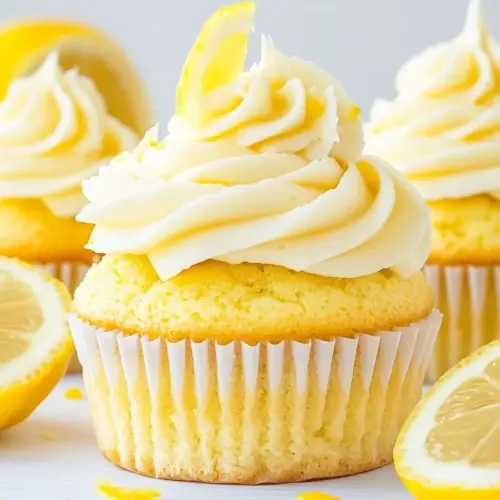
Lemon Cupcakes
Lemon Cupcakes offer bright, fresh citrus flavor and a tender, moist crumb with a silky lemon buttercream. These easy to make treats balance zesty lemon notes with sweet, fluffy frosting, perfect for spring gatherings or casual tea times. They are approachable for home bakers yet impressive for guests, making them a go to dessert to bake again and again.
Equipment
- Stand mixer
- Handheld Mixer
- Muffin Tin
- Mixing Bowls
- Measuring Cups
- Piping Bag
Ingredients
- 1 1/2 cups cake flour Sifted to ensure light texture and even distribution in the batter, promoting tender cupcakes; cake flour's lower protein content yields a finer crumb and softer mouthfeel. Use it to replace all-purpose flour in this recipe for a delicate structure that supports the lemon filling and frosting without becoming dense.
- 2 teaspoons baking powder Measured accurately to help leaven the cupcakes, providing lift and a tender crumb; baking powder reacts during baking to create a light, airy texture. Incorporate evenly with the dry ingredients to ensure consistent rising and avoid uneven holes or dense spots in each cupcake.
- 3/4 cup granulated sugar Creamed with the butter to add sweetness and structure while assisting with aeration when beaten; granulated sugar helps create a fine crumb and caramelization at the edges. Use the specified amount to balance tart lemon flavors without making the cupcakes overly sweet.
- 2 tablespoons lemon zest Finely grated to release bright citrus oils, adding concentrated lemon aroma and flavor throughout the batter; lemon zest enhances overall freshness without extra acidity. Distribute evenly in the batter so each bite has fragrant citrus notes that complement the lemon juice.
- 1/2 cups salted sweet cream butter (softened) Softened and creamed for richness, tenderness, and moisture in the cupcakes; salted sweet cream butter contributes flavor and mouthfeel while the salt helps balance sweetness. Ensure the butter is at room temperature to incorporate air when creamed for optimal volume and texture.
- 1/4 cup vegetable oil Added to increase moisture and create a tender crumb by contributing fat without overpowering the butter; vegetable oil helps keep cupcakes moist and prevents them from becoming dry. Mix gently into the batter to maintain emulsification and softness.
- 1/4 cup half and half (room temperature) Brought to room temperature and used to thin the batter slightly while adding creaminess, helping achieve a smooth consistency; half and half contributes dairy richness. Add as directed to balance moisture and ensure proper texture without making the batter runny.
- 1/4 cup lemon juice (freshly squeezed) Freshly squeezed to provide natural acidity and bright lemon flavor that complements the zest; lemon juice also reacts mildly with baking powder to enhance lift. Use fresh juice for the cleanest citrus taste and avoid bottled juice for optimal freshness.
- 2 large eggs (room temperature) Brought to room temperature and beaten into the batter to provide structure, moisture, and emulsification; eggs help bind ingredients and trap air for leavening. Add eggs one at a time and mix until just combined to maintain a tender, uniform crumb.
- 1 teaspoon vanilla extract Measured and added to provide a subtle background of sweetness and rounded flavor, enhancing the vanilla notes in both batter and frosting; vanilla extract complements lemon without overwhelming it. Stir in at the end of mixing to preserve its aromatic compounds.
- 1 cups salted sweet cream butter (softened) Softened and creamed to create a stable, rich frosting base that is smooth and spreadable; salted sweet cream butter adds flavor, texture, and structure to the lemon buttercream. Beat until light and fluffy before gradually adding powdered sugar to achieve desired consistency.
- 2 tablespoons lemon juice (freshly squeezed) Freshly squeezed and added to the buttercream to impart bright lemon flavor and slight acidity, balancing the sweetness of powdered sugar. Add gradually to control consistency, ensuring the frosting remains smooth and spreadable while delivering citrus brightness.
- 1 tablespoon lemon zest Finely grated to infuse concentrated lemon oil into the buttercream, enhancing aroma and reinforcing the lemon profile of the cupcakes. Fold into the frosting to distribute fragrant citrus notes without altering texture significantly.
- 4 1/2 cups powdered sugar Sifted and gradually incorporated into the buttercream to build body and sweetness, creating a stable, pipeable frosting; powdered sugar dissolves into the butter to form a smooth finish. Add in portions while beating to avoid lumps and achieve desired thickness.
- 2 tablespoons half and half Measured and added sparingly to adjust buttercream consistency and add slight creaminess without thinning flavor; half and half helps achieve a silky, spreadable texture. Use small amounts to reach piping consistency while keeping the frosting stable.
- 9 gummy lemon slice candies (cut in half) Cut in half and used as a decorative garnish to add bright, chewy lemon flavor and playful visual appeal on top of each cupcake. Place carefully on frosted cupcakes to provide a sweet-tart finishing touch and a pop of color.
Instructions
- Preheat the oven to 350°F. Line a standard muffin tin with cupcake liners (I used 2 muffin tins, but only needed to line 1/2 of the second tin). Set aside.: When you warm the oven to 350°F , you will notice a clean, dry heat that soon fills the kitchen, signaling readiness. The sound of the oven settling is subtle, and the scent is neutral, so feel confident putting the tins in once the temperature stabilizes. Lining the muffin tin prevents sticking and ensures tidy edges, and using liners also makes removal simple, which is especially important when the tops are tender. If you skip preheating, the batter may spread rather than rise, producing denser cupcakes. A common mistake is not confirming the actual oven temperature, since many ovens run hot or cold. To avoid uneven baking, place the oven rack in the middle and preheat for at least 10 to 15 minutes before baking.
- Add the cake flour and baking powder to a small mixing bowl. Whisk together and set aside.: As you whisk cake flour and baking powder , you should see a pale, powdery mixture with tiny air pockets forming, which helps lightness later. Whisking distributes the leavening evenly, preventing pockets of metallic tasting baking powder or uneven rise. The motion creates a soft breeze of flour dust, so work gently to avoid clouding the counters. If you skip this step or mix unevenly, you risk having some cupcakes rise more than others. One pitfall is packing the flour into the measuring cup, so aerate or spoon it in to keep measurements accurate.
- If you have a food processor or a blender, add the granulated sugar and lemon zest, and blend on low for 30 seconds to 1 minute. This will help release the oils in the lemon zest and really kick that fresh lemon flavor into high gear. Set it aside.: While pulsing the granulated sugar with lemon zest , a bright citrus aroma will lift from the bowl, strong and perfumy, which is the essential oils releasing. The resulting sugar will have a slightly flecked appearance and a fragrant scent that perfumes the whole batter. This step deepens the fragrance beyond what plain sugar provides. Avoid over processing into a paste, as that can alter textural behavior with other ingredients. A common error is skipping this and losing some aromatic intensity, so if you do not have a processor, rub the zest into the sugar with your fingertips to coax out the oils.
- Using a stand mixer or a medium-sized mixing bowl and a handheld mixer on medium speed, beat together the butter and vegetable oil for 30 seconds.: When you begin to beat the softened butter with vegetable oil , you will see the fats dull slightly and become glossy as they incorporate. The mixture should look smooth and slightly aerated after half a minute, with no visible lumps of butter. This initial blending helps create an emulsion so the batter holds air and moisture evenly, which contributes to a tender crumb. If the butter is too cold, it will not blend and the texture will be uneven. Do not overbeat, as too much air can collapse in the oven and make the cupcakes sink.
- Add the granulated sugar and lemon zest mixture. Increase the mixer speed to medium-high and beat for an additional 1 to 1 1/2 minutes until well incorporated.: As you add the fragrant sugar, the bowl will release a stronger lemon aroma, and the texture becomes lighter and paler. You will hear a quicker whipping sound, and the mixture should look fluffy and cohesive, which traps air that becomes lift during baking. The aroma should be lively but not sharp. Overbeating beyond the suggested time can make the batter too aerated, risking collapse when hot, so keep a close eye. An error to avoid is adding cold eggs or liquids immediately, which can deflate this aeration.
- Add in the half and half and lemon juice. Continue mixing for 1 minute.: When the half and half and lemon juice go in, the batter will loosen slightly and give off an invigorating citrus scent. This addition balances fat and acid, contributing to tenderization and bright flavor. Mixing for about a minute helps the liquids fully integrate, producing a smooth, glossy batter. If the dairy is too cold it may cause slight separation, so ensure room temperature. A frequent mistake is adding too much liquid at once, making the batter runny, so always measure carefully.
- Lower the mixer speed to low. Add in the eggs, one at a time, mixing well after each egg until no yellow streaks are visible.: Adding the eggs slowly on low speed helps maintain the emulsion and prevents curdling. After each egg, watch the batter become silkier and more cohesive, with a slight sheen. This slow incorporation builds structure, ensuring the cupcakes have body without heaviness. If you add eggs too quickly, the batter can separate and appear curdled, which is a sign to pause and gently bring it back together on low speed. Always use room temperature eggs to aid smooth blending.
- Add the vanilla and mix until no vanilla streaks remain.: When you stir in the vanilla , its warmth will fold into the citrus profile, rounding edges without stealing focus. The batter will darken slightly in hue and smell pleasantly complex. Mixing until streak free ensures even distribution so each cupcake tastes consistent. Over mixing at this stage risks gluten development, so use just enough motion to combine. A common misstep is adding too much vanilla, which can cloud the bright lemon notes.
- Add the flour mixture. Mix just until combined.: Incorporating the flour blend should be done gently so the batter remains tender. As the dry ingredients disappear, the batter will thicken and move in slow ribbons from the paddle, indicating the right texture. Mixing until just combined prevents overworking gluten, which would make the cupcakes dense. If you beat vigorously, you will notice a tougher texture after baking, so a few strokes is all you need. Scrape the bowl to ensure no pockets of dry flour remain.
- Add 2 1/2 tablespoons to each muffin cup; this should fill the cups to 3/4 full. Bake for 20 to 22 minutes until the tops are light golden or a toothpick inserted comes away clean. Allow the cupcakes to rest in the muffin pans for about 5 minutes. Remove the cupcakes from the pans and transfer them to a cooling rack to finish cooling completely. While the cupcakes are cooling, prepare the frosting.: As you portion batter into liners, the cups should look evenly filled and glossy. In the oven, the batter will expand and develop a faint golden hue, and you may hear a delicate, quiet settling. The toothpick test is the most reliable indicator of doneness; a clean toothpick means the crumb is set. Letting the cupcakes rest for about five minutes helps them firm up so they come out cleanly. A common issue is opening the oven door too often, which causes temperature fluctuations and uneven tops, so resist peeking frequently.
- Use a stand mixer or a large mixing bowl and a handheld mixer on medium-high to beat the butter for 1 minute.: Beating the second portion of butter for the frosting on medium-high introduces air and creates a pale, creamy base. You will notice the butter becomes visibly lighter and more voluminous, which is the texture you want for a silky frosting. This aeration helps the powdered sugar fold in smoothly. If the butter is too cold it will not whip properly, and if it is too warm the frosting will be loose and may not hold shape.
- Add the lemon juice and lemon zest, and continue to beat for another 1 minute until well incorporated.: Adding lemon juice and lemon zest to the whipped butter releases a fresh, zesty aroma that brightens the frosting. The mixture will smell lively and look glossy, and the acidity helps balance the sweetness of the powdered sugar. Beat briefly to combine and avoid over liquefying the butter. Too much juice at once will thin the frosting, so add slowly.
- Add the powdered sugar 1 cup at a time, mixing well after each addition until all of the powdered sugar is added. Continue mixing for an additional 1 1/2 to 2 minutes until the frosting is light and fluffy. If the frosting is too stiff, add the half and half, 1 tablespoon at a time.: As you add powdered sugar , the frosting will thicken and become snow white and airy. Mixing in stages keeps the texture smooth and prevents sugar clouds. After all sugar is incorporated, beating longer gives a whipped, billowy consistency that pipes beautifully. If it seems too firm, a little half and half loosens it gently; add gradually to reach the desired pipeability. Over thinned frosting will not hold peaks, so add liquids cautiously.
- Add the frosting to a piping bag fitted with a 1 M decorator’s tip or a quart-size ziplock bag with a corner snipped off.: Filling a piping bag is tactile and satisfying; the frosting should glide easily and feel smooth as you press it into the bag. Using a 1 M tip gives a classic swirl that looks bakery made, while a ziplock corner works in a pinch. Avoid overfilling the bag, which makes it hard to handle and can cause uneven pressure when piping. Keep a small bowl of frosting to do touch ups if you run out while decorating many cupcakes.
- Hold the tip of the bag about 1/2 inch above the outer edge of the cupcake. Use even and steady pressure as you squeeze the frosting in a circle from the outer edge around the surface of the cupcake to the center. Repeat for the remaining cupcakes. Garnish with the halved gummy lemon slice candies. Keep refrigerated until ready to serve.: When piping, you will feel the frosting exit smoothly and see a defined, glossy swirl form. The crisp, sweet scent combined with the lemon top note is inviting. Even, steady pressure creates uniform swirls, and the final garnish of halved gummy candies adds a playful visual and chewy contrast. Refrigerating helps the frosting set and keeps the cupcakes fresh, but bring them to near room temperature before eating for the best mouthfeel. A common mistake is piping too close to the center which creates a dense mound rather than an elegant swirl.
Notes
- Prep your pans and liners: Use good quality cupcake liners and place them evenly on the muffin tin so heat circulates uniformly, preventing uneven domes.
- Blitz sugar with zest: Pulse the granulated sugar with lemon zest to release fragrant oils for an amplified citrus aroma throughout the batter.
- Combine fats carefully: Cream butter and vegetable oil briefly to form a stable base that yields moist yet structured cupcakes that hold frosting well.
- Use room temperature dairy and eggs: This helps the batter emulsify and prevents separation, resulting in a uniform crumb and consistent rise.
- Pipe with confidence: Use a 1 M tip for classic swirls and practice on a plate to get even pressure before decorating the whole batch.
- Adjust frosting consistency: If the frosting is too thick, add half and half one teaspoon at a time; if too soft, chill briefly to firm up before piping.