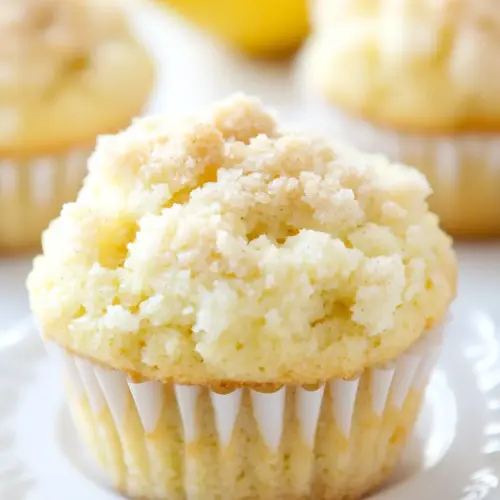
Lemon Crumb Muffins
Lemon Crumb Muffins are tender, citrus forward muffins with a crunchy buttery crumb and a glossy lemon glaze. Bright grated lemon peel and tangy dairy create a moist, pillowy interior while the crumb topping adds contrast, making them perfect for breakfast, brunch, or a sweet afternoon treat. Make a batch for an easy crowd pleasing bake that feels special and approachable.
Equipment
- Mixing Bowls
- Whisk
- Spatula
- Muffin Pan
- Measuring Cups
Ingredients
- 3 cups all-purpose flour Provide structure and bulk to the muffins by forming the flour matrix that traps gases during baking; sift or whisk to ensure even distribution and gentle texture. Combine with wet ingredients to create the batter and prevent dense spots by avoiding overmixing once added.
- 2 cups sugar Add sweetness and contribute to tender crumb by dissolving into the batter; creaming with fats or stirring with wet ingredients helps distribute evenly. Control caramelization and moisture retention while balancing the tartness from lemon components.
- 1/4 tsp baking soda Lighten the texture by reacting with acidic ingredients to produce carbon dioxide, aiding rise during baking. Measure carefully because small amounts significantly affect crumb openness and overall volume.
- 1/4 tsp salt Enhance flavor balance and strengthen gluten structure slightly while controlling yeast or leavening reactions; salt also suppresses any metallic or bitter notes. Use precise measurement to avoid overpowering the delicate lemon profile in muffins.
- 4 eggs Bind ingredients, add richness, and contribute to both structure and moisture through proteins and fats; beat lightly if instructed to incorporate air. Temper eggs if mixing with hot components to avoid curdling and ensure even distribution.
- 1 cup sour cream Add tanginess and moisture while contributing to tenderness due to its acidity and fat content; helps activate baking soda for leavening when combined. Stir into wet mixture until smooth to maintain consistent batter texture.
- 1 cup buttermelted Provide moisture and tang while supplying liquid fat components if melted butter was intended; integrate with sugars and eggs to form a cohesive wet mixture. Warm or melted state aids in combining with dry ingredients and helps create tender crumb.
- 1 -2 tbsp grated lemon peel Impart bright citrus aroma and concentrated lemon flavor through finely grated peel, delivering essential oils that enhance the muffins' fragrance. Use only the colored zest portion to avoid bitterness and distribute evenly for consistent lemon notes throughout.
- 1 tbsp lemon juice Contribute fresh acidity and an immediate lemon flavor punch, balancing sweetness and activating baking soda for lift. Add to wet ingredients and mix briefly to avoid overworking the batter while ensuring even tartness.
- 1/2 cup all-purpose flour Create the crumb structure for the streusel and absorb moisture while providing a contrasting texture to the muffin top. Combine with sugar and butter to form coarse crumbs that brown nicely during baking.
- 1/2 cup sugar Sweeten the crumb topping and provide slight moisture control to form a tender streusel that caramelizes; helps balance the tart muffins. Mix with flour and butter until evenly distributed for consistent texture across muffins.
- 3 tbsp butter cubed Bind streusel components and add rich buttery flavor that melts into crumbs during baking, producing crisp, golden topping. Cut into dry ingredients until pea-sized pieces form to ensure a flaky crumb rather than a paste.
- 1/3 cup lemon juice Enhance glaze brightness and provide a pronounced lemon tang when whisked into powdered sugar or drizzled over baked muffins. Adjust amount to taste to balance sweetness and acidity for a glossy finish.
- 1/2 -3/4 cup powdered sugar Sweeten and thicken into a smooth glaze that coats muffin tops, providing a sweet finish and slight textural contrast; dissolves easily when sifted and mixed with liquid. Add gradually to lemon juice until desired consistency is reached for drizzling or spreading.
Instructions
- Preheat oven to 350.: You will smell the warm, dry air begin to fill the oven as it approaches temperature, and preheating ensures even baking from the moment the muffins go in. This step matters because a cold oven leads to muffins that spread rather than rise, producing a dense center. A common mistake is skipping preheat or placing the tray in too early, which causes uneven tops and longer bake times. If your oven runs hot or cool, use an oven thermometer to verify it reaches a steady 350 degrees before you start timing.
- In a large bowl, mix flour, sugar, baking soda and salt. Set aside.: As you whisk these dry elements together you will notice the mixture takes on a uniform color and texture, which helps distribute the leavening and salt evenly for consistent rise and flavor. This is important because pockets of baking soda cause bitter spots or irregular texture. Avoid scooping directly from the bag which can compact the flour; spoon and level for accurate measures. If you see lumps, break them up now so the batter mixes smoothly later.
- In another bowl, mix eggs, sour cream, butter, lemon peel and juice. Add wet ingredients to dry ingredients and stir until moistened.: When you combine these wet ingredients the mixture will look glossy and fragrant from the lemon peel , with a silky texture from the sour cream and butter . Stir just until the dry is moistened because overmixing develops gluten and yields tough muffins. You want a few streaks to disappear rather than a completely uniform batter. A frequent error is mixing too vigorously; fold gently with a spatula and stop once the flour is barely incorporated.
- Fill paper-lined muffin pan to 3/4 full.: Filling to this level gives the muffins room to rise and dome without spilling over. You will see the batter glossy at the top and hear a slight plop as it hits the paper cup, settling into place. Overfilling causes spillage and uneven bakes, while underfilling results in flat tops that lack presence. Use an ice cream scoop for consistency if you want uniform sizes across the tray.
- In another bowl, make topping by combining flour and sugar. Cut in butter until it’s crumbly. Sprinkle over batter and bake for 20-25 minutes.: The topping should feel like coarse sand when you rub it between your fingers, with pea sized bits of butter visible; this creates flaky pockets as it bakes. As the muffins bake you'll hear faint crackles and smell a richer, buttery aroma as the crumbs brown. This technique matters because the butter melts and creates tiny steam pockets that turn crisp. A common mistake is using warm butter, which turns the mixture into a paste rather than crumbs, so chill the butter first and cut it in quickly.
- Cool for several minutes before removing from pan.: Allowing the muffins to rest lets the internal steam redistribute, so the centers finish setting without falling apart when you remove them. You should notice the tops firm up slightly and the edges pull away from the paper. Diving in too early can cause them to break apart, while leaving them in the pan too long retains moisture on the bottom. Aim for a gentle touch when lifting them out.
- While cooling, make glaze by whisking lemon juice and powdered sugar together. Drizzle over muffins and ENJOY!: The glaze should be smooth and glossy, sliding off the whisk in slow ribbons and giving off a sharp citrus scent as you stir. Drizzle while the muffins are warm so the glaze seeps into the crumb and creates a shiny finish on the topping. If the glaze is too thin it will pool, and if too thick it will sit like icing, so adjust the powdered sugar amount for the consistency you prefer. A frequent slip is using pre powdered sugar that has lumps, so sift if needed for the silkiest glaze.
Notes
- Measure flour correctly by spooning it into your measuring cup and leveling with a knife. This prevents packing which can lead to dense muffins.
- Keep butter cold for the topping so that when it bakes it creates flaky, crunchy crumbs rather than blending into the flour.
- Do not overmix the batter once you add wet to dry; gentle folding keeps the crumb tender and avoids toughness.
- Use fresh lemon zest for brightness, grating only the yellow skin and avoiding the bitter pith beneath.
- Fill pans consistently using an ice cream scoop or measuring cup so all muffins bake at the same rate and finish together.
- Check oven temperature with an oven thermometer if your oven has hot spots, and rotate the pan halfway through if needed for even browning.