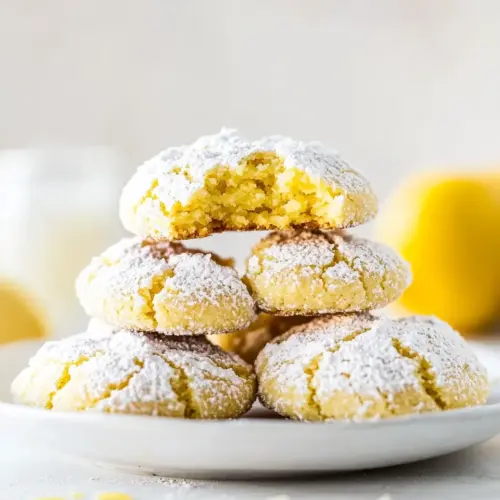
Lemon Crinkle Cookies
Lemon Crinkle Cookies are bright, tender, and coated in snowy powdered sugar for a show stopping crackle. These easy cookies combine fresh lemon zest and juice with a soft, cake like interior for a light, nostalgic treat perfect for gatherings or an afternoon pick me up. Make a batch for a crowd or to keep on hand for quick, citrusy snacks.
Equipment
- Stand mixer or hand mixer
- Mixing Bowls
- Cookie Scoop
- Baking Sheets
- Parchment Paper
- Cooling rack
Ingredients
- 1 cup granulated sugar Sweetens the dough and contributes to structure by dissolving into the butter and egg, creating tender cookies; also helps caramelize edges during baking for a light golden color.
- 2 tablespoons fresh lemon zest Adds bright citrus oil and aroma to infuse the dough with fresh lemon flavor, intensifying the overall lemon profile; finely grate to avoid bitter pith and distribute evenly through the batter.
- 1/2 cup unsalted butter, room temperature Provides richness and moisture while aiding in creaming with sugar to incorporate air, yielding a tender, slightly flaky crumb; ensure at room temperature for smooth creaming and even texture.
- 1 large egg Binds ingredients together while adding moisture and lift through protein structure, helping cookies set with a slightly cakey tenderness; beat just until combined to avoid overworking the gluten.
- 1 egg yolk Adds extra richness and fat to the batter, improving mouthfeel and tenderness without adding significant liquid; incorporate gently to maintain a soft, cohesive dough.
- 2 tablespoons fresh lemon juice Imparts bright, tangy acidity and concentrated lemon flavor to enhance freshness and balance sweetness; add to dough for natural acidity that can react subtly with leaveners.
- 1 teaspoon lemon extract Provides concentrated lemon aroma and flavor depth when natural juice is diluted during mixing, boosting citrus intensity without additional acidity; use sparingly to avoid artificial taste.
- 1/2 teaspoon vanilla extract Adds subtle sweet vanilla aroma that rounds and complements the lemon notes, enhancing overall flavor complexity; a small amount balances and deepens the cookie's profile.
- 2 1/2 cups all-purpose flour Forms the bulk of the cookie structure by supplying starch and gluten-forming proteins, determining texture and chewiness; sift or whisk before adding to ensure even incorporation and avoid lumps.
- 1 teaspoon cornstarch Lightens the texture by slightly reducing gluten formation and tenderizing the crumb, contributing to a soft mouthfeel; mix with flour to distribute evenly for consistent cookies.
- 1 teaspoon baking soda Acts as a leavening agent that reacts with acids to produce carbon dioxide, creating lift and a delicate crumb; measure accurately to maintain proper rise and avoid metallic taste.
- 1/4 teaspoon baking powder Provides a small additional lift and slight lightening of texture, working with baking soda to ensure proper rise; use sparingly as excess can dry out the cookie.
- 1/2 teaspoon salt Enhances overall flavor by balancing sweetness and bringing out citrus notes while also strengthening gluten slightly; keep measurements precise to avoid overly salty cookies.
- 2 tablespoons granulated sugar Used for rolling the cookie dough before baking to create a sweet, slightly crunchy exterior and visible crinkle pattern; coat evenly to ensure uniform appearance and light caramelization.
- 1 cup powdered sugar Coats the baked cookies to create a powdered, snowy finish and slight sweetness contrast, offering a soft outer texture that highlights the crinkle effect; dust or roll while warm for best adhesion.
Instructions
- Add 1 cup granulated sugar and 2 tablespoons fresh lemon zest to a large bowl and use a fork to combine them until the sugar is moist and fragrant. Add 1/2 cup unsalted butter, and use a hand mixer or a stand mixer fitted with the paddle attachment to beat the sugar and butter together on medium-high speed for 3-4 minutes, until light and fluffy.: The first thing you will notice is the aroma, as the citrus oils perfume the sugar making it glossy and damp to the touch, which means the zest has released its essential oils. This step primes the sugar so that when it meets the unsalted butter the whole mixture will smell bright and integrated, not like separate lemon and butter notes. Avoid skipping the fork step, because if the zest stays in clumps the flavor will be uneven; also do not use pre zested or dried zest, the scent must be fresh.
- Scrape down the sides and bottom of the bowl before adding 1 large egg, 1 egg yolk, 1 teaspoon lemon extract, 2 tablespoons fresh lemon juice, and 1/2 teaspoon vanilla extract, and mix until just combined.: At this stage listen for a change in the mixer sound, it will go from heavy to lighter and airy, and the mixture will look pale and almost ribbon like when you lift the beater. This aeration traps tiny air bubbles that cause a tender lift while baking, contributing to a soft interior. If the butter is too warm the mixture will be greasy rather than fluffy, and if too cold it will not aerate, so aim for room temperature butter. One mistake people make is rushing this step; under creaming yields dense cookies.
- Add 2 1/2 cups all-purpose flour, 1 teaspoon cornstarch, 1 teaspoon baking soda, 1/2 teaspoon salt and 1/4 teaspoon baking powder to a medium bowl and whisk to combine. Add to the butter and sugar mixture and beat until just combined. Cover the bowl and chill for at least 2 hours.: After scraping, you should see a smooth base for the new liquids, and when you add the eggs and extracts the batter will briefly look glossy before settling into a creamy consistency. The wet ingredients bring moisture and flavor, and you should stop mixing as soon as they are incorporated to avoid overworking the batter which can develop gluten. Smell for a gentle lemon scent mingled with vanilla as a sign of balance. Over mixing here is a common error that leads to tougher cookies, so combine until the streaks disappear.
- After the dough is done chilling, preheat the oven to 350 degrees Fahrenheit and line 2-3 baking sheets with parchment paper. Combine 2 tablespoons granulated sugar with 1 cup powdered sugar in a shallow dish, like a pie dish or a wide bowl.: Whisking these dry ingredients ensures even distribution so that leavening and salt are spread uniformly, preventing pockets of baking soda that could taste metallic. The mixture should look uniform and powdery, and when you fold it in the dough will thicken noticeably. This step controls texture, because the cornstarch helps create a delicate crumb while the leaveners give lift. A frequent mistake is adding flour directly to the wet bowl without whisking first, which can cause uneven texture.
- Use a medium cookie scoop to scoop about 1 1/2 tablespoon of dough for each cookie, rolling each in your hands to form a uniform ball. Roll the dough in the powdered sugar until fully coated.: Once the dry mix meets the wet, you will see the batter transform from glossy cream to a soft dough that holds shape. Work gently and stop mixing when no visible streaks of flour remain, because excessive mixing develops gluten and yields dense cookies. The dough should be soft but not sticky, and you will feel the difference when you scoop it. If the dough seems too loose refrigerate it; too firm dough may mean you over measured flour.
- Place the balls on the prepared cookie sheets leaving 2 inches between each of them. Bake for 11-13 minutes, until the edges of the cookies have set and the centers just begin to lose their shine.: As the dough chills it firms and the flavors meld, the scent of lemon becomes more pronounced, and chilling helps the cookies spread less in the oven so they keep a rounded form. The butter solidifies making the dough easier to handle and improving texture. A common error is skipping this step; warm dough will flatten excessively and lose the crackled look. Plan ahead, because this resting is essential for structure and timing.
- Let the cookies cool on the baking sheet for at least 2 minutes before transferring to a cooling rack to finish cooling.: You will get the most consistent bake when the oven is fully preheated, and parchment helps prevent sticking and allows even browning. The oven should feel hot when you open it briefly to slide in the pans, and the air may smell faintly warm and dry. Avoid putting cold pans into a warm oven as that can alter bake time, and do not skip parchment unless you grease the sheet which changes crisping.
- Combine 2 tablespoons granulated sugar with 1 cup powdered sugar in a shallow dish, like a pie dish or a wide bowl: The two sugars together give a textured coating that helps create the crackled top, and the powdered sugar forms the snowy finish we expect. Swirl them gently with a fork until uniform, and you will notice the powdered sugar clinging to the granulated sugar giving a fine grain. If the powdered sugar is lumpy sift it first, because lumps will not coat evenly and can create dark spots on the finished cookie.
- Use a medium cookie scoop to scoop about 1 1/2 tablespoon of dough for each cookie, rolling each in your hands to form a uniform ball: Rolling helps create surface tension that encourages an even rise, and a consistent scoop ensures uniform baking so all cookies finish together. The dough should feel cool and slightly tacky; the ball will smooth as you roll. If the dough is sticky chill it briefly, and if the balls are uneven sized they will bake at different rates which causes some to overbake while others remain underdone.
- Roll the dough in the powdered sugar until fully coated: The coating must be generous, because as the cookie spreads the powdered sugar cracks and highlights the surface. You will notice the sugar forming a matte shell that contrasts with the dough beneath. Press gently so the sugar adheres without compressing the dough, and avoid inhaling the powdered sugar while coating as it can dust the air.
- Place the balls on the prepared cookie sheets leaving 2 inches between each of them: Space is crucial, cookies spread as they bake and need room to expand, so expect them to nearly double in diameter. The sheets should not be overcrowded to prevent steam building between cookies which yields soggier edges. A common oversight is placing too many on one sheet, which results in misshapen cookies.
- Bake for 11 to 13 minutes, until the edges of the cookies have set and the centers just begin to lose their shine: Watch for the visual cues, the edges will look slightly firm while the centers still appear soft and glossy, and the top will be crackled. You should hear a faint quiet as the cookies set rather than a loud sizzle. Overbaking removes the tender center, so pull them as soon as the shine dulls; underbaking will leave them too raw in the middle.
- Let the cookies cool on the baking sheet for at least 2 minutes before transferring to a cooling rack to finish cooling: During this brief rest the cookies finish setting and firm up enough to move without breaking, and you will notice the bottom becoming set but still soft. Transferring too quickly can cause them to collapse, and leaving them on the sheet too long may make bottoms soggy from residual heat. Use a thin spatula to lift gently when ready.
Notes
- Prep your citrus first, zest and juice the lemons before you start so the oils do not escape and you can press the zest into the sugar right away for maximum aroma.
- Room temperature butter matters, it creams better and traps air that gives the cookie a light texture, so avoid microwaving it to soften.
- Don’t skip chilling, refrigeration firms the dough so cookies spread less and develop the ideal interior texture, plan ahead for at least two hours.
- Even scoops equal even bakes, use a cookie scoop for uniform size and check spacing on the sheet so cookies bake at the same rate.
- Coat generously, the powdered sugar layer creates the signature crackle, so roll thoroughly to ensure an even, snowy finish.
- Use visual oven cues, remove cookies when edges set and centers lose shine to keep them tender, rather than relying solely on time.