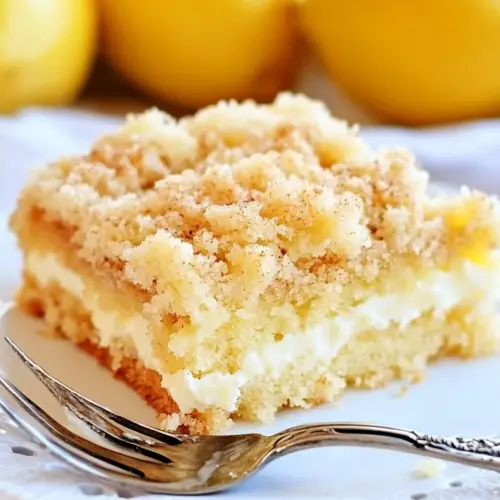
Lemon Cream Cheese Crumb Cake
Lemon Cream Cheese Crumb Cake is a creamy, tangy, and slightly crunchy sheet cake that balances bright lemon with a silky cream cheese ribbon and buttery crumbs, perfect for brunch or a casual gathering. This easy to make dessert is moist, textured, and approachable for home bakers, promising slices that are satisfying and sharable, making it a reliable choice to impress friends and family.
Equipment
- Mixing Bowl
- Whisk
- Offset Spatula
- 13x9 baking pan
- Fork
- Oven
Ingredients
- 1.5 cup all-purpose flour Provide structure and bulk to the cake batter by forming the gluten network that traps air and supports crumb development during baking. Promote even texture and combine with leaveners to create a tender yet stable crumb for slicing. Balance moisture by interacting with wet ingredients for proper dough consistency.
- 1/2 cup granulated sugar Add sweetness and aid in browning while contributing to moistness and tenderness by interfering with gluten formation. Help dissolve other dry ingredients and enhance flavor perception throughout the cake layers. Encourage caramelization at the surface for appealing color and slight crispness in crumb topping areas.
- 2 teaspoons baking powder Leaven the cake by producing carbon dioxide when activated, helping the batter rise and become light and airy. Work quickly with other leaveners and acidic components to give reliable lift and fine crumb structure. Also assist in improving texture and volume without imparting flavor.
- 1/4 teaspoon baking soda React with acid to create additional leavening gas and fine crumb when used with acidic liquids, ensuring the cake rises properly and remains tender. Support browning and help balance pH for optimal flavor and texture development. Provide a quick, short-acting lift often used alongside baking powder.
- 1/4 teaspoons salt Enhance overall flavor by balancing sweetness and intensifying other flavors while slightly strengthening gluten formation when present in small amounts. Help control yeast or leavening activity subtly and improve the perception of freshness. Aid in stabilizing batter and preventing off-flavors during baking.
- 3/4 cup buttermilk or sour milk Contribute acidity and moisture while tenderizing the crumb through protein denaturation; provide a slight tang that complements lemon and cream cheese flavors. React with baking soda to produce additional lift and create a finer crumb. Add richness without adding fat when using sour milk or mimic buttermilk’s properties.
- 1 teaspoon vanilla extract Impart aromatic sweetness and a rounded flavor profile that enhances the other ingredients while contributing negligible moisture. Complement citrus and dairy notes to create a cohesive flavor experience throughout the cake. Stabilize aroma compounds during baking for lasting fragrance.
- 1/3 cup vegetable oil Provide fat that tenderizes the crumb and contributes to moistness while aiding in even baking and richness. Help carry flavors and promote a softer texture without the heaviness of butter, ensuring a lighter crumb. Also assist in creating a delicate mouthfeel and preventing dryness.
- 2 large eggs Bind ingredients and add structure, richness, and moisture through coagulated proteins that set during baking to create a stable crumb. Contribute leavening support and emulsification to ensure even distribution of fats and liquids. Enhance color and flavor depth when incorporated into the batter.
- 2 tablespoons fresh lemon zest Deliver intense citrus aroma and concentrated lemon oil that brightens the overall flavor profile and complements the cream cheese layer. Provide textured flecks and aromatic lift, ensuring pronounced lemon notes throughout the cake. Pair with lemon juice to balance sweetness and acidity.
- 2 tablespoons fresh lemon juice Introduce fresh acidity and aromatic brightness that balances richness from cream cheese and butter, enhancing overall flavor clarity. React with baking soda for lift and add a clean, tart note that lifts the cake’s sweetness. Penetrate the crumb to distribute citrus flavor evenly.
- 8 oz . brick of cream cheese softened to room temperature Create a creamy, tangy filling with rich texture and fat that adds moisture and decadence to the cake’s middle layer. Provide a contrasting smoothness against the crumb topping and cake layers while contributing savory-sweet balance. Soften to room temperature to ensure smooth blending and even baking.
- 1 large egg Enrich and stabilize the cream cheese filling by adding protein and emulsion capacity for a firmer, silkier texture when baked. Contribute color, structure, and additional moisture while helping the filling set. Integrate with sugar and vanilla to round out the filling’s sweetness and aroma.
- 1/3 cup granulated sugar Sweeten and slightly loosen the cream cheese filling to create a smooth, spreadable consistency while balancing the cheese’s tang. Assist in preventing curdling and help achieve a glossy, even filling that slices cleanly after baking. Work with the egg to set the filling during baking.
- 1/2 teaspoon vanilla extract Provide warm, sweet aroma and depth to the filling while enhancing perceived sweetness and complexity. Bind flavors together and round the tang of cream cheese for a more harmonious profile. Add minimal moisture but significant flavor lift.
- 1 tablespoon lemon zest Contribute citrus perfume with concentrated flavor to intensify lemon presence within the filling and overall cake. Supply essential oils that boost aroma without adding liquid, enhancing sensory impact with small quantity. Complement the lemon juice for layered citrus notes.
- 1/4 cup unsalted butter melted, cooled to room temperature Introduce richness and create a smooth, cohesive filling by adding fat that increases tenderness and mouthfeel. Help incorporate air when creamed and assist in flavor dispersion while cooling to prevent separation. Provide a silky finish and contribute to golden edges when baked.
- 1/3 cup granulated sugar Sweeten and help create a crumbly topping texture by combining with flour and butter to form streusel when mixed to coarse crumbs. Promote browning and add contrast to the soft cake layers with sweet crunch. Balance salt and lemon notes for a satisfying topping.
- 1/4 teaspoons salt Enhance overall flavor depth and balance sweetness in the topping by subtly boosting other flavors and controlling yeast or leavening interactions. Help round the streusel’s taste and provide a slight savoury counterpoint that makes the sweet elements pop. Aid in maintaining shelf stability of the crumb.
- 2/3 cup all-purpose flour Form the crumb topping’s structure by providing bulk and creating tender, sandy crumbs when combined with butter and sugar. Bind with fats to produce crisp edges and a pleasant mouthfeel while offering a contrasting texture to the cake’s soft interior. Assist in absorbing some moisture to keep topping distinct.
Instructions
- Preheat oven to 350 degrees F.: Steam from the oven is not part of this step, but you will notice a warm, dry scent as it comes to temperature, which primes you for baking. Getting the oven to an accurate 350 degrees F ensures the cake bakes evenly, giving the crumb time to set before the filling overexpands. If the oven is cooler than expected the cake can be dense, and if it is hotter you risk overbrowning. A common mistake is not allowing the oven to fully warm, so I recommend using an oven thermometer if yours is inconsistent.
- Grease a 13" x 9" baking pan. Set aside.: Once greased, the pan will glint slightly and the butter or oil coating will catch the light. This thin film prevents sticking and promotes even browning along the edges. If you forget to grease the pan you may struggle to remove neat slices, so be thorough and allow excess oil to drip off before adding batter. For best results, line the pan with parchment after greasing for easier removal.
- In a large mixing bowl, whisk together the dry ingredients (flour, sugar, baking powder, baking soda and salt).: You will notice the flour looks uniform and the fine sugar disperses, creating an even pale mixture. Whisking distributes the leaveners so the cake rises consistently. If you fail to mix the dry ingredients well, pockets of baking powder can make the cake rise unevenly, leading to bumps or tunnels.
- In another mixing bowl, whisk the wet ingredients (buttermilk, vanilla, eggs, oil, lemon zest and lemon juice).: The wet bowl will smell bright from the lemon zest and creamy from the buttermilk . Whisking the eggs and oil together with the liquids gives a smooth, glossy mixture that will emulsify into the dry ingredients without clumping. A misstep here is adding cold eggs or butter, which can cause the mixture to seize or blend poorly; use room temperature ingredients for a silkier batter.
- Add the wet ingredients to the dry ingredients and whisk until smooth.: As you incorporate, the batter will come together into a velvety, pourable consistency with a faint lemon perfume. Achieving a smooth batter ensures an even crumb structure. Overmixing at this stage will develop gluten and make the cake tough, so whisk just until no streaks of flour remain.
- Spread the cake layer in the prepared pan.: The batter should settle into a smooth, even layer when poured, with a slight shine from the oil. Use an offset spatula to level without compacting it. If the layer is uneven, the cheesecake filling may slide into low spots, creating an uneven top. A common error is tamping the batter too hard, which compresses the texture and leads to a denser cake.
- In a medium mixing bowl, beat cream cheese until creamy.: The softened cream cheese will fluff and lose any cold lumps as you beat it, releasing a mild tang and silky sheen. Achieving a fully creamy base prevents curdled or lumpy cheesecake filling. If the cream cheese is too cold you will see chunks, so allow it to reach room temperature before beating.
- Add vanilla, sugar and zest and mix in well.: The bowl will start to smell warmly aromatic from the vanilla and sharply citrusy from the lemon zest , while the sugar dissolves into the cream cheese to create a smooth, slightly glossy filling. Proper mixing here ensures even sweetness and flavor; if you under-mix, you may find pockets of sugar or uneven flavor pockets in the baked filling.
- Add egg and mix in well.: Once added, the filling becomes silkier and slightly looser, taking on more body as the egg emulsifies with the cream cheese . This egg helps the filling set to a tender custard. A frequent mistake is overbeating after adding the egg, which can incorporate too much air and cause the filling to puff excessively and then collapse.
- Drop spoonfuls of the cheesecake batter on the cake layer and gently spread with the back of the spoon. Try to keep it about 1/4" away from the edge.: The dotted filling will look like islands of glossy white across the cake batter, and gently smoothing will leave a slightly rippled surface. Leaving a margin helps the cake layer bake evenly and prevents leakage at the edges. If you spread the filling right to the pan edge it can run and bake into a thin rim that may overbrown.
- In a medium mixing bowl, stir with a fork melted butter, sugar, salt and flour. Stir until the mixture resembles coarse crumbs.: As you stir, the mixture will clump into coarse, sandy crumbs that smell like warm butter and sugar. This texture is crucial because it yields a crisp topping that contrasts with the soft filling. Overworking the crumbs can turn them pasty, losing their ability to crisp, so stop once the pieces are coarse and varied in size.
- Sprinkle the crumb topping over the cream cheese layer.: The crumbs should fall like confetti, creating an irregular blanket that will crisp into a golden crust. A generous, even scatter ensures every bite has a bit of crumb texture. Pressing the crumbs down will compact them and reduce crispness, so leave them loose for better contrast.
- Bake the cake for 33 to 37 minutes, or until the edges are golden brown, the crumb topping is golden and the cream cheese layer looks slightly puffed up. It will go down as the cake cools.: During baking you will notice aromas deepen and the crumbs take on a toasty color while the filling puffs modestly. These visual cues mean the components have set while maintaining a creamy center. A common mistake is removing the cake too early; the filling may seem slightly wobbly but should not be liquid. Allowing the cake to finish in the oven time range prevents a soggy center.
- Cool the cake completely in the pan before serving.: As the cake cools, the cheesecake layer gently settles and the crumb topping crisps more. Cooling also makes slicing neater, since a warm filling can smear. Rushing this step will yield sloppy slices, so be patient and allow it to reach room temperature before cutting.
Notes
- Room temperature ingredients: Ensure the cream cheese and eggs are at room temperature so they incorporate smoothly and prevent lumps in the filling.
- Fresh lemon over bottled: Use fresh lemon zest and juice for a brighter, more aromatic citrus flavor that bottled juice cannot match.
- Buttermilk substitute: If you do not have buttermilk, stir one tablespoon of vinegar or lemon juice into the measured buttermilk amount and let it sit for five minutes to mimic tang and acidity.
- Preventing overbrowning: If your oven runs hot, tent the pan loosely with foil for the last ten minutes of baking to keep the crumb from getting too dark while the filling finishes setting.
- Make ahead tip: You can bake the cake a day in advance and store it covered at room temperature; this actually allows the flavors to meld and the crumbs to remain pleasantly crisp.
- Cleaning the edges: For neater slices, run a sharp knife under hot water and dry between cuts so each piece is cleanly separated without dragging crumbs.