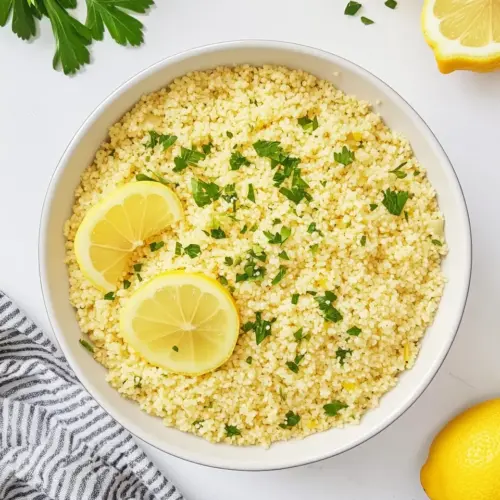
Lemon Couscous
Lemon Couscous is a bright, easy side with fluffy texture and citrusy aroma. This quick, 10 minute recipe combines tender couscous with fresh lemon, silky olive oil, and vibrant parsley, making it perfect for easy weeknight dinners or springtime gatherings, and a great reason to make it for simple, flavorful meals.
Equipment
- Medium Saucepan
- Fork
Ingredients
- 1 cup couscous Provide the base grain that soaks up flavors and creates a light, fluffy texture in the dish; cook briefly with hot water to rehydrate and separate before fluffing with a fork.
- 1 cup water Bring moisture and heat to the couscous, allowing the grains to steam and expand; use boiling water poured over the couscous then covered until all liquid is absorbed.
- 2 tablespoons extra-virgin olive oil Add richness and silky mouthfeel while carrying and enhancing lemon flavors; stir in warm olive oil after cooking to coat grains and prevent clumping.
- 1 teaspoon lemon zest Concentrate bright citrus aroma and offer an intense, zesty note; grate finely over the finished couscous to release essential oils without adding acidity.
- 2 tablespoons fresh lemon juice Impart fresh acidity and vibrant citrus flavor that brightens the entire dish; squeeze and mix in after cooking to balance richness and lift the herbs.
- 1/2 teaspoons salt Season and enhance the natural flavors, providing necessary savory balance; dissolve into the cooking water or scatter sparingly then adjust to taste.
- 2 tablespoons chopped fresh parsley Introduce fresh herbal brightness and color while adding a mild peppery note; chop and fold in at the end to preserve freshness and visual appeal.
Instructions
- In a medium saucepan, bring the water to a boil. Add the couscous, 1 tablespoon of olive oil, and salt. Stir, cover, and remove from heat. Let stand for 5 minutes.: The moment the water starts to bubble vigorously you should notice steam rising and a faint mineral scent depending on your tap water. Boiling is important because hot water ensures the couscous rehydrates quickly and evenly, which keeps the texture tender but separate. If the water is not fully boiling when you add the grains, they may clump or cook unevenly. A common mistake is using water that is only warm, which results in chewy pockets of undercooked couscous.
- Fluff the couscous with a fork. Add the remaining 1 tablespoon of olive oil, lemon zest, lemon juice, and parsley. Stir to combine.: As soon as you add the dry couscous , you will hear a soft settling sound as the granules meet the hot water . Stir gently once so each grain is moistened, then note that adding the first tablespoon of olive oil lends a subtle sheen that helps prevent sticking. The salt dissolves and begins seasoning the interior of the grains. Overstirring at this point can make the texture gluey, so resist the urge to mix repeatedly.
- Serve warm or cold. Adjust seasoning with additional salt or lemon juice if needed.: Covering the saucepan traps steam, and you should notice the lid rattling slightly as pressure equalizes. Removing from heat while covered lets residual warmth finish the cooking gently, producing fluffy grains instead of a boiling starch paste. This gentle steaming step is essential for delicate texture. Leaving the pot on the hot burner can continue cooking and dry out the couscous, so transfer it off heat promptly.
- Let stand for 5 minutes: During the rest period the couscous absorbs the remaining moisture and swells, developing a pillowy feel. You can use this time to zest the lemon and chop the parsley , because aromatic oils and chopped herbs are best added fresh. Rushing this standing time will leave some grains underhydrated, which shows up as hard bits when you eat it.
- Fluff the couscous with a fork: When you lift the lid you will see the grains have puffed and look separated, not sticky. Use a fork to tease the grains apart with gentle sweeping motions so air mixes through and the texture stays light. The sound here is subtle, a soft rustle as the tines separate the grains. Using a spoon to smoosh the couscous instead of a fork often compacts it, producing a dense mouthfeel.
- Add the remaining 1 tablespoon of olive oil, lemon zest, lemon juice, and parsley: Once fluffed, drizzle the second tablespoon of olive oil and fold in the bright lemon zest , fresh lemon juice , and chopped parsley . The citrus aroma will become pronounced, and the glossy grains will shimmer slightly as the oil coats them. Mixing these at the end preserves the fresh herb and citrus notes. Mixing them too early can blunt the brightness, so add them after fluffing.
- Stir to combine: After adding the finishing elements, stir gently so the flavors marry but the grains remain distinct. The finished dish should smell of citrus and green herbs, with a silky mouthfeel from the olive oil . Taste and if needed adjust with a pinch more salt or a little extra lemon juice . A frequent oversight is failing to taste at this stage, which means you might miss correcting a flat or overacidic balance.
- Serve warm or cold: Depending on preference, serve the couscous immediately while warm and aromatic, or chill it for a refreshing salad component. Warm servings feel cozy and aromatic, while chilled servings allow the flavors to integrate further. If serving cold, note that the texture tightens slightly as the grains set, so you may want to loosen with a touch more olive oil or a squeeze of lemon juice before plating.
- Adjust seasoning with additional salt or lemon juice if needed: Always finish by tasting a small spoonful and adjusting. A little extra salt will heighten flavors, while a drop more lemon juice brightens the overall profile. Adjustments are subjective, so I encourage small increments to avoid oversalting. Commonly people add too much acid at once, which is hard to reverse, so add gradually.
Notes
- Measure the water precisely, because too much liquid makes the couscous soggy while too little leaves hard bits. Use an equal ratio of 1 cup water to 1 cup couscous for fine grains.
- Zest before juicing, so you get the most fragrant oils from the lemon. Zesting after juicing is harder and yields less aromatic punch.
- Finish with fresh herbs like chopped parsley to preserve vibrant color and aroma. Add them at the end to avoid wilting.
- Use good olive oil, since the oil is a key flavor. A fruity extra virgin olive oil elevates the mouthfeel and adds complexity.
- Taste as you go at each stage, especially after adding the lemon and oil, to catch any need for small adjustments in salt or acidity.