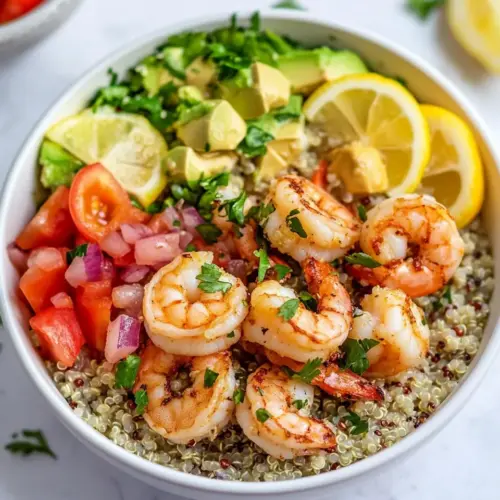
Lemon Chili Shrimp Quinoa Bowls
Lemon Chili Shrimp Quinoa Bowls combine zesty lemon, spicy chili flakes, and seared shrimp over fluffy quinoa for a light, savory meal. This easy weeknight dinner is bright, satisfying, and quick to assemble, with fresh herbs and creamy avocado adding contrast. Perfect for summer meals or packed lunches, it’s a flavorful, balanced dish worth making again and again.
Equipment
- Medium heavy pot
- Small Bowl
- Grill pan or heavy skillet
- Fork
Ingredients
- 1 cup uncooked quinoa, tri-color or red Cook until fluffy and separate, providing a nutty, slightly chewy base and substantial texture for the bowl; tri-color or red quinoa adds visual appeal and additional fiber compared to white quinoa.
- 1 3/4 cups low sodium vegetable or chicken broth Simmer with the quinoa to infuse grains with savory flavor and prevent sticking; low sodium broth allows control over saltiness while contributing depth without overpowering the dish.
- 24 jumbo shrimp, peeled and deveined (20 ounces) Sear quickly over high heat until pink and opaque, supplying tender protein and a briny sweetness that pairs well with citrus and heat; 20-ounce count ensures generous portions for four servings.
- 2 tablespoons olive oil, divided Sauté and drizzle for cooking and finishing, delivering rich mouthfeel and aiding in browning the shrimp; dividing the oil helps with both cooking and dressing the assembled bowl.
- Juice and zest of 1 lemon, divided Brighten and balance flavors by adding acidity and aromatic oils; using both juice and zest intensifies lemon character for the quinoa, shrimp, and dressing components.
- 1 tablespoon fresh oregano Chop finely and mix into marinades or garnish, imparting a piney, slightly bitter herbaceous note that complements lemon and seafood.
- 1 tablespoon chopped fresh parsley Fold into the finished bowl or sprinkle on top to add fresh, grassy flavor and a mild peppery finish; parsley also brightens presentation and aroma.
- 2 garlic cloves, minced Mince and sauté briefly to release pungent, savory compounds that enhance the shrimp and dressing; garlic provides depth and rounds out the citrus and chili notes.
- 1/4 teaspoon crushed red chili flakes, or more to taste Sprinkle into marinades or adjust to taste for a concentrated, smoky heat; crushed red chili flakes deliver consistent spice that can be increased for more intensity.
- 1/8 teaspoon kosher salt Add sparingly to balance and enhance overall seasoning while avoiding over-salting; kosher salt helps elevate other flavors when combined with broth and lemon.
- black pepper, to taste Grind freshly over the finished bowl to introduce sharp, aromatic heat and to personalize seasoning; black pepper complements the lemon and chili components.
- 1 medium Haas avocado, pitted and sliced (yields 5 ounces) Slice and layer into the bowl to provide creamy, buttery texture and healthy fats that mellow the heat and brighten each bite with smooth richness.
- 4 cups chopped romaine lettuce or your favorite greens Toss under or over the other ingredients to contribute crispness, bulk, and a refreshing base; romaine or greens add a cool contrast to warm quinoa and shrimp.
- 1 cup diced tomato Dice and scatter for juicy bursts of acidity and sweetness that contrast the savory components; tomatoes also add color and a light, fresh element to each forkful.
- 1/2 cup diced red onion Chop finely and sprinkle to introduce sharp, pungent bite and a crisp crunch that balances creamy avocado and tender shrimp; red onion also adds color and aroma.
Instructions
- Cook the quinoa: Bring broth to a boil in a medium heavy pot. Rinse quinoa under cold water and drain well. Add quinoa, lower the heat to low and cook, covered, for 20 to 25 minutes. Turn off heat and let rest, covered, for 5 minutes. Fluff with a fork.: The kitchen will fill with a warm, toasty aroma as the broth comes to a boil and the quinoa simmers. You will hear a gentle bubbling and see the grains become translucent with tiny germ rings popping out. This step concentrates savory notes from the broth , so the quinoa tastes more layered than if you cooked it in water. A common mistake is boiling too vigorously, which can make the grains gluey; keep the heat low and the lid snug so steam cooks the grains evenly. After the covered rest period, fluff with a fork so the texture becomes light and separate, not clumpy.
- For the shrimp: While the quinoa is cooking, add 2 teaspoons of the olive oil, half of the lemon juice, half of the lemon zest, oregano, parsley, garlic, chili, salt and pepper to a small bowl and mix well. Add the shrimp and toss.: As you mix the marinade, the citrus and herbs release fragrant oils and the minced garlic becomes aromatic. Tossing the shrimp coats them evenly, and you will notice the shrimp starting to take on the lemon scent. Marinating briefly helps the flavors adhere, but avoid a long soak in acid since the lemon juice can firm the shrimp if left too long. A common mistake is overmarinating which yields rubbery texture, so keep this short and focused.
- Heat a grill pan or heavy skillet over high heat. When hot, spray with oil and add the shrimp. Cook 2 to 3 minutes on each side.: When the pan is screaming hot you will see shimmering smoke and a fine heat haze. A quick spray or brush of oil prevents sticking and allows immediate contact for a fast Maillard reaction. The sound is a sharp sizzle as the shrimp hits the surface, signaling that browning is happening. If the pan is not hot enough the shrimp will release moisture and steam instead of sear, preventing that desirable crust. Avoid crowding the pan, which lowers the temperature and spoils the sear.
- Divide greens into 4 large serving bowls on one half of the dish.: During this brief sear the shrimp will shift from translucent to an opaque, pink color, and the edges will take on a golden char. You can hear a steady sizzle and smell the herbs toasting. The rapid cook time keeps the shrimp tender and juicy; overcooking is the most common error here, leading to toughness. Remove them as soon as they curl slightly and the flesh is firm but springy.
- Add half the quinoa to the other half, then top with shrimp, avocado, tomato, and onion.: As you arrange the chopped romaine , the bowls will feel crisp and fresh under your fingertips. Laying down the greens first gives a cool bed that contrasts nicely with warm quinoa and shrimp . Aim for even distribution so each bowl has balance. A frequent oversight is uneven portions, which makes some bowls dominate with greens while others lack crunch.
- Drizzle each salad with 1 teaspoon of the remaining olive oil, salt, pepper, red chili flakes and drizzle with remaining lemon juice.: The visual layering is important, you will see warm, fluffy quinoa next to bright avocado and vibrant tomato . The contrast in textures becomes apparent as you press the fork through each element. The quinoa holds dressing well, while avocado gives silkiness. One mistake is adding avocado too early, which causes it to warm and lose its creamy texture; add it at the end for the best mouthfeel.
- Drizzle each salad with remaining olive oil and lemon juice: The finishing drizzle brings shine and a final citrus lift, and the crackle of freshly ground black pepper and a pinch of chili flakes brighten the bowl. The aroma of lemon will come forward and the olive oil will coat components, melding flavors. If you overdress, the greens can become limp, so use sparingly and allow diners to add more if they like. Tasting and adjusting salt and pepper at this stage ensures a balanced final bite.
Notes
- Double the herbs for a greener, more vibrant top note, especially if your oregano and parsley are abundant.
- Swap broth types using vegetable broth to keep the bowl lighter and fully vegetarian friendly when skipping shrimp for guests who prefer plant protein.
- Make it spicy by increasing the crushed red chili flakes, adding them to the final drizzle for controlled heat that builds with each bite.
- Meal prep tips include storing quinoa and shrimp separately, assembling bowls only when ready to eat so textures remain distinct.
- Dress at the end to keep the romaine crisp, drizzle oil and lemon right before serving rather than mixing everything ahead of time.
- Use different greens to vary texture, try baby spinach for a softer mouthfeel or kale if you want more chew and structure.