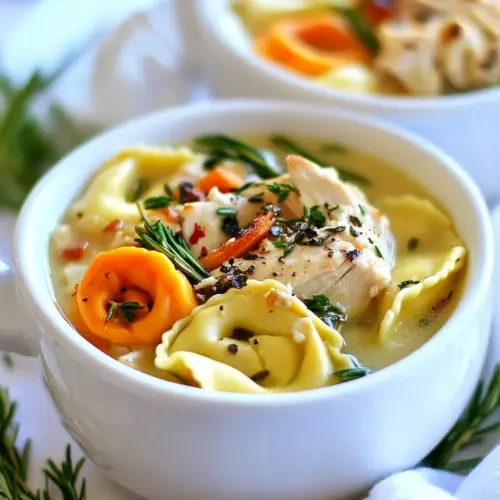
Lemon Chicken Tortellini Soup
Lemon Chicken Tortellini Soup is a creamy bright bowl featuring tender chicken, pillowy cheese tortellini, and crisp vegetables in a lemon kissed broth. This easy weeknight dinner blends savory depth and fresh citrus for a comforting yet lively meal that comes together quickly. Make it for family dinners when you want something nourishing and crowd pleasing.
Equipment
- Large Dutch oven or soup pot
- Slow Cooker
Ingredients
- 12 oz . boneless skinless chicken thighs (or 2 1/2 cups shredded rotisserie chicken) Cooked and shredded to provide tender, savory protein that enriches the soup and soaks up the broth’s flavors; can be seared and simmered or substituted with rotisserie chicken for convenience.
- 1 tablespoon olive oil Used to gently sauté aromatics and vegetables, imparting a fruity, peppery backbone that helps carry flavors throughout the soup.
- 2 tablespoons butter Added to create a rich, silky mouthfeel and help brown the onions and mushrooms, contributing buttery depth to the overall broth.
- 1 small onion, chopped Chopped and sautéed until translucent to build the aromatic base, offering natural sweetness and supporting layers of savory flavor.
- 8 oz . sliced mushrooms Sliced and browned to add earthy, meaty texture and umami, enhancing the soup’s savory profile while absorbing seasonings.
- 1 cup carrots, sliced Sliced and cooked until tender to provide natural sweetness, color, and a slight textural contrast to the tender tortellini.
- 4 garlic cloves, minced Minced and added near the start of cooking to release pungent, aromatic oils that boost overall savory complexity.
- 2 teaspoons chicken bouillon Dissolved into the broth to intensify chicken flavor quickly and provide a concentrated savory seasoning base for the soup.
- 1 tsp EACH dried parsley, salt Sprinkled in to offer gentle herbal notes and seasoning balance, while salt adjusts overall seasoning to taste.
- 1/2 tsp EACH dried thyme, dried oregano, ground cumin Added sparingly to introduce warm, herbaceous and slightly citrusy notes along with a subtle earthy background.
- 1/4 tsp EACH pepper, red pepper flakes Pinched in to introduce bright heat and mild warmth, lifting the broth with peppery and spicy accents.
- 2 bay leaves Tucked into the pot while simmering to impart subtle herbal complexity and a slightly floral, bay-like aroma.
- 9 cups low sodium chicken broth Poured as the primary liquid to create a flavorful, low-sodium base that simmers the ingredients and melds flavors.
- 15.25 oz . can sweet corn, rinsed and drained Rinsed and drained before adding to contribute bursts of sweet corn flavor and pleasant textural pop throughout the soup.
- 12 oz . UNCOOKED fresh cheese tortellini Added uncooked so the tortellini cooks directly in the broth, providing tender, cheese-filled pasta that makes the soup hearty.
- 4 cups loosely packed fresh spinach Tossed in loosely to wilt and add bright color, fresh herbal flavor, and a light, leafy texture as the soup finishes.
- 2 tablespoons lemon juice plus more to taste Stirred in near the end to brighten the soup with citrusy acidity and balance richness; additional juice can be adjusted to taste.
- freshly grated Parmesan cheese (optional garnish) Sprinkled over individual bowls as an optional savory, salty finish that adds umami and a nutty, tangy edge to each serving.
- lemon zest (optional) Grated finely as an optional finishing garnish to provide intense citrus aroma and enhance the soup’s bright lemon character.
Instructions
- Heat 1 tablespoon olive oil in a large Dutch oven/soup pot over medium high heat.: Close your eyes and notice the faint fruity scent of warm olive oil as it shimmers in the pot, which signals it is ready. The oil creates a slick surface that helps the chicken form a brown crust, which adds both aroma and depth to the finished broth. You want the oil hot but not smoking; if it smokes, lower the heat immediately because burned oil will impart bitterness. A common pitfall here is crowding the pot which steams rather than sears, so leave space around each piece of chicken .
- Add chicken and sear on each side, about 2 minutes per side. Remove chicken.: When the chicken hits the hot oil it should sizzle audibly, creating caramelized flavors as the surface browns, and that Maillard reaction is key for richness. The visual cue is a golden brown exterior; if the meat sticks to the pan, give it another 30 seconds and it will release naturally. Overcooking at this stage risks drying the chicken , so aim for a good color not full doneness because it will finish cooking in the broth. If small brown bits are left in the pan, they are flavor gold, so leave them for the next step.
- Add 2 tablespoons butter/oil to the now empty pot and heat over medium high heat. Add onions and mushrooms and cook, stirring occasionally for 6 minutes. Add carrots and cook until tender – about 4 minutes. Add the garlic and thyme and cook 30 seconds.: The butter melts and carries the fond from searing, which deglazes the pan and becomes the base for the aromatics. As the onion softens and the mushrooms shrink and brown slightly, the kitchen fills with savory, almost nutty notes. The carrots soften to a tender bite, offering sweet contrast. Add minced garlic at the end because it cooks fast; you should smell its warm, pungent aroma after about 30 seconds, but if it browns too much it will taste acrid. Avoid constantly stirring which prevents caramelization; give them space to color.
- Add remaining spices, corn, chicken stock and chicken back to the pan.: When you add the dried herbs, corn , and low sodium chicken stock, the steam will release a layered aroma, and you will hear the pot come back to life as liquids meet hot surfaces. Returning the seared chicken to the pot lets those browned flavors infuse the broth. Stir gently to distribute spices and corn evenly, and scrape up any browned bits on the bottom to dissolve them into the liquid. A common error is over-salting at this point, so hold back if your bouillon or stock already contains sodium.
- Bring to a boil; cover and reduce to a gentle simmer. Simmer 10 minutes, remove chicken and let rest 2 minutes then shred.: As the pot reaches a rolling boil the steam will smell richer, then lowering to a gentle simmer concentrates flavor without making the broth cloudy. Simmering for about 10 minutes lets the vegetables and spices meld into a cohesive broth while finishing the chicken . Removing the chicken to rest prevents overcooking during shredding and keeps the meat juicy. Letting it rest for 2 minutes relaxes the fibers so shredding yields tender ribbons. A common mistake is leaving the lid off entirely which can cool the pot too much and lengthen cooking time.
- Meanwhile, bring soup back to a boil. Add tortellini and boil 1-2 minutes or until tender.: Returning the soup to a boil before adding the fresh cheese tortellini ensures they cook quickly and evenly, and you should see the pot return to active bubbling. Fresh tortellini usually need only 1 to 2 minutes; once they float and feel tender to the bite, they are ready. Overcooking will make them fall apart, so taste one early and often. If the broth thickens too much from starch, add a splash of extra chicken stock.
- Remove from heat and stir in spinach, lemon juice, and chicken (Add rotisserie chicken if using).: Off the heat, the residual warmth wilts the spinach into soft ribbons without turning it to mush, and the lemon juice adds a citrus lift that brightens the entire pot. Stirring in the shredded chicken now keeps it moist and integrates it with the tortellini. A mistake to avoid is adding the spinach while the pot is still vigorously boiling which can overcook it and make the color dull.
- Taste and add additional lemon, salt, pepper to taste. Remove bay leaves.: This is the moment you balance the bowl, allowing the zesty lemon to sing through the savory notes. Taste carefully and adjust one element at a time, because it is easier to add than subtract. Removing the bay leaves prevents bitter, woody fragments in the finished soup. Over-seasoning with salt is a common misstep, so go slowly and taste between adjustments.
- Garnish with freshly grated Parmesan cheese and lemon zest (optional).: A final sprinkle of freshly grated Parmesan cheese melts slightly into the warm broth adding nutty, salty complexity, while a pinch of lemon zest lifts the aroma. The contrast between warm broth and bright citrus in the finish creates a memorable mouthful. If you use too much cheese it can make the broth feel heavy, so garnish sparingly.
- Sear chicken as instructed above and add uncut chicken to the bottom of a slow cooker, followed by all of the remaining ingredients EXCEPT for the tortellini, spinach, lemon juice and Parmesan. Cover and cook on low heat 6 – 7 hours or on high for 3-4 hours.: If you choose the slow cooker route, searing first adds those caramelized flavors that the slow cooker alone cannot create. Placing uncut chicken at the bottom lets it slowly infuse the liquid as it cooks low and slow, and this method yields a fork tender texture after several hours. A frequent mistake is adding delicate ingredients too early in the slow cooker which will overcook them, so reserve tortellini and spinach for the end.
- When ready to serve, remove chicken to a cutting board and let rest for 10 minutes. Meanwhile, add tortellini to the slow cooker (turn to high heat if on low). After 10 minutes, shred chicken and add back to slow cooker along with spinach and lemon juice. Tortellini should be about cooked by this time, approximately 15 minutes total. When tortellini is completely cooked and spinach wilted, taste and add additional lemon, salt, pepper to taste. Remove bay leaves.: Slow cooking develops deep flavor as the heat slowly teases gelatin and flavor from the chicken and vegetables; you will notice a gentle aroma filling the house as it cooks. Low and slow yields the most tender meat, while high shortens time at the cost of slightly less depth. Check near the end for doneness, because overcooking can cause the meat to break down excessively.
- Garnish with freshly grated Parmesan cheese and lemon zest (optional).: Resting the chicken before shredding keeps the juices locked in, and adding the tortellini toward the end ensures they maintain their texture. The steam and residual heat will wilt the spinach while the lemon brightens the slurry of flavors. A mistake is leaving tortellini in too long so they become unrecognizable, so monitor their tenderness closely.
- Garnish with freshly grated Parmesan cheese and lemon zest (optional).: The final touches of freshly grated Parmesan cheese and a dusting of lemon zest add aroma and polish to each bowl, creating a contrast between warm savory and bright citrus. Serve immediately so the garnishes retain their character. Avoid adding the cheese too early because it will dissolve fully into the broth and reduce the intended finishing effect.
Notes
- Choose the right chicken: Dark meat thighs deliver juicier texture and richer flavor in the finished broth, while rotisserie chicken makes the recipe faster without sacrificing taste.
- Mind the tortellini: Fresh cheese tortellini cook quickly; add them near the end so they are tender and intact rather than falling apart into the soup.
- Build flavor in stages: Searing and sautéing in sequence creates layers of taste that a single all in one step cannot replicate, so give each stage the time it needs.
- Adjust acidity gradually: Add lemon juice in small increments, tasting as you go so the citrus enhances rather than overwhelms the broth.
- Finish with fresh garnishes: A sprinkle of freshly grated Parmesan cheese and a little lemon zest right before serving heighten aroma and flavor complexity.
- Slow cooker shortcut: Sear the chicken first and add delicate ingredients like tortellini and spinach at the very end to preserve their texture and color.