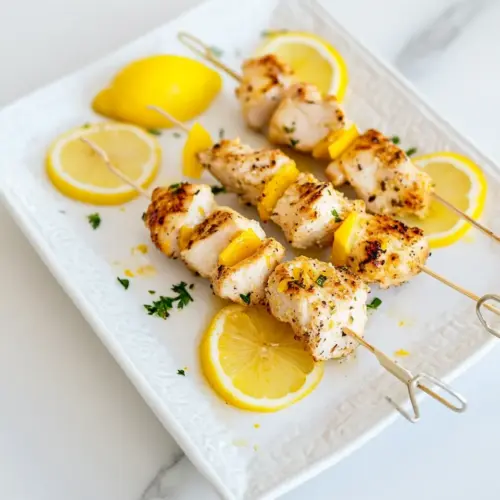
Lemon Chicken Skewers
Lemon Chicken Skewers are bright, juicy, and easy to make with simple ingredients like chicken, lemon, and Greek yogurt. This easy weeknight dinner features caramelized citrus and a cooling garlic yogurt sauce for a balanced, crowd pleasing meal. Quick to prep and full of fresh aroma, it is a perfect choice when you want something effortless yet impressive.
Equipment
- Grill or Cast Iron Skillet
- Metal Skewers
- Large Bowl
- Small Bowl
Ingredients
- 2 organic lemons Provide bright, acidic juice and aromatic oils that brighten and balance the marinade; squeeze over the chicken and reserve some slices for serving to add fresh citrus zing. Use both juice and zest when possible to maximize lemon flavor and cut through richness of yogurt and oil.
- 5 tablespoon extra-virgin olive oil Contribute rich, fruity fat that helps emulsify the marinade and carry flavors into the chicken; drizzle and whisk with lemon juice and yogurt to form a cohesive coating. Use extra-virgin olive oil for depth and a pleasant mouthfeel while grilling.
- 800 g chicken breast, cut into 2 cm cubes Supply the primary protein and canvas for flavors, offering tender meat when cut evenly and marinated long enough to absorb seasonings. Ensure uniform 2 cm cubes for even cooking on skewers and to achieve juicy, well-charred bites when grilled.
- 200 g Greek yogurt, regular or dairy-free Deliver creamy tang and tenderizing lactic acid that softens chicken fibers while adding a silky texture to the marinade. Choose regular or dairy-free versions depending on dietary needs, and blend smoothly with garlic, lemon, and oil.
- 1 garlic clove, grated Add pungent, savory aromatics that infuse the marinade with depth and a subtle bite; grate finely to release maximum flavor without fibrous bits. Distribute evenly through the yogurt mixture so garlic complements rather than overpowers the chicken.
- 1 teaspoon organic lemon zest Provide concentrated citrus aroma and a sharp flavor lift that enhances lemon juice without extra acidity; incorporate grated zest into the marinade and sprinkle lightly before serving. Use organic zest to avoid waxes or residues on the peel.
- sea salt and freshly-grated black pepper Season and balance the dish by enhancing natural flavors and controlling seasoning levels; add a pinch or more to taste and grind fresh pepper for bright heat. Use sea salt and freshly-grated black pepper gradually during marinating and adjust after cooking for optimal flavor.
Instructions
- Cut one lemon into thin round slices and set them aside.: The scent of fresh lemon oils will be immediate, sharp, and bright when you slice the fruit. Thin rounds char quickly on hot metal, producing caramelized edges that give a gentle smokiness to the skewers and a slightly crisp texture where the citrus touches the heat. Use a sharp knife to create even, translucent slices; uneven thickness will cause some pieces to burn while others remain raw. A frequent slip here is slicing too thickly which prevents proper charring, so aim for near translucent rounds that can fold when threaded.
- In a large bowl, add the chicken cubes, 4 tablespoons of oil, the juice of one lemon, and a generous pinch of salt, and mix all the ingredients.: As you toss, notice how the olive oil glosses the chicken and the lemon juice beads across the surface, starting to tenderize the meat. This simple emulsion helps distribute salt and acid so every cube picks up flavor. Marinating briefly allows the acid to slightly firm the protein while the oil protects it from drying during cooking. Overmarinating in strong acid can make the texture mealy, so keep the time modest for best texture, and always pat the chicken dry before skewering to promote browning.
- Thread the chicken cubes onto metal skewers alternating with folded slices of lemon.: Threading is tactile and visual, you should feel the resistance as the skewer pierces each cube and notice how the folded lemon nestles against the meat. Alternating pieces creates pockets of citrus steam that infuse the chicken as it cooks, while the slices act as natural flavor bursts. Keep spacing uniform to ensure even heat exposure. A common mistake is overcrowding skewers, which leads to uneven cooking, so leave a little space between pieces for air flow.
- Cook the chicken lemon skewers on a hot grill or cast iron skillet, turning them often for 5-10 minutes, or until the chicken is cooked through and golden brown.: When the surface hits hot metal, you will hear a satisfying sizzle and smell the first notes of caramelization. The heat should be high enough to create color quickly while keeping the interior juicy, so watch for golden brown spots rather than a uniform dark crust. Turning often prevents one side from burning and encourages even caramelization all around. Use visual cues like the appearance of clear juices and a firm but springy texture to determine doneness. Beware of leaving them too long which results in dry chicken , pull them off as soon as they reach that sweet spot of golden color with slightly charred edges.
- Meanwhile, in a small bowl, mix the yogurt with the grated garlic, the lemon zest and 1 tablespoon of oil, and season with salt and pepper to taste.: The aroma of grated garlic folded into cool Greek yogurt is bright and inviting, with the lemon zest adding a floral top note. The extra tablespoon of olive oil smooths the sauce and rounds the sharpness of the acid, creating a silky coating that complements the charred meat. Stir until the texture is cohesive and taste for salt and pepper, adjusting until it sings. A mistake here is making the sauce too watery, in which case a brief strain or thicker yogurt will restore body.
- When ready, transfer the lemon chicken skewers onto a serving dish and serve them with the yogurt sauce.: The final presentation should be glossy strips of browned chicken punctuated with caramelized lemon disks, their edges blistered and fragrant. Serve the skewers immediately so the contrast between hot, charred meat and cool, tangy yogurt is preserved. If plating for guests, drizzle a touch more olive oil over the sauce and add a light grind of pepper for visual appeal. One common oversight is letting the skewers sit too long which causes them to lose juiciness, so plan to serve right off the heat.
Notes
- Choose fresh lemons, the juice and zest make a big difference because fresh citrus has brighter, more complex aromatics than bottled juice.
- Trim and cube evenly, consistent 2 cm pieces ensure each skewer cooks at the same rate so you avoid overdone or underdone bites.
- Do not overcrowd the skewers, leave small gaps for heat circulation so the exterior chars while the inside stays juicy.
- Pat meat dry before searing, removing excess moisture helps achieve a brown crust instead of a steamed surface.
- Make the sauce last minute, freshly mixed yogurt and grated garlic tastes brighter and retains a pleasant texture.
- Rest briefly after cooking, a short rest of a couple of minutes lets juices redistribute and keeps the chicken tender.