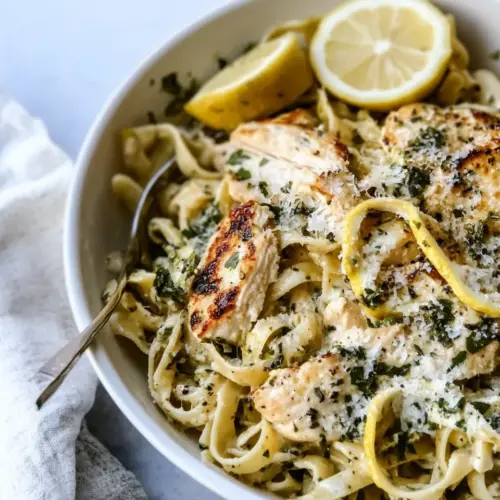
Lemon Chicken Pasta
Lemon Chicken Pasta is a creamy, bright, and easy weeknight dinner that pairs tender chicken with buttery parmesan cheese and fresh lemon. Quick to pull together, it offers satisfying texture from bite-size pasta and sautéed vegetables, making it perfect for family meals and casual gatherings, a delightful reason to make it tonight.
Equipment
- Pot
- Large Skillet
Ingredients
- 16 ounces mini farfalle pasta (454 g), or your favorite bite-size pasta Provide bite-sized texture and vehicle for the sauce; cooks quickly to al dente and holds lemony coating well. Use the specified weight to ensure proper pasta-to-sauce ratio and even cooking times for a balanced dish.
- 2 -3 boneless skinless chicken breasts Tenderize and flavor the dish while providing substantive protein; slice or pound to even thickness for uniform cooking. Season and sear until golden to develop savory Maillard flavors before combining with pasta.
- Salt and freshly ground black pepper Season proteins and vegetables to enhance overall taste; balance with salt to elevate other flavors without overpowering. Use freshly ground black pepper for a sharp, aromatic finish that complements lemon and garlic notes.
- 1 teaspoon lemon zest Brighten the dish with concentrated citrus aroma; grate finely to avoid bitter pith and distribute flavor evenly. Sprinkle into marinades or finishing sauce to reinforce fresh lemon character without adding acidity.
- 1 teaspoon garlic powder, divided Impart savory garlic essence in a convenient form and distribute easily; divide usage to layer flavor during seasoning and cooking. Use measured portions to avoid overpowering delicate lemon and parmesan elements.
- 1 teaspoon Italian seasoning, divided Contribute an herby, savory base flavor and aromatics; split usage between chicken seasoning and final sauce for consistent savory notes. Use a balanced Italian blend to complement garlic, lemon, and parmesan without dominating.
- 1/2 teaspoon onion powder Enhance savory depth and background sweetness; use sparingly to round out flavors without adding texture. Add to chicken or vegetable seasoning blends to support other dried herbs and spices.
- 3 tablespoons olive oil, divided Provide fat for searing and finishing; split to cook proteins and sauté vegetables while reserving some for flavor finishing. Use quality olive oil for its fruity aroma and to help the sauce emulsify with butter and lemon.
- 1 zucchini chopped Add tender, slightly sweet vegetable texture and freshness; chop into uniform pieces to ensure even cooking and pleasant bite size. Sauté until just tender to retain light crunch that contrasts with creamy pasta.
- 1 yellow squash chopped Introduce mild sweetness and tender texture complementary to zucchini; chop to match zucchini size for consistent mouthfeel. Cook briefly to prevent becoming mushy and to preserve color and shape in the final dish.
- 3 cloves garlic, minced Deliver pungent savory lift and aromatic depth when minced fresh; add toward the end of sautéing to avoid bitterness. Combine with butter and lemon to infuse the sauce with robust garlic flavor.
- 4 tablespoons butter (57 g) Provide richness and silky mouthfeel to create a cohesive sauce; melt gently with lemon juice and pasta water to form an emulsion. Use measured butter to balance acidity and cheese while coating the pasta evenly.
- 1/4 cup fresh lemon juice (60 g) Introduce bright acidity and lemon flavor to balance richness; measure to avoid overpowering creaminess and to achieve a refreshing tang. Add with a bit of pasta cooking water to help loosen and emulsify the sauce.
- 1 cup freshly grated parmesan cheese (95 g) Add salty, umami-rich creaminess and binding power; grate fresh for best melting and flavor integration into the sauce. Stir in off-heat to prevent graininess and to create a smooth, glossy coating on the pasta.
- 1/4 cup fresh chopped parsley (15 g), chopped Contribute fresh herbaceous finish and color contrast; finely chop to distribute evenly and sprinkle at the end for brightness. Use as a garnish to lift flavors and provide a light, fresh counterpoint to rich elements.
Instructions
- Cook pasta according to package instructions.: The kitchen will fill with the comforting scent of boiling starch, and you want the pasta to be al dente so it holds up when tossed with the sauce. Salt the water generously, it should taste like the sea, because that is your only chance to season the pasta itself. A common mistake is overcooking, which results in mushy pasta that will soak up too much sauce and lose bite. Drain and reserve a cup of pasta water in case you need to loosen the sauce, this starchy water can rescue a too-thick finish.
- Season chicken on both sides, with salt and pepper, lemon zest, and 1/2 tsp EACH of garlic powder, Italian seasoning and onion powder. Add olive oil to a large skillet over medium-high heat. Once hot, add seasoned chicken and cook for 3-5 minutes on each side, flipping once, until cooked through. Remove chicken to a plate and tent with foil to keep warm while it rests.: You will smell the citrus oils from the lemon zest right away, which helps the seasoning adhere and gives an aromatic top note. Season evenly so every slice tastes consistent. When searing, the meat should sizzle vigorously, which creates Maillard browning for rich flavor. Avoid crowding the pan, overcrowding lowers the temperature and prevents browning, producing steam instead. Let the seasoned chicken rest after cooking, tented with foil, so juices redistribute and it stays juicy when sliced.
- Cook Veggies: Add another tablespoon of oil to the skillet. Once hot, add the chopped zucchini and yellow squash. Season with salt and pepper, 1/2 tsp garlic powder and 1/2 tsp Italian seasoning. Cook, on medium-high heat for 2 minutes. Add minced garlic and cook for 30 seconds.: As the chicken hits the pan you will hear a steady sizzle and see the edges darken into deep golden patches, that crust locks in juices and flavor. The pan should be hot but not smoking, and you will notice the aroma transform into roasted, savory notes. If the chicken browns too quickly and blackens, lower the heat slightly to avoid a bitter crust. Resting under foil keeps the meat warm and tender while you finish the sauce, preventing dry slices when you cut it.
- Finish: Add hot cooked pasta to the pan, along with the butter and lemon juice. Toss everything to combine, until butter has melted. Sprinkle with parmesan cheese and toss to combine. Chop the chicken and return to the pan.: The vegetables should sizzle and start to blister at the edges, giving a slight caramelized sweetness that complements the savory chicken . Adding the minced garlic at the end preserves its fragrance and prevents bitterness from burning. Watch closely since minced garlic browns fast, burning will introduce an acrid note. The goal is tender yet slightly crisp vegetables that add texture and freshness to the dish.
- Serve garnished with parsley and additional parmesan cheese, if desired.: At this stage you will smell the bright lemon mingling with melted butter and toasty parmesan cheese . Tossing while the pasta is hot allows the cheese to melt into a silky coating, and the sauce will cling to the pasta. If the mixture seems dry, a splash of reserved pasta water will loosen the sauce and create a glossy texture. A common error is adding cheese to a cold pan which causes clumping rather than a smooth sauce, so ensure everything is hot enough for melting.
- Serve garnished with parsley and additional parmesan cheese if desired: When plating you should see bright green flecks of parsley and a sheen on the pasta from the butter and cheese, which invites you to dig in. The final aroma should be citrus forward with savory undertones and a hint of herbaceous freshness. Serve immediately for the best texture, since the pasta will continue to absorb sauce as it sits. Holding it too long before serving can lead to a thicker, less vibrant dish, so keep fingers nimble and plates ready for the best presentation.
Notes
- Fresh lemon juice matters Freshly squeezed lemon juice gives a brighter, more complex acidity than bottled juice, and it lifts the flavors beautifully when mixed with the melted butter and parmesan cheese.
- Choose sturdy bite-size pasta Mini farfalle or another small shape holds sauce well and mingles with chopped chicken and vegetables in each forkful, creating a balanced mouthful every time.
- Don’t overcrowd the pan when searing Give the chicken space to brown, if pieces are touching they will steam rather than sear, resulting in less flavor development.
- Reserve pasta water Keep about a cup of pasta water before draining because a few tablespoons can rescue the sauce if it becomes too thick or clumpy when the cheese is added.
- Grate cheese fresh Freshly grated parmesan cheese melts into a smooth coating and has a brighter, nuttier flavor compared to pre-grated options, which may be dustier and less fluid.