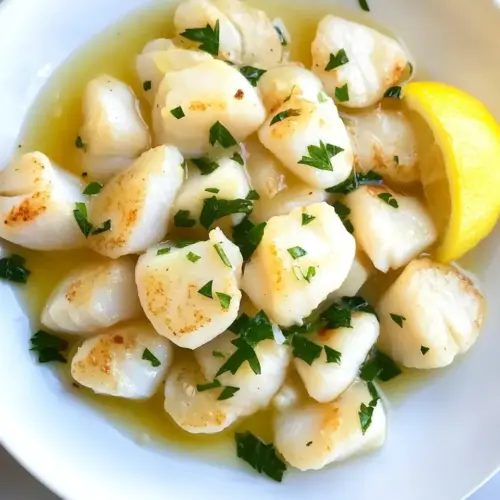
Lemon Butter Sauteed Scallops
Lemon Butter Sauteed Scallops are a quick, flavorful dish featuring tender scallops coated in rich butter and bright lemon. This easy weeknight dinner delivers a buttery, garlicky aroma, a hint of citrus, and restaurant worthy texture in minutes. It's perfect when you want a simple elegant plate without fuss, making it a go to for busy evenings and last minute guests.
Equipment
- Skillet
- Spatula
- Paper towels
Ingredients
- 1 lb (500 g) frozen bay scallops, thawed, rinsed and pat dry with paper towels Thaw and pat dry to remove excess moisture, ensuring even browning and preventing steaming; rinsing eliminates surface ice and debris while drying promotes a golden sear on bay scallops.
- 2 tablespoons unsalted butter, melted Melted butter provides a rich, nutty cooking fat that helps transfer heat evenly and encourages caramelization; it also coats scallops for silky texture and carries flavor from aromatics.
- 2 cloves garlic, minced Minced finely to release pungent, aromatic oils that infuse the butter and scallops during quick sautéing; garlic adds savory depth and balances the sweetness of the shellfish.
- 1 teaspoon lemon juice Squeeze briefly to add bright acidity that lifts the natural sweetness of the scallops and cuts through the richness of butter; lemon juice also enhances overall flavor contrast.
- 1 pinch salt Pinch lightly to season and enhance the scallops' natural flavors without overpowering them; salt helps proteins in the scallops develop a better crust during searing.
- 3 dashes ground black pepper Dash sparingly to contribute mild heat and complexity, rounding out flavors while avoiding dominance over delicate scallops; freshly ground black pepper adds aromatic top notes.
- 1 teaspoon chopped parsley Chopped finely and sprinkled at the end to provide fresh, herbal brightness and a pleasant color contrast; parsley also adds subtle grassy notes that complement lemon and butter.
Instructions
- Heat a skillet with the melted butter. Sauté the garlic, stirring with a spatula a few times. Add the bay scallops and continue to sauté. Then add the lemon juice, salt, and pepper.: The pan should be warm enough that the butter shimmers and gives off a faint nutty aroma, not dark brown smoke. You want an even film of fat that will carry heat to the scallops , creating light caramelization. If the butter smokes immediately, lower the heat and let it cool briefly to avoid burning. A common mistake is using too high heat and scorching the fat, which leaves a bitter note on the seafood.
- As soon as the surface of the scallops turns opaque and water starts to seep out, turn off the heat. Dish them out and garnish with parsley. Serve immediately.: As the garlic hits the warm butter , inhale that immediate fragrant burst, it is a key layer of flavor. Move the minced garlic constantly, watching for tiny edges to color slightly, which signals readiness. If you see the garlic turning brown quickly, the pan is too hot, so reduce the heat to prevent bitterness. Overcooked garlic is a frequent snag; aim for a soft aromatic release without deep browning.
- Add the bay scallops and continue to sauté: When the scallops touch the pan, they should sizzle softly, and you will notice a faint sweet, briny perfume rising. Space them in a single layer so they have contact with the pan, avoid crowding or they will steam and become rubbery. As they cook, their edges will firm and their centers will go from translucent to opaque. If your pan feels crowded, cook in two batches to maintain temperature and achieve slight color development.
- Then add the lemon juice, salt, and pepper: Add the bright lemon juice toward the end to preserve its fresh acidity, and the tiny salt and sprinkles of ground black pepper will snap the overall taste into balance. You should hear a quiet hiss as the juice hits the hot fat, and a momentary steam will carry citrus aroma. Avoid adding too much liquid at once, which can chill the pan and slow the final browning process.
- As soon as the surface of the scallops turns opaque and water starts to seep out, turn off the heat: This visual cue is crucial, the scallops should look uniformly opaque on the surface and a faint sheen of juices may appear; that tells you the interior is cooked but still tender. Turn off the heat promptly to prevent overcooking, which yields a tough, rubbery texture. A typical mistake is leaving them in the hot pan too long out of caution, so trust the visual signs and remove them at the right moment.
- Dish them out and garnish with parsley: Transfer the scallops quickly so residual heat in the pan does not continue cooking them. As you plate, notice the glossy butter coating and the tiny flecks of parsley that add color and freshness. Serve immediately while the aroma is at its peak. Letting them sit too long off heat can cause them to cool and lose the delicate texture you worked to achieve.
Notes
- Tip 1 Use thoroughly dried scallops for a proper sear, pat them with paper towels until no visible moisture remains to prevent steaming.
- Tip 2 Melt the butter gently and heat it until it shimmers, not smokes, to preserve a clean, nutty flavor without bitterness.
- Tip 3 Mince the garlic finely so it disperses evenly and releases aroma quickly; avoid browning it which causes bitterness.
- Tip 4 Keep the skillet hot enough that the scallops sizzle on contact, but not so high that the butter burns; adjust heat as needed.
- Tip 5 Add the lemon juice at the end to maintain a bright citrus lift, a small amount is often all you need for balance.