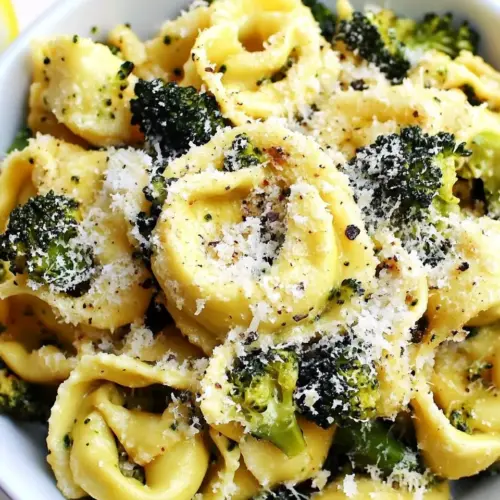
Lemon Broccoli Tortellini
Lemon Broccoli Tortellini is a creamy yet bright pasta with roasted broccoli, pillowy cheese tortellini, and a zesty lemon finish. This easy weeknight dinner brings contrasting textures and fresh flavors, making it perfect for spring meals or quick family suppers. The simple method and pantry friendly ingredients make it a recipe you'll return to again and again.
Equipment
- Oven
- Large Pot
- Baking Sheet
- Spatula
Ingredients
- 1 1/2 pounds broccoli, cut into bite size pieces Cut into bite-size pieces to provide tender, roastable florets that absorb flavors and cook quickly; adds bulk, texture, and a bright green color to the dish while contributing vitamins and fiber.
- 1 tablespoon olive oil Use to sauté vegetables and prevent sticking while imparting a fruity, savory flavor; balances the acidity of lemon and helps coat tortellini for a glossy finish.
- 1 tablespoon fresh lemon juice Add to brighten and lift flavors with citrus acidity; helps cut richness from butter and cheese and ties broccoli and tortellini together for a fresher profile.
- 2 cloves garlic, chopped Chop finely to release aromatic oils that infuse the oil and butter with savory depth; helps build the foundational flavor of the dish and complements lemon and shallot.
- Salt and black pepper, to taste Season to enhance and balance all flavors; adjust to taste to bring out natural sweetness from vegetables and temper bitterness from greens.
- 1 pound cheese tortellini, refrigerated or frozen Cook according to package instructions to provide the primary pasta component filled with cheese; offers a tender, chewy base that carries sauce, broccoli, and seasonings.
- 3 tablespoons unsalted butter Melt to create a rich, silky coating for tortellini and vegetables; adds creamy mouthfeel and helps bind lemon, garlic, and cheese into a cohesive sauce.
- 1 tablespoon minced shallot Mince to contribute a delicate, sweet onion-like flavor that melds with garlic and butter; elevates overall aroma without overpowering the lemon brightness.
- 2 cloves garlic, minced Mince to provide a sharper, more pronounced garlic presence than chopped pieces; disperses evenly to deliver consistent savory notes throughout the dish.
- Dash of crushed red pepper Add sparingly to introduce gentle heat and contrast; enhances complexity and balances the dish without overwhelming the citrus and cheese.
- 3 cups packed fresh spinach Pack tightly to provide a tender leafy green that wilts into the sauce; contributes color, nutrients, and a mild earthy flavor that complements broccoli.
- Zest of 1 large lemon Zest to deliver concentrated lemon oils and bright aromatic lift; intensifies citrus fragrance without adding extra acidity and garnishes the finished dish.
- Juice of 1 large lemon Juice to supply fresh citrus acidity that brightens and balances richness; integrates into the sauce to enhance flavor and help meld ingredients.
- 1/2 cup freshly grated Parmesan cheese Grate freshly to contribute salty, nutty, umami richness; melts slightly into warm tortellini for a savory finish and helps thicken the sauce.
- Salt and black pepper, to taste Season again to fine-tune final taste and balance all components; use at the end to ensure flavors are perfectly adjusted before serving.
Instructions
- Preheat the oven to 400 degrees F. Place the broccoli pieces on a large baking sheet. Drizzle with olive oil and lemon juice. Add the garlic and toss broccoli until well coated. Season with salt and pepper, to taste. Place baking sheet in the oven and roast for 20-25 minutes, stirring once. Remove broccoli when it is crisp and slightly charred. Set aside.: The scent of caramelizing vegetables is one of the best signals that roasting is working, with notes of sweetened green and a faint smokiness when edges char; you should hear a soft sizzle when the baking sheet first goes in, and the florets will visibly darken at the tips. Roasting concentrates flavor by driving off water and allowing natural sugars to caramelize, which is why I prefer a hot oven so the surface browns quickly while the interior stays tender. A common mistake is overcrowding the pan, which steams the broccoli instead of roasting it; give each piece space so air can circulate. When stirring once midway, use a metal spatula to turn pieces that are browning too fast so nothing burns. Visual cues to look for are lightly crisped edges and a bright, softened green in the stems. If you accidentally under roast them, return the pan for a few more minutes rather than increasing the temperature drastically, which can scorch the garlic.
- Meanwhile, bring a large pot of salted water to a boil. Cook tortellini according to package instructions. When cooked, drain, but reserve 1/2 cup of the pasta water. Set the water and tortellini aside.: You will notice the water smell change as it reaches a rolling boil, and the salted water seasons the tortellini from the inside out; the pasta should float or feel tender but still offer a slight bite when you taste it. Reserving some of the starchy cooking water is key because it binds the sauce and helps it cling to the cheese tortellini . A frequent error is draining everything and throwing away the water, which can make the final dish dry. If your tortellini seems sticky after draining, toss it with a drizzle of olive oil to keep pieces separate before adding to the sauce. Use the reserved water to loosen the sauce slowly, rather than adding all at once, so you control the consistency.
- Put the pot back on the stove and melt the butter over medium heat. Add the shallot, garlic, crushed red pepper, and spinach and cook until spinach is wilted, about 3 minutes. Add the lemon zest and stir.: When the butter melts it will foam slightly and release nutty aromas; the softened shallot should become translucent and sweet, while the minced garlic will perfume the pan without browning. The sound will shift from a gentle simmer to a softer sizzle as the spinach collapses, turning vivid green before it wilts. This short cook time preserves the fresh notes and prevents the greens from becoming mushy. Overcooking at this stage dulls the brightness, so watch closely and stir frequently. If the heat is too high the garlic can burn, creating a bitter edge; reduce the heat if you see browning. Adding the lemon zest at the end preserves its aromatic oils, giving a fragrant lift rather than a cooked citrus flavor.
- Turn the heat to low and add the cooked tortellini and roasted broccoli to the pot. Stir in the reserved pasta water and lemon juice. Cook on low until tortellini is warm, about two minutes. Sprinkle Parmesan cheese over the tortellini and season with salt and pepper, to taste. Serve warm.: At this stage you will feel the warmth spread through the pot and hear a gentle simmer as the reserved starchy water binds with the butter to form a light coating; the aroma will be a mix of tangy lemon , nutty Parmesan cheese , and roasted broccoli . The reason for cooking on low is to avoid breaking the tortellini and to let the flavors marry gently so the cheese melts into a silky finish. One common slip is overheating which can cause the tortellini to burst or the sauce to separate; keep the heat minimal and stir carefully. If the sauce seems too thin, let it reduce for a minute or two, or if it is too thick, add a splash more reserved pasta water. Final seasoning is subjective so taste before serving, aiming for a balance of salt, pepper, and lemon brightness. A final flourish of extra Parmesan cheese on top adds umami and a pleasing grainy texture on the tongue.
Notes
- Space the broccoli so it roasts instead of steams, giving you those desirable charred edges.
- Keep reserved pasta water to loosen and bind the sauce, adding it gradually until you reach the desired silkiness.
- Use fresh lemon zest for aromatic brightness, adding it at the end to preserve its oils.
- Toast aromatics gently in the butter to release sweetness without burning the garlic.
- Adjust crushed red pepper to taste so the heat complements rather than overwhelms the citrus and cheese.
- Reheat carefully by adding a splash of water and a drizzle of olive oil to restore texture when warming leftovers.