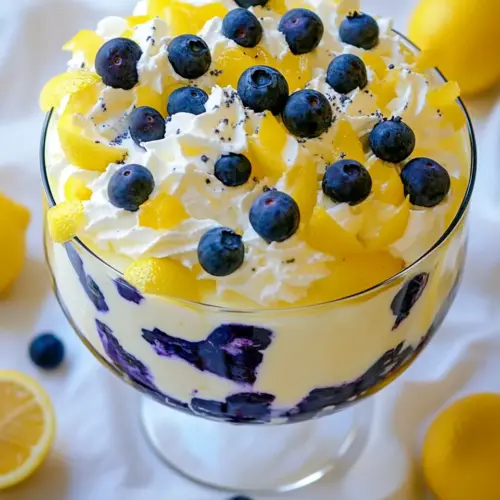
Lemon Blueberry Trifle
Lemon Blueberry Trifle is a creamy layered dessert with bright citrus pudding, airy angel food cake, and bursts of fresh blueberries. This easy make ahead treat balances tangy and sweet textures for an elegant summer finale, ideal for parties and casual gatherings. Try it for a simple showstopper that looks fancy but comes together quickly and reliably.
Equipment
- Mixing Bowl
- Electric Mixer
- Trifle dish
- Whisk
Ingredients
- 1 cup heavy cream Whip to soft peaks to create a light, airy texture that tops and layers the trifle, providing richness and structure when folded with other components. Chill before assembly to maintain volume and prevent weeping between layers.
- 1/4 cup powdered sugar Sweeten gently to balance tart and tangy flavors, dissolving completely to avoid graininess and ensure a smooth finish in the whipped cream layer. Adjust amount slightly if using sweeter fruits or puddings to keep overall sweetness harmonious.
- 1/2 teaspoon vanilla extract Flavor mildly to enhance the sweetness and aroma of the cream and custard layers, contributing a warm, familiar note that complements lemon and blueberry accents. Use pure extract sparingly to avoid overpowering delicate citrus flavors.
- 2 (3.4 ounce) boxes instant lemon pudding mix Prepare quickly to form the lemon custard base when whisked with milk, delivering bright citrus flavor and a silky, set texture for layering in the trifle. Hydrate according to package directions to achieve a smooth, spoonable pudding consistency.
- 3 cups whole milk Combine with pudding mix to hydrate and thicken into creamy lemon layers, contributing body and a dairy richness that balances tartness. Use whole milk for optimal creaminess and a stable set in the chilled pudding.
- 1 (8-ounce) package cream cheese, room temperature Soften fully to a spreadable consistency to add tangy creaminess and stability between cake and pudding layers, helping to create luscious contrasts of texture. Beat until smooth to avoid lumps and to integrate seamlessly with whipped cream if desired.
- 2 (14 ounce) angel food cakes, cubed Cube evenly to provide airy, spongy layers that absorb pudding and juices without collapsing, offering light texture and volume to the trifle. Use fresh or day-old cake for best absorption and to prevent becoming soggy too quickly.
- 4 cups fresh blueberries Rinse gently and layer generously to contribute bright, juicy bursts of flavor and natural sweetness, balancing the lemony custard and rich cream components. Reserve a handful for garnish to maintain visual appeal and freshness on top.
- Lemon zest and lemon slices for garnish Zest finely and slice thinly to provide vibrant citrus aroma and decorative contrast, intensifying lemon flavor throughout the trifle without adding extra acidity. Arrange slices attractively on the final dessert for a polished presentation.
Instructions
- For the whipped cream: Place cream and sugar in a chilled mixing bowl and mix on high for 1-2 minutes. Add the vanilla and beat for an additional 1-2 minutes or until soft peaks have formed. Set aside.: Place cream and sugar in a chilled mixing bowl and mix on high for 1 to 2 minutes : You will notice the sound of the mixer change from a liquid ripple to a thicker, velvety swish as the heavy cream aerates, and a soft, sweet dairy aroma will rise. This aeration traps tiny air bubbles that give the cream lift, creating a cloud like texture that supports the pudding without weighing it down. One common mistake is continuing to whip past soft peaks, which leads to grainy, butter like curds, so stop when gentle peaks form and the cream holds shape briefly. Chill your bowl and beaters beforehand to speed whipping and help achieve stable peaks.
- In a large bowl, add the pudding mix and whole milk. Beat for 2-3 minutes or until thickened. Add the cream cheese and beat until mixed in. Fold in half of the prepared whipped cream. Save the other half to top before serving.: As you incorporate the vanilla extract , the scent will deepen and the cream will become silkier under your beaters. This small addition smooths out the sweetness and rounds flavors, so add it slowly and taste. If you whip too long at this stage, the texture can become overly stiff and lose that pillowy mouthfeel that makes the trifle light. If that happens, gently fold in a spoonful of extra cold cream to soften it back.
- In a trifle dish, layer 1/3 of the angel food cake cubes, 1/3 of the pudding mixture, and 1/3 of the blueberries. Repeat layers twice.: When the whipped cream reaches the right soft peak stage, its glossy surface will catch the light and it will hold peaks that gently fold over at the tip. Transferring it to a bowl and covering it keeps it cool and prevents it from absorbing fridge odors. A common error is leaving it at room temperature too long, which can cause it to deflate; keep it chilled until assembly for best structure.
- Chill in the refrigerator for 2-4 hours or until fully chilled before serving. Top with reserved whipped cream, additional blueberries, lemon slices, and lemon zest before serving.: When you combine the instant lemon pudding powder with cold whole milk , you will hear a quiet whisking rhythm and see the mixture thicken within moments. The milk temperature matters, because cold liquid yields a firmer, silkier pudding. Whisk briskly so the powder dissolves without lumps, and scrape the bowl sides to ensure even mixing. If you whisk too slowly, you may end up with grainy pockets of dry mix.
- Beat for 2 to 3 minutes or until thickened: As you beat, the pudding will go from glossy liquid to a custard like mass that trails the whisk slightly. This is when it gains body to support the layers. A good sign is when the mixture clings to the whisk and leaves a soft ribbon as you lift; that indicates proper thickening. Over beating is unlikely here, but under beating can produce a loose layer that will cause the cake to sink.
- Add the cream cheese and beat until mixed in: Room temperature cream cheese should blend into the pudding smoothly, and you will smell a faint tang as it integrates. Beat until the mixture is homogeneous and silky, avoiding streaks. If the cream cheese is too cold, you will get lumps, so always soften it first. If lumps form, beat a bit longer or strain the mixture for ultimate smoothness.
- Fold in half of the prepared whipped cream: Using a gentle folding motion combines the airy whipped cream with the denser pudding, creating a lighter texture while preserving body. You will see the mixture become paler and slightly fluffier, and the aroma will shift to a balanced sweet tartness. Avoid vigorous stirring which deflates the air you worked to create; that would yield a denser result. If you accidentally overfold, the trifle will still be tasty but less airy.
- Save the other half to top before serving: Reserving the remaining whipped cream provides a fresh, decorative crown that keeps the top looking bright and inviting. Keep this portion chilled so it holds peaks for piping or dolloping. A common slip is letting it sit uncovered, which can dry the surface; cover it lightly with plastic wrap to preserve texture.
- In a trifle dish, layer 1 third of the angel food cake cubes, 1 third of the pudding mixture, and 1 third of the blueberries: As you assemble, the visual rhythm matters, so place the cubed angel food cake evenly to form a base that will soak just enough pudding to be tender yet still slightly springy. The first layer of pudding should be spread to coat the cake, and the blueberries should be distributed for even fruity pops. You will notice the scent of lemon brighten as layers accumulate. Avoid packing the cubes too tightly, or drainage and texture will suffer.
- Repeat layers twice: Building repeated tiers creates those inviting strata that make a trifle dramatic. With each repeat, you will hear the gentle thud of cake settling, see the pudding smooth glossy on top, and the berries introduce specks of deep purple. Taking a moment to press gently ensures good contact between layers but avoid compressing them flat. Pressing too hard will crush the light cake structure and create a gummy feel.
- Chill in the refrigerator for 2 to 4 hours or until fully chilled before serving: Chilling allows the flavors to marry and the pudding to set, giving the trifle a cohesive, sliceable texture. You will notice the aromas calm and the layers slightly firm to the touch when ready. Resist the urge to serve immediately, because insufficient chilling can cause the trifle to fall apart when scooped. If you need to speed things up, chill for at least 90 minutes, but longer resting enhances integration.
- Top with reserved whipped cream, additional blueberries, lemon slices, and lemon zest before serving: Right before serving, add the reserved whipped cream and garnish with fresh blueberries and bright lemon zest so the presentation feels fresh and lively. The citrus oil from the zest contributes aroma that wakes the palate, and the final fruit encourages the first spoonful to be fruit forward. A frequent mistake is garnishing too early, which can cause berries to bleed juice; always garnish just before serving for the cleanest look.
Notes
- Chill bowl and beaters: Cold equipment helps the heavy cream whip faster and reach stable peaks without overworking, saving time and getting the texture right on the first try.
- Soften cream cheese properly: Bring the cream cheese to room temperature and beat it smooth before adding to pudding, this prevents lumps and ensures a silky, even layer.
- Measure pudding mix accurately: Use the exact two 3 point four ounce boxes called for, because instant pudding formulas are calibrated to a specific ratio of powder to liquid for ideal set and flavor.
- Layer with intention: Distribute cake, pudding, and blueberries evenly so every serving has balance, and resist packing layers tightly to preserve the airy character of the angel food cake.
- Garnish last minute: Add lemon zest and slices right before serving to keep them bright and aromatic, preventing the zest from losing its volatile oils over time.
- Make ahead wisely: Prepare the pudding and whipped cream components ahead, but assemble no more than a day early to maintain the best texture and presentation.