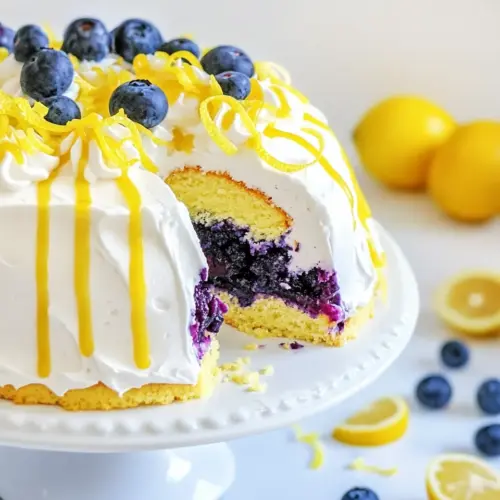
Lemon Blueberry Surprise Cake
Lemon Blueberry Surprise Cake is a bright, easy crowd pleaser with creamy texture and jammy blueberry pockets. This moist, citrus forward cake comes together with pantry staples, making it an ideal easy dessert for spring gatherings and weekend baking. Try it for a cheerful celebration and you will see why it disappears fast.
Equipment
- Bundt Pan
- Mixer
- Spatula
- Measuring Cups
Ingredients
- 1 box Lemon Cake Mix Provides the primary structure and lemon flavor for the cake; contains flour, sugar, and leavening to create a tender crumb and consistent rise when combined with wet ingredients. Enhances overall convenience and ensures uniform texture across the batter.
- 13.4 oz package lemon INSTANT pudding mix Adds concentrated lemon flavor and extra thickening power to the batter; instant pudding helps retain moisture and produces a denser, more custard-like crumb. Contributes sweetness and helps the cake stay moist during baking and storage.
- 1 cup plain greek yogurt Adds moisture and density while contributing tangy flavor and tenderness; Greek yogurt also provides acidity that can brighten the lemon profile and improve crumb structure. Helps emulsify and bind ingredients for a rich mouthfeel.
- 3/4 cup vegetable oil Provides fat to tenderize the crumb and carry flavor; vegetable oil keeps the cake moist and gives a soft, even texture. Ensures longer freshness compared to solid fats and helps with an even rise.
- 4 large eggs Contributes structure, leavening, and richness through proteins and emulsification; eggs help set the cake and provide lift and stability to the batter. Also adds moisture and improves overall texture and color.
- 1 1/2 cups canned blueberry pie filling Introduces pockets of sweet, fruity blueberry flavor and a glossy, jammy contrast when folded or swirled into the batter; canned filling adds sugar and fruit pieces that punctuate each bite. Helps balance the lemon with bursts of sweet-tart blueberry.
- 2 cups powdered sugar Creates a smooth, sweet glaze or frosting base when combined with liquid; powdered sugar dissolves easily to form a silky finish that complements the cake's tartness. Can be adjusted for thickness to drizzle or spread.
- 2 tbsp cold milk Thins the powdered sugar to a spreadable consistency and smooths the glaze; cold milk helps achieve desired viscosity for drizzling or icing. Allows control over sweetness and texture of the glaze without altering flavor much.
- 1/4 cup toasted coconut for topping, optional Adds a crunchy, tropical garnish with toasted flavor and visual contrast when sprinkled on top; optional toasted coconut provides aroma and texture that complements lemon and blueberry. Enhances presentation and gives an extra layer of mouthfeel if used.
Instructions
- Preheat oven to 350 degrees F. Coat a bundt cake pan with non-stick spray and then sprinkle in about 2 tbsp of flour, coat the pan with the flour, discard any excess flour.: As the oven warms to 350 degrees F , the kitchen begins to smell faintly warm and the air feels ready for baking, which is a comforting cue. Greasing and flouring the bundt pan ensures the cake releases smoothly, preserving the decorative ridges. When you tap the pan lightly after coating, you should see an even dusting of flour that clings to the spray, not clumps or bare spots. A common mistake is using too much flour, which can create a dusty outer layer, so shake out extra flour so only a thin coating remains. If you notice wet spots where the spray pooled, wipe them and reapply spray before flouring to avoid sticking.
- In a large bowl combine the cake mix, lemon pudding mix, greek yogurt, oil, and eggs. Mix on low for 30 seconds, then medium speed for 2 minutes. Batter should be thick.: When you combine these wet and dry elements, you will hear the mixer hum and see the batter shift from streaky to cohesive, becoming glossy and thick. The instant pudding dissolves into the batter, amplifying lemon notes and contributing to a velvet texture from the greek yogurt . Mixing on low first prevents flour from puffing out, then increasing to medium for two minutes helps hydrate the dry mix fully and incorporates air for a lighter crumb. The batter will cling to the paddle and form slow ribbons when lifted, signaling readiness. Avoid overmixing beyond two minutes, because too much mixing can develop gluten and make the crumb tougher, which is the most common error at this stage.
- Scoop half of the batter into the prepared bundt cake and spread to an even layer. Use a spatula or spoon to create a valley in the batter, bringing it up on the sides and middle of the pan.: The batter should feel slightly dense and silky as you spoon it into the pan, and its surface should smooth easily with a spatula. Creating a valley is critical for holding the blueberry filling in the center, so press the batter up along the sides and into a shallow well in the middle. You will notice the batter resists quick spreading, which is good because it helps cradle the filling. If the valley is too shallow the filling may run into the sides and bake into the outer cake, so make a distinct trough that will accept the filling without touching the pan walls.
- Spoon the blueberry pie filling into the valley of batter and then top with the remaining batter, being careful to enclose all the pie filling and not let it touch the sides of the pan.: As you spoon the blueberry filling into the well, it should sit glossy and slightly domed, not spilling over. The contrast between the pale batter and deep blue filling is visible and satisfying. When you cover it with the remaining batter, aim to fully encase the filling so it remains a concealed center rather than leaking during bake. If any filling contacts the pan sides, it can caramelize and stick, so keep the filling centered and use the spatula to gently pull the top batter over, sealing the fruit away from direct pan contact.
- Bake for 45 to 50 minutes, or until set. Let cool for 15 minutes before inverting onto your cake plate. Let cool completely.: In the oven the aroma shifts to bright lemon with warm, baked sugar notes, and you may hear a faint crackle as moisture escapes. The cake is done when the top springs back slightly to the touch and a toothpick in the cake portion comes out with a few moist crumbs, avoiding wet batter near the filling. Allowing the cake to cool for 15 minutes stabilizes the center so the filling does not pour out when inverted. If you try to unmold too soon the cake can break or the filling may run, so patience is essential. Once cooled completely, the cake firms and slicing will reveal the jammy blueberry core.
- To prepare the icing simply whisk together the powdered sugar and milk. The icing will be really thick. If you want a thinner icing add just a teaspoon more milk at a time until desired consistency is reached. Pour over the cooled cake, letting it run down the sides. Sprinkle with the toasted coconut if desired. Enjoy!: The glaze should feel like a dense ribbon as you whisk, glossy and opaque, with a sweet vanilla free finish focused on sugary balance for the lemon cake. Adding milk slowly keeps you from ending up with a syrupy flood, so adjust in tiny increments until it pours slowly but clings to the bundt ridges. Pouring the glaze creates soft cascades down the flutes, and the contrast between matte cake and shiny icing is visually pleasing. Toasted coconut , if used, adds a warm aroma and crunch, and you should sprinkle it right after glazing so it sticks. A common misstep is glazing a warm cake, which melts the icing into a thin sheen, so always glaze only when fully cooled.
Notes
- Use full fat greek yogurt for the creamiest, most tender crumb; lower fat yogurts make the batter thinner and can affect structure.
- Measure the oil carefully to avoid an overly greasy cake; 3 quarters cup is the sweet spot for moisture without heaviness.
- Choose a thick blueberry filling to prevent leaking; if your filling is watery, cook it down slightly on the stove first until it thickens.
- Check doneness in the cake, not the filling by inserting a toothpick into the cake portion; the center around the filling may remain moist without being underbaked.
- Sift powdered sugar before mixing the glaze to ensure a smooth, lump free finish that clings beautifully to the cake's ridges.
- Cool fully before slicing so the hidden filling sets and slices hold their shape for a cleaner presentation.