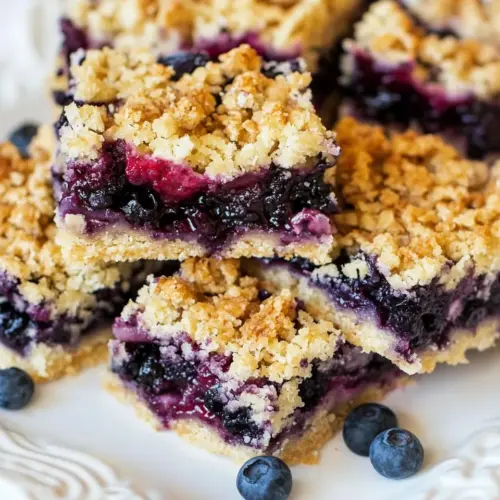
Lemon Blueberry Streusel Bars
Lemon Blueberry Streusel Bars are a bright, buttery treat with a crisp crumb and juicy fruit pockets. These easy, crowd pleasing bars combine tangy lemon, sweet condensed milk, and bursting blueberries for a dessert that is both comforting and refreshingly light, perfect for summer gatherings or casual entertaining, and worth making for their delightful balance of textures.
Equipment
- 9 x 13-inch metal baking pan
- Foil
- Mixing Bowls
- Pastry Cutter
- Flat wide glass
- Spatula
- Wire Rack
Ingredients
- 1 cup (2 sticks) unsalted butter, at room temperature Cream softened to provide richness and moisture while helping bind the streusel and crust components for a tender, buttery texture throughout the bars.
- 3 cups all purpose flour Combine to create structure and bulk in both the crust and streusel layer, contributing to a tender crumb and helping the bars hold together when sliced.
- 1 1/2 cups old fashioned rolled oats (don't use quick cook oats) Add rustic texture and chewiness while absorbing some of the fat and moisture; oats also contribute a hearty flavor and help balance sweetness in the streusel and crust.
- 1 1/3 cups packed light brown sugar Sweeten and deepen flavor with a hint of caramelized molasses, improving the streusel’s chew and color while balancing the tart lemon filling.
- 1 teaspoon salt Enhance overall flavor by balancing sweetness and brightening the profile; also helps control yeast-free baking reactions and strengthen gluten slightly.
- 1 teaspoon baking powder Leaven gently to provide slight lift and tenderness in the crumb, helping the crust and streusel to be light rather than dense.
- 1 large egg (separated) Separate to use the yolk for richness that enriches dough and the whipped white for lightening the topping or providing structure to the filling as needed.
- 1 14-ounce can sweetened condensed milk Contribute creamy concentrated sweetness and body to the lemon filling, creating a smooth, custard-like layer that sets when baked without curdling.
- 1/2 cup freshly squeezed lemon juice Provide bright, tart acidity to cut through the sweetness, set the filling with a pleasant tang, and enhance the overall citrus flavor of the bars.
- 2 teaspoons grated lemon zest Offer concentrated citrus aroma and bright intense lemon flavor; zest accentuates the lemon character without adding extra liquid to the filling.
- 2 1/2 cups room temperature blueberries, washed and dried on paper towels Supply fresh, juicy bursts and tender fruit texture that contrast the buttery streusel and custardy lemon layer, adding color and natural sweetness to each bite.
Instructions
- Preheat the oven to 350°F. Line a 9 x 13-inch metal baking pan with foil, leaving a 1-inch overhang on the ends. Spray the foil with cooking spray - bottom and sides of the pan.: Warm air in the oven ensures even baking and a consistent rise while lining the pan with foil makes removing the bars effortless once cooled. You'll notice the oven giving off a gentle heat and the foil will shine when the spray is applied, which helps prevent sticking. If the pan is not well lined, the bars can cling and tear when lifted out, so make sure the overhang is generous and the foil is pressed into corners smoothly to prevent batter seepage.
- In a large bowl, whisk together the flour, oats, sugar, salt, and baking powder. Using a pastry cutter (or your fingers), blend the butter completely into the flour mixture. Transfer 2 cups of the crumb mixture to another bowl and reserve for the topping.: As you combine the dry ingredients, you should see a uniform pale mixture that smells faintly of brown sugar and oats. Rubbing the butter into the dry mix creates pea sized bits that will melt in the oven, producing flakiness and pockets of richness. When reserving the topping, you are creating a smaller batch of crumbs that will toast beautifully, so make sure it is evenly mixed. A frequent mistake is overworking the butter into the flour which can make the crumbs greasy, so stop when small, coarse lumps remain.
- Blend the egg white into the remaining crumbs and then press the mixture into the bottom of the pan to form a level crust. Use the bottom of a flat, wide glass to tap the mixture and even it out.: The addition of the egg white binds the crumbs so they hold together after pressing. You should feel the mixture come together under pressure, and the surface will look compact and smooth when tamped down. Using a glass gives even pressure and helps prevent thin spots. If the crust seems too loose or sandy, you may not have mixed the white in enough, which can cause it to crumble after baking, so press firmly until it holds.
- Bake the crust 10 to 12 minutes, or until it starts to form a dry top.: During this short bake, the edges will take on a light golden hue and the aroma of toasted oats will emerge. The top will lose its raw sheen, signaling that the base is set enough to hold the filling without becoming soggy. Remove it when it looks dry rather than waiting for deep color, since overbaking now can make the crust too firm. Watching closely prevents a dry crust that steals tenderness from the finished bars.
- Meanwhile, in a medium bowl, whisk the condensed milk, lemon juice & zest, and egg yolk. Let the mixture stand for 5 minutes (it will begin to thicken).: As you whisk, the mixture will become glossy and slightly viscous, thanks to the sweetened condensed milk and egg yolk emulsifying with the lemon. The lemon oils from the zest will perfume the mixture, releasing a citrusy aroma. Letting it rest allows tiny air bubbles to settle and the components to meld, which helps the filling set evenly in the oven. If you skip the rest, the filling may spread too thinly and not develop the delicate skin that signals doneness.
- Sprinkle the blueberries evenly over the hot crust and then drop spoonfuls of the lemon mixture over the blueberries. Spread gently with a spatula to distribute as evenly as you can. Bake until the lemon mixture begins to form a shiny skin - 7 to 8 minutes.: The hot crust will warm the blueberries slightly and the contrast of cold fruit on warm dough creates gentle steam, which helps the filling meld with the berries. As you drop the lemon mixture, it will sit around and between the berries, creating glossy pockets that shimmer when baked. After about seven to eight minutes you will see the filling take on a slight sheen and the edges may show tiny bubbles. Avoid overworking when spreading, as mashing the berries releases too much juice and can dilute the filling.
- Sprinkle the reserved crumble topping over the lemon-blueberry layer, pressing the streusel between your fingers into small lumps as you sprinkle. Bake until the filling is bubbly at the edges and the topping is brown, 25 to 30 minutes.: The streusel will begin to brown and crisp, releasing a toasty fragrance and forming a textured, golden top. Pressing the crumbs into small lumps helps them maintain contrast and prevents them from completely melting into the filling. When the edges bubble, it indicates the filling is set and heated through. A common pitfall here is underbaking which leaves the center too soft, so watch for the bubbling edges and an even golden color on top.
- Let the bars cool in the pan on a rack until just warm, about an hour. Carefully lift them out of the pan using the foil overhang and transfer to a wire rack to cool completely. Remove the foil and cut into 24 bars when cool. (If you have time to chill the bars, they're easier to cut cleanly when chilled).: Cooling allows the filling to firm so the bars slice neatly. You will notice the filling lose its gloss and hold shape as it cools, and the streusel will crisp further. Lifting with the foil keeps the bars intact, and chilling tightens the center, giving clean edges. Cutting too soon leads to squished pieces, so patience pays off. If you need to speed things up, refrigerate for a short period but avoid freezing immediately, which affects texture.
Notes
- Measure flour correctly: Spoon the all purpose flour into your measuring cup and level it off rather than scooping, which prevents a dry, dense crust.
- Use old fashioned oats only: The old fashioned rolled oats give the streusel structure and chew, while quick oats will break down and produce a less distinct topping.
- Dry the berries well: Pat the blueberries dry to avoid adding excess moisture to the filling, which keeps the bars from becoming soggy.
- Don't overwork the crust: Blend the butter just until pea sized pieces remain for a tender, flaky texture rather than a tough base.
- Check doneness with visual cues: Look for a shiny skin on the lemon layer and bubbling at the edges to ensure proper set and avoid underbaking.