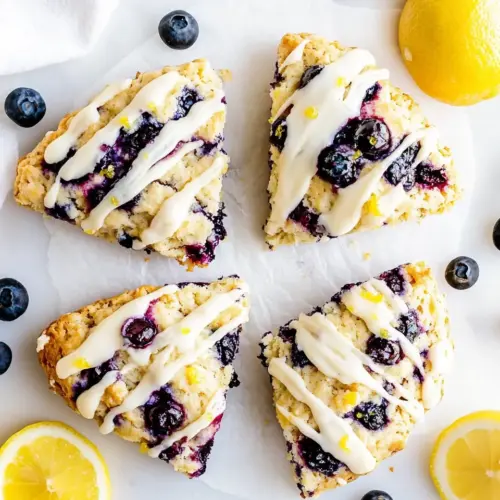
Lemon Blueberry Scones
Lemon Blueberry Scones deliver tender, flaky pastry with bright citrus and juicy bursts of blueberry. This easy bake produces golden tops with a crunchy turbinado sugar finish and a glossy lemon glaze. Perfect for brunch or a leisurely breakfast, they feel indulgent yet simple, and make a great choice when you want an impressive but approachable pastry.
Equipment
- Baking Sheet
- Parchment Paper
- Large Bowl
- Pastry blender
- Spatula
- wire cooling rack
- Small Bowl
- Pastry Brush
Ingredients
- 1/4 cup granulated sugar Adds sweetness and helps balance the lemon’s tartness while aiding in browning during baking; dissolve into the wet ingredients for even distribution and tender texture.
- 1 tablespoon lemon zest Provides concentrated citrus aroma and bright flavor that infuses the dough; finely grate only the yellow outer peel to avoid bitterness and measure packed zest for consistency.
- 2 cups all-purpose flour Forms the structural base of the scones by supplying gluten and bulk; sift or whisk to eliminate lumps and ensure even mixing with leaveners for light crumb.
- 1 tablespoon baking powder Leavens the dough by releasing carbon dioxide when heated, creating lift and a tender, flaky interior; whisk into the dry ingredients to distribute evenly before adding butter and liquids.
- 1/2 teaspoons salt Enhances overall flavor by balancing sweetness and highlighting other components; dissolve into the dry mix so it seasons the dough uniformly.
- 6 tablespoons cold unsalted butter, cut into 1/4-inch cubes Contributes rich flavor and creates flaky layers when cut into the flour; keep cold and use small cubes to produce pockets of butter that melt into tender pockets during baking.
- 1 cup heavy cream, plus 1 tablespoon for brushing the scones Adds fat and moisture to the dough while promoting tenderness and a rich mouthfeel; reserve a tablespoon to brush the scones for a golden crust before baking.
- 1 teaspoon pure vanilla extract Lends a warm, sweet background note that complements citrus and berries; fold into the wet ingredients to distribute its aroma throughout the dough.
- 1 cup blueberries, fresh or frozen (don’t thaw frozen berries) Offers fresh, juicy bursts of fruity flavor and visual appeal; gently fold in at the end to avoid crushing, and leave frozen to reduce bleeding into the dough if using frozen berries.
- 2 tablespoons turbinado sugar Provides a crunchy, caramelized finish when sprinkled on top; apply before baking to add texture and a subtle molasses-like sweetness to the crust.
- 1 cup confectioners’ sugar Creates a smooth, sweet glaze or finishing drizzle that balances tart lemon; whisk with lemon juice until smooth and adjust thickness to taste for glazing cooled scones.
- 2 tablespoons fresh lemon juice Delivers bright acidity and citrus tang to balance sweetness and enhance blueberry flavor; mix into the glaze or dough to add fresh lemon brightness without overwhelming other ingredients.
Instructions
- Preheat oven to 400 degrees F. Line a large baking sheet with a Silpat baking mat or parchment paper. Set aside.: You will notice the oven warms the kitchen with a dry heat that promises crisp edges once the scones are inside. The preheating ensures an immediate burst of steam from the cold butter , which encourages lift and flakiness. A lined baking sheet prevents sticking and promotes even browning. Common mistake, forgetting to preheat fully, leads to under risen and pale scones.
- In a large bowl, combine the granulated sugar and lemon zest. Rub together with your fingers until fragrant. Add the flour, baking powder, and salt. Whisk until combined.: As you rub, inhale the lemon oil scent, an immediate sign the sugar has captured the zest. The dry mixture should feel airy, with the sugar and zest thoroughly dispersed, which helps even distribution of citrus in every bite. Whisking aerates the flour and activates the baking powder , producing a light texture. Avoid over-rubbing the zest into the sugar until it becomes paste like, which would concentrate oils unevenly.
- Using a pastry blender or your hands, quickly cut the cold butter into the flour mixture. Mix until mixture resembles coarse meal, with a few larger butter lumps.: The sound here is a quiet, coarse rustling as flakes of cold butter break into the flour. You should still see small chunks the size of peas, and these are crucial because they melt into little pockets creating lamination. If you overwork the butter until it fully integrates, you lose flakiness and end up with dense scones, so work swiftly and chill if the butter warms.
- In a small bowl, whisk together 1 cup heavy cream and vanilla extract. Pour the liquid ingredients over the flour mixture and stir with a spatula until dough begins to form. Don’t over mix. Gently fold in the blueberries.: The batter will transform from dusty crumbs to a shaggy dough, picking up moisture evenly. You should hear a gentle scraping as the spatula brings the mixture together, and visually it will start to cohere without looking glossy. Folding in the blueberries should be gentle to avoid crushing them, as burst berries can color the dough and release excess moisture. Over mixing here will result in tougher scones.
- Transfer dough to a floured countertop and gently push the dough together with your hands, just until it forms a ball. Form the dough into a circle by patting the dough and gently pressing the dough. You want the scones to be about 1-inch thick. Don’t overwork the dough. You want to work quickly so the butter doesn’t get too warm. Use a sharp knife to cut the scones into 8 triangles.: The feel of the dough should be slightly cool and tacky but not sticky. Patting into a circle helps create even thickness for uniform baking. When you press, you may feel lumps where butter and blueberries sit, and that is good. A jagged or warm dough will spread too much; chilling briefly can firm it up. Use a sharp knife in a single motion to cut clean edges, avoiding sawing which can compress the dough.
- Place scones on prepared baking sheet and put in the freezer for 15 to 20 minutes. This will prevent the scones from spreading when baking.: Chilling on the sheet firms the butter and sets the shape, so when the scones hit the hot oven they rise instead of flattening. The surface will feel cool to the touch after chilling, and this short rest preserves texture. Skipping this step often causes wide, flat scones that lose their tender layers.
- Remove the scones from the freezer. Use a pastry brush to brush the tops of the scones with the additional heavy cream. Sprinkle the scones with turbinado sugar.: Brushing with heavy cream adds fat that browns beautifully under heat, giving that inviting golden top. The turbinado sugar adds a crunch and sparkle, and when you brush, you may see the cream bead slightly before absorbing. If you brush too vigorously you can distort the edges, so use light, even strokes.
- Bake for 18 to 23 minutes, or until scones are golden brown on the bottom and around the edges. Let the scones cool on the baking sheet for 5 minutes and then transfer to a wire cooling rack.: As they bake you will see the tops bloom to a warm golden color, and the scent of butter and lemon will deepen. The bottoms should turn golden too, which indicates full bake. Letting them rest on the sheet allows carryover cooking and helps set the crumb. A common error is removing too soon, which risks a doughy center, or leaving too long which dries them out.
- While the scones are cooling, make the lemon glaze. In a small bowl, whisk the confectioners’ sugar and lemon juice together. Drizzle the glaze over the scones. Enjoy!: The glaze should be smooth and glossy, flowing slowly from the whisk in a thick ribbon. The sugar and fresh lemon juice will form a balanced, tangy coating that cuts through the scone richness. Drizzle methodically so each scone gets a fine coating and allow it to set briefly before stacking. If the glaze is too thin, add more confectioners’ sugar ; if too thick, add a few drops more lemon juice . A mistake is glazing piping hot scones, which can make the glaze run off, so let them cool just enough.
Notes
- Chill the butter: If your unsalted butter starts to soften while you work, pop the bowl into the refrigerator for a few minutes, this restores coldness and ensures flaky pockets.
- Frozen berries: You can use frozen blueberries without thawing, fold them in frozen to minimize color bleed and moisture, and expect slightly longer bake time if they cool the dough.
- Flour measuring: Fluff your all-purpose flour before spooning into the measuring cup and level off, this prevents dense scones from packing too much flour.
- Flavor boost: Rubbing the lemon zest with the granulated sugar releases oils and distributes citrus aroma evenly, so do not skip this step even if it feels small.
- Make ahead: You can shape and freeze unbaked scones on the sheet, then bake from frozen adding a few extra minutes, which is great for last minute mornings.