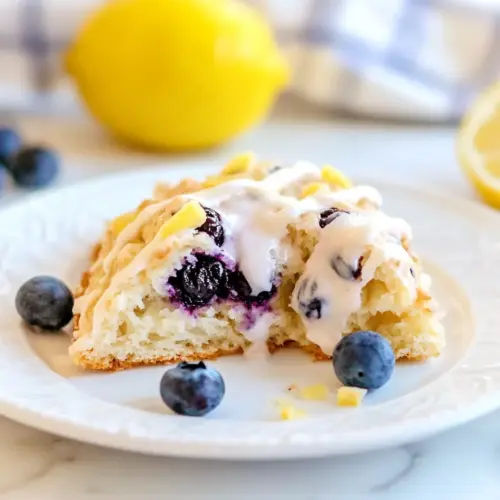
Lemon Blueberry Scones
Lemon Blueberry Scones are tender, buttery pastries studded with bursting blueberries and bright lemon flavor. These easy, flaky scones bake up golden with a sweet powdered sugar glaze and make a delightful addition to brunch or a leisurely weekend breakfast. Perfect for sharing and simple enough for bakers of any level, they are worth making for the fresh citrus and warm berry pockets.
Equipment
- Sheet Pan
- Parchment Paper
- Large Bowl
- Pastry blender
- Whisk
- Rolling Pin
- Cooling rack
Ingredients
- 1 1/2 cups all purpose flour Provide structure and body to the scones by contributing gluten and starch; measure precisely to maintain tender crumb and avoid toughness. Sift or spoon into the cup for accurate volume and combine with dry ingredients for even distribution.
- 2 tbs granulated white sugar Add subtle sweetness to balance lemon tartness and blueberries while encouraging proper browning on the crust. Sprinkle into the flour mixture and adjust slightly if using particularly sweet fruit to prevent overly sugary dough.
- 1 tbsp lemon zest about 1 lemon's worth Brighten flavor with concentrated citrus oils and aromatic intensity to enhance the overall lemon profile in the scones. Zest finely and mix with dry ingredients so the oils disperse evenly throughout the dough for consistent citrus notes.
- 1 tsp baking powder Leaven the dough gently to create lift and a light, flaky texture by producing carbon dioxide during baking. Measure carefully and mix with the flour to ensure even rising without creating large holes or dense spots.
- 1/4 tsp salt Enhance taste by balancing sweetness and highlighting other flavors while helping to control yeast and gluten activity for proper texture. Dissolve into the dry mix so it disperses uniformly and avoids salty pockets in the finished scone.
- 1/4 tsp nutmeg Contribute warm, subtle spice that complements lemon and blueberries while adding depth to the flavor profile. Sprinkle into the dry ingredients in small amounts to avoid overpowering the delicate citrus and berry notes.
- 1/4 tsp cinnamon Introduce a warm aromatic background that rounds out the spice profile and pairs especially well with nutmeg and lemon. Blend evenly with the dry mix to ensure a balanced spice presence throughout each scone.
- 1/4 cup cold salted butter, cut into 1 inch cubes Provide fat for flakiness, tenderness, and rich mouthfeel while creating layers when cut into the flour; keep cold to prevent over-absorbing. Cut into small cubes and work quickly so the butter remains chilled, producing distinct flaky pockets during baking.
- 1 egg Bind ingredients, add richness, and contribute to browning and structure through proteins and fats; use at room temperature if possible for easier incorporation. Whisk lightly before adding to ensure even distribution and avoid overmixing the dough once combined.
- 1/4 cup half and half Add moisture and fat for a softer texture and richer crumb while contributing to tenderness without overwhelming the other flavors. Keep chilled or cold to help maintain dough temperature and combine gently with egg and butter for uniform hydration.
- 1 tbs lemon juice about 1 large lemon's worth of juice Provide fresh acidity to brighten flavor, activate baking powder slightly, and reinforce the lemon character in the scones. Juice and strain to remove seeds, then stir into the wet ingredients to distribute citrus tang evenly.
- 1/2 tsp vanilla extract Enhance aroma and sweetness perception through concentrated vanilla flavor while rounding out the lemon and spice notes. Measure precisely and add to the wet mixture to ensure subtle, balanced flavor without dominating the scones.
- 1 cup fresh blueberries washed and patted dry Add bursts of fruity sweetness and juicy texture while contributing visual appeal and fresh flavor contrast to the lemony dough. Gently fold into the dough at the end to avoid crushing berries and causing excess moisture or discoloration.
- 1/2 cup powdered sugar Create a simple glaze or dusting that adds sweetness and a smooth finish, helping balance the tart lemon; sift to remove lumps for an even coating. Mix with liquid to desired consistency and drizzle over cooled scones to avoid melting into the pastry.
- 1/2 – 1 tbs lemon juice Adjust glaze acidity and texture by adding just enough lemon juice to achieve a pourable consistency and bright, fresh flavor. Add slowly while whisking powdered sugar to reach the desired thickness that will set on the scones.
Instructions
- Prepare a sheet pan by lining it with parchment paper. Set it aside and preheat the oven to 400 degrees Fahrenheit.: When you preheat to 400 degrees Fahrenheit , the oven becomes ready to deliver a quick burst of heat that helps the scones rise and form a golden exterior. You will hear the faint hum of the oven fan and see the temperature climb on the dial or digital display, which signals readiness. A lined sheet pan prevents sticking and ensures clean bottoms while also making cleanup painless. One common mistake is not preheating long enough, leading to scones that spread instead of rising, so wait until the oven reaches temperature before baking. I like to set the prepared sheet pan nearby so the chilled scones go straight from the freezer to hot air, preserving their shape.
- In a large bowl, stir together the all-purpose flour, granulated white sugar, lemon zest, baking powder, salt, cinnamon, and nutmeg.: As you mix these dry ingredients, you will notice the dry, powdery texture and the bright scent of lemon zest releasing essential oils that perfume the flour. Combining the leavening and spices evenly ensures each bite lifts and tastes balanced. Use a whisk or fork to lightly aerate the mixture so the baking powder distributes uniformly. A common mistake is adding wet ingredients to unevenly mixed dry ingredients, which can cause pockets of unbalanced flavor or inconsistent rising. I find stirring for thirty to forty seconds by hand usually does the trick, and the aroma of citrus and warm spice will tell you the blend is ready.
- Use a pastry blender to cut the cold butter into the flour mixture until the butter is completely incorporated. The mixture should resemble coarse meal.: Cutting in cold butter creates pea sized bits that will steam during baking and produce flakiness. The sound is a soft crumbly scrape as the blades work, and the visual cue is a mixture dotted with small, pale lumps of fat. You want it to look like coarse cornmeal, with no large slabs of unincorporated butter. Avoid overworking, because melting the butter with your hands will make the dough greasy and the scones dense. If you do not have a pastry blender, pulse briefly in a food processor in short bursts, watching closely to maintain those small lumps.
- In a separate bowl, whisk together the egg, half and half, lemon juice, and vanilla extract.: Whisking the wet ingredients together produces a glossy, homogenous mix that will evenly hydrate the dough. You will see the egg break down and the mixture thicken slightly, giving a pale, creamy color. The lemon scent will become more pronounced as the acid blends with the dairy. This combination is responsible for both tenderness and flavor, so measure carefully. A frequent error is using warm dairy which can soften the butter prematurely when combined; use chilled half and half for best results.
- Create a well in the middle of the flour mixture. Add the wet ingredients into the well in the center of the dry ingredients and mix them together using a fork at the beginning then transitioning to floured hands. Turn out dough to a clean countertop and knead 2-3 times until the mixture resembles a shaggy dough.: After adding the wet mix into the well, the initial fork work helps incorporate liquids without prematurely warming the butter . The dough should look ragged and barely cohesive, with bits of dry flour still visible, which prevents overdevelopment of gluten. When you knead 2 to 3 times, it should just come together into a shaggy mass; you can see the texture change from crumbly to slightly sticky. The tactile feedback here is crucial, and you will resist the urge to keep kneading. Over kneading leads to tough scones, so stop the moment the dough holds together when pressed.
- Gently fold in the blueberries. This can be difficult to do, but be patient and try not to work the dough too much. It’s okay if some of the blueberries break in the process.: Folding in the blueberries introduces moist pockets that will burst and create juicy notes in the crumb. Use a light hand and fold just until the fruit is distributed, watching the color to avoid turning the dough purple. You will feel small resistance as berries settle into pockets, and occasionally one may give way, leaving a blotch of blueberry color which is normal. A common pitfall is overmixing, which will crush too many berries and make the dough soggy. If a few berries break, that contributes to flavor, but avoid vigorous stirring.
- Roll the dough out until about 1 inch thick and cut it into an even square. Cut the square dough in four smaller squares. Then cut corner to corner, diagonally down the middle, to create triangles. Place each scone on the sheet pan and then chill the dough in the freezer for 10 minutes.: Rolling to 1 inch gives the right balance of height and even baking. As you roll, the dough will look slightly tacky but should not stick; if it clings, dust the surface lightly with all purpose flour . Cutting into an even square and then triangles yields uniform pieces that bake consistently. Chilling the shaped scones firms the butter once more and keeps their edges sharp. A frequent error is skipping the chill step, which causes scones to spread and lose their flakiness. Ten minutes in the freezer is enough to relax the dough and firm the fat.
- Bake in the oven for 22-25 minutes or until lightly golden on the bottom of the scone. Cool completely. Once cool, make the glaze.: During baking, you will see the edges go from pale to a warm, even golden color and smell the mingling scents of butter , lemon , and fruit. The bottoms should be lightly golden when you lift one to check. Cooling completely is important because warm scones will absorb glaze and become soggy. A common mistake is removing them too early; allow them to cool on a rack so air circulates and the crumb sets properly. The timing will vary slightly by oven, so watch for color and firmness rather than relying solely on minutes.
- To make the glaze, whisk together the powdered sugar and lemon juice. Add more lemon juice if the mixture is too thick. If it’s too thin, add in a little extra powdered sugar. Drizzle glaze over baked, cooled scones. Let the glaze set before plating and serving.: The glaze should be smooth and glossy; when you whisk powdered sugar with lemon juice , you can adjust the consistency to a slow ribbon drizzle or a thicker coat. As you whisk, steam or citrus aroma may lift faintly, and the texture should be free of lumps. Drizzling over completely cooled scones ensures the glaze stays on the surface forming a pretty sheen. A common misstep is glazing warm scones, which causes the glaze to melt and run off, so be patient and allow full cooling before decorating.
Notes
- Chilling matters Keep the butter and dough cold, especially during shaping. Cold fat creates steam pockets as it melts in the oven, which produce that flaky texture we want. If the kitchen is warm, pop shaped scones into the freezer for an extra five minutes before baking. Avoid letting the butter soften completely, because that will lead to spreading and denser crumb.
- Measure flour correctly Spoon and level all purpose flour rather than scooping with the measuring cup. Scooping compresses flour and adds too much, making scones dry. If your dough feels stiff, you can add a teaspoon of half and half at a time until it reaches the right shaggy consistency.
- Protect the berries Use fresh, dry blueberries and fold them in gently to avoid color bleeding and soggy dough. If you must use frozen, do not thaw them first and toss them in a dusting of flour to reduce bleeding. Handle gently to keep their shape and reduce bruising.
- Adjust glaze thickness Whisk powdered sugar with lemon juice a little at a time to reach your preferred consistency. For a thicker glaze, add more powdered sugar. For a thin drizzle, add more lemon juice. Let the glaze rest briefly to remove tiny air bubbles before drizzling.
- Watch your oven Oven temperatures vary, so use visual cues like a light golden color on the bottom and a firm top to know when scones are done at about 22 to 25 minutes. If they brown too quickly on top, tent with foil to allow the interior to finish baking without overbrowning.
- Timing for mixing Limit mixing time once wet ingredients touch dry ingredients. Overmixing develops gluten and results in dense scones. Mix until ingredients are just combined and the dough looks shaggy, then stop. If you accidentally overmix, try chilling the dough longer before baking to mitigate toughness.