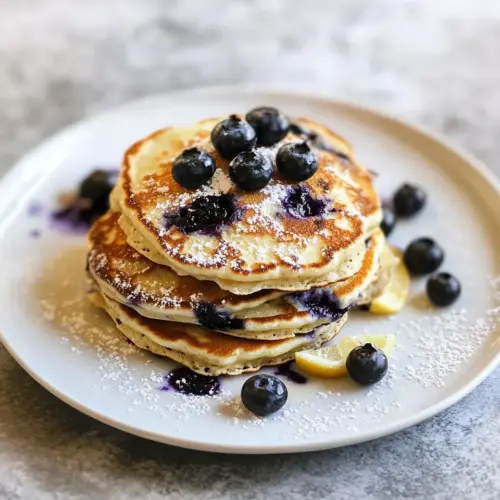
Lemon Blueberry Pancakes
Lemon Blueberry Pancakes are fluffy, tangy, and bursting with juicy blueberries. This easy, crowd pleasing breakfast uses buttermilk for tender texture and a bright hit of lemon for freshness. Perfect for weekend brunch or an easy weeknight treat, these pancakes brown beautifully and taste irresistible straight from the skillet.
Equipment
- Skillet
- Mixing Bowl
- Measuring Cup
- Measuring Spoons
Ingredients
- 2 cups buttermilk Provide tangy richness and acidity that activates leavening agents; contributes moisture and a tender crumb while imparting a subtle tang characteristic of classic pancakes. Use at room temperature to blend smoothly with wet ingredients and help create a light batter. Can be substituted with yogurt diluted with milk in a pinch, but flavor will differ slightly.
- 1/2 teaspoon baking soda React with acidic components to produce carbon dioxide, helping batter rise for fluffy pancakes. Dissolve briefly into the wet mixture to ensure even distribution and avoid metallic taste from overuse. Measure accurately since excess can create off flavors.
- 1 lemon, zest and juice Offer bright citrus aroma and sharp acidity that lighten flavor and balance sweetness; zest adds concentrated lemon oils while juice adds moisture and tang. Incorporate zest into batter for fragrance and fold juice into wet ingredients for acidity that interacts with baking soda. Wash and dry before zesting to avoid bitter pith.
- 1 large egg Bind ingredients together and add structure while contributing richness and a bit of lift when beaten; yolk adds fat for tenderness and white adds protein for structure. Beat lightly before adding to ensure even incorporation into the batter and help trap small air bubbles. Use fresh, properly refrigerated eggs for best results.
- 1 1/2 teaspoons vanilla extract Impart warm, sweet floral notes that enhance the overall flavor profile and complement lemon and blueberries. Mix with wet ingredients to distribute flavor evenly throughout the batter without overpowering other components. Use pure vanilla extract for best aromatic clarity.
- 2 tablespoons butter, melted Contribute richness and moisture while adding a subtle buttery flavor that improves mouthfeel and helps brown the pancake surface. Melt and cool slightly before mixing to prevent cooking the egg or prematurely activating leaveners. Can be browned for a nuttier flavor if desired.
- 2 cups all-purpose flour Provide the primary structure and bulk of the batter through gluten formation and starch; determines texture and density of the pancakes. Sift or whisk with dry leaveners to remove lumps and ensure uniform distribution for consistent rise. Handle gently when mixing to avoid overdeveloping gluten for tender pancakes.
- 1/4 teaspoons salt Enhance and balance flavors by bringing out sweetness and suppressing bitterness; also slightly strengthens dough structure through ionic interactions. Dissolve with dry ingredients to ensure even seasoning throughout the batter. Use accurate measurement since small quantities affect taste noticeably.
- 2 1/2 teaspoons baking powder Act as a dry leavening agent that releases air when heated, giving pancakes their lift and light texture. Combine evenly with flour and salt so bubbles form uniformly during cooking and avoid uneven rise. Check freshness periodically to ensure effective leavening.
- 3 tablespoons granulated sugar Add sweetness to balance the tartness of lemon and blueberries while also contributing to browning through caramelization on the griddle. Sprinkle into dry ingredients or dissolve into wet mixture for even sweetness distribution. Adjust slightly to taste depending on fruit sweetness.
- 1 cup blueberries, fresh or frozen Provide bursts of juicy, fruity flavor and natural sweetness that contrast the lemon and buttermilk; fresh berries offer brightness while frozen berries can be added straight from the freezer. Fold gently into the batter to avoid crushing and discoloring the batter, and distribute evenly for consistent fruit in each pancake.
Instructions
- Heat skillet over medium heat.: Warmth creates the right crust and interior texture, with a faint buttered aroma rising as the pan approaches temperature. You will often hear a soft hiss the moment batter hits the surface, and that sound is a good indicator the pan is ready. If the skillet is too hot, pancakes will brown too fast and remain raw inside, so watch carefully and adjust to medium if you see rapid smoking. A common error is overheating at the start, which leads to dark edges and uncooked centers; keep patience and aim for a steady medium heat.
- In a mixing bowl stir together buttermilk, baking soda, and juice and zest of lemon. Add egg, vanilla, and melted butter and stir to combine. In a separate large mixing bowl stir together flour, salt, baking powder, and sugar.: The wet mix will smell citrusy and slightly tangy, and when the baking soda meets the buttermilk and lemon juice you may notice tiny bubbles forming, which is a good sign of lift. The dry bowl should be lightly aerated and free of clumps, with the baking powder evenly dispersed. Combining wet and dry in separate bowls ensures even distribution and prevents overmixing, which can make pancakes tough. Avoid whisking vigorously after combining to keep the texture tender; gentle folding is best.
- Pour wet mixture into dry ingredients and stir just until combined. There may be some lumps--don't over-mix the batter. (Add a little splash of buttermilk if the mixture is too thick). Gently stir in blueberries.: The batter will look slightly lumpy and glossy, and those small lumps signal a tender crumb. If it feels too stiff, a tablespoon or two of extra buttermilk will loosen it without thinning too much. When you fold in the blueberries , you should see pockets of color, and the batter will become speckled. Overmixing activates gluten and yields dense pancakes, so stop as soon as the flour streaks disappear. One pitfall is adding too many extra liquids, which can make pancakes spread thin and cook unevenly, so add sparingly.
- Grease the warm skillet with butter or non-stick cooking spray. Use a 1/4 measuring cup to spoon the batter onto the pan. Cook until the bottom of the pancakes are golden and bubbles come to the surface. Flip to the other side and cook until golden.: The greased skillet will sizzle gently when batter meets it, releasing a delicious toasted butter scent. As the pancakes cook, look for even golden browning at the edges and a network of bubbles across the top that have started to set, which signals the right flip moment. After flipping, the second side will cook faster, developing a uniform golden color. A frequent mistake is flipping too early, which leads to broken pancakes; wait for the bubbles to set and edges to look dry before turning.
- Serve with your favorite pancake syrup.: Once plated, the pancakes should steam lightly and smell richly of citrus and warm grain. A drizzle of syrup or a pat of softened butter enhances shine and mouthfeel, and the contrast between syrup sweetness and the lemon brightness is delightful. To keep stacks warm while finishing the batch, place them on a low oven rack; avoid stacking them too high or steam will collapse the texture. Serving directly from the skillet can be tempting, but using a warm plate keeps them from getting soggy quickly.
Notes
- Swap dairy carefully Keep the acid balance when substituting buttermilk by adding a teaspoon of lemon juice to regular milk if needed, which preserves tenderness and lift.
- Adjust sweetness Reduce the granulated sugar by up to half if you prefer a more tart finish, especially if topping with a sweet syrup.
- Blueberry handling If you want even distribution, fold blueberries into the batter gently and avoid stirring them to pieces to prevent bleeding.
- Make ahead You can prepare the dry mix in advance and store it in a sealed container, then whisk in wet ingredients when ready to cook for a fast morning.
- Keep warm Hold pancakes on a low oven rack to keep them tender while you finish cooking remaining batches without drying them out.