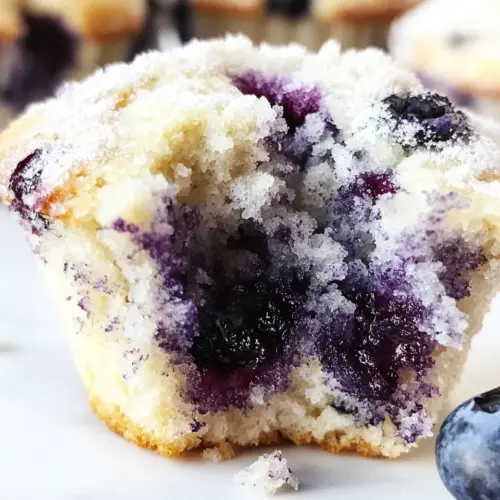
Lemon Blueberry Muffins
Lemon Blueberry Muffins offer a tender, moist crumb with pops of juicy blueberry and bright lemon glaze. This easy, crowd pleasing bake is perfect for brunch or snacks, delivering a soft, buttery texture and a glossy, tangy finish that keeps people coming back for more. Make a batch for a sunny breakfast or to please a hungry crowd.
Equipment
- Muffin Tin
- Mixing Bowls
- Whisk
- Rubber spatula
- Ice cream scooper
- Wire Rack
Ingredients
- 12 oz . blueberries (about 2 1/2 cups) Plump and tart, bursty blueberries add bright fruity flavor and moistness while contributing a fresh texture contrast to the muffin crumbs. Fold gently to prevent color bleed and maintain evenly distributed fruit throughout the batter.
- 2 1/2 cups all-purpose flour All-purpose flour provides the structural base and creates the crumb network that traps leavening gases for lift and shape. Measure accurately and sift if necessary to avoid dense muffin texture and ensure even mixing with dry ingredients.
- 2 1/2 teaspoons baking powder Leavening agent baking powder generates carbon dioxide during baking to produce rise and tender crumb in each muffin. Combine with flour and bake promptly to maximize its chemical reaction and oven-spring.
- 1 teaspoon salt Coarse element salt enhances overall flavor balance, rounding out sweetness and amplifying other ingredients' nuances. Dissolve into the batter for an even savory lift without being detectable as a salty note.
- 1 1/3 cups sugar Granulated sugar sweetens the muffins and contributes to tenderization, moisture retention, and browning of the crust during baking. Cream with wet ingredients to help dissolve and distribute sweetness evenly throughout the batter.
- 2 large eggs Large eggs bind ingredients, provide structure through coagulation, and add moisture and richness for a tender crumb. Whisk until combined to incorporate air and improve batter consistency for better rise.
- 4 tablespoons unsalted butter, melted and cooled Melted and cooled unsalted butter adds rich, buttery flavor and contributes to a tender, moist crumb while controlling fat solids in the batter. Cool before adding to avoid cooking the eggs and to help incorporate evenly.
- 1/4 cup vegetable oil Vegetable oil supplies neutral-flavored fat that keeps muffins moist and extends shelf life by inhibiting staling. Combine with other fats and liquids to ensure a supple batter and even texture.
- 1/2 cup milk Milk contributes liquid for hydration, helps dissolve dry ingredients, and adds proteins and lactose for browning and slight richness. Use at room temperature to promote even blending with fats and prevent batter separation.
- 1/2 cup sour cream Sour cream imparts tangy flavor and acidity that tenderizes the crumb while adding moisture and richness for a soft, dense texture. Its acidity can also react with leaveners to improve lift and flavor complexity.
- 1 tablespoon vanilla extract Vanilla extract provides warm aromatic notes that deepen the overall flavor profile and enhance the perception of sweetness. Add to the wet mixture to distribute its aroma uniformly through the batter.
- 1 teaspoon lemon extract Lemon extract delivers concentrated citrus aroma and bright lemony flavor without adding extra liquid, complementing blueberries and enhancing freshness. Use sparingly to avoid overpowering other delicate flavors.
- 1 1/4 cups sifted powdered sugar Sifted powdered sugar creates a silky, lump-free glaze that dissolves smoothly and provides sweet finish and subtle sheen on cooled muffins. Sifting ensures a smooth texture for mixing with butter and lemon juice.
- 1 1/2 tablespoons unsalted butter, melted Melted unsalted butter in the glaze adds glossy richness and mouthfeel, balancing the powdered sugar's sweetness and helping to set a smooth coating. Mix with powdered sugar and lemon juice for a creamy, spreadable consistency.
- 1 1/2 tablespoons lemon juice Lemon juice supplies fresh acidity and citrus brightness to the glaze, cutting sweetness and tying the muffin flavors together with a zesty finish. Use fresh juice for the cleanest, most vibrant lemon character.
Instructions
- Preheat oven to 425 degrees F. Spray 18 muffin cups (1 1/2 tins) with nonstick cooking spray containing flour or grease and flour muffin cups.: When you set the oven to 425 degrees F , you will notice the air in the kitchen warming quickly and the racks radiating heat, which helps the muffins get an immediate lift. I always make sure the pan is centered so heat circulates evenly; if you use a dark pan the outside will brown faster, so watch the first batch. A common mistake is skipping the flour in the cups, which can cause muffins to stick when they cool. While the oven preheats, the heating element will give off a faint metallic smell that is normal; if you open the oven door too often to check, you will lose heat and the initial rise will be reduced. To test oven accuracy, an inexpensive oven thermometer can be helpful.
- In a large bowl, whisk flour, baking powder and salt together. Add blueberries and toss until evenly coated.: The dry mixture should look uniform and pale after whisking; the baking powder will be evenly distributed, which is crucial for consistent rise. Tossing the blueberries in the dry mix creates a thin coat that helps them stay suspended in the batter rather than sinking. You will see the berries become lightly dusted, and this visual cue means they are ready. One troubleshooting note, if the berries are very wet, pat them dry first, otherwise they may bleed into the batter and make it purple. Overworking this mixture can break berries, so be gentle when folding them in later.
- Whisk sugar and eggs together in a separate medium bowl until combined. Slowly whisk in cooled butter and oil into sugar/eggs until combined, followed by milk, sour cream, vanilla and lemon extract until combined.: As you whisk the sugar and eggs , the mixture will become slightly lighter in color and glossy, which signals proper incorporation. Adding the cooled unsalted butter and vegetable oil slowly keeps the emulsion stable and prevents the eggs from scrambling. When you add the milk and sour cream , the batter will loosen and emit a mild dairy aroma; the acidity of the sour cream helps tenderize the crumb. A common mistake is adding hot butter too soon, which cooks the eggs; always let melted butter cool. Mixing just until homogeneous avoids overbeating, which can toughen the final muffin.
- Using a rubber spatula, fold egg mixture into flour mixture just until moistened, don’t overmix! (mixture will be lumpy): At this stage you will notice streaks of dry flour disappear and the batter come together with visible lumps, which is exactly what you want. Folding gently preserves air and prevents gluten overdevelopment, resulting in a soft, tender crumb. The batter will feel slightly thick and pillowy, studded with blue specks of blueberries . If you overmix, the batter becomes smooth and heavy, and the muffins may be dense; stop folding as soon as the dry pockets vanish. A simple test is to lift the spatula and watch the batter slowly drizzle back into the bowl rather than flowing like a liquid.
- Using an ice cream scooper or large spoon, divide batter evenly among 18 prepared muffin cups.: Scooping creates uniform muffins that bake at the same rate. You should hear a soft slap as the batter hits the paper or pan, and each cup should look filled but not overflowing. Consistent portioning prevents some muffins from baking faster and getting too dark while others remain underdone. A common pitfall is uneven filling, which leads to mismatched baking times; I prefer an ice cream scooper because it helps with speed and uniformity. If you see big air pockets after scooping, tap the pan gently on the counter to settle the batter.
- Bake muffins at 425 degrees F for 17-19 minutes or until toothpick inserted into the center of muffins comes out clean. Let muffins cool in tin for 5 minutes then transfer to wire rack to cool completely before glazing.: During baking you will smell the sweet, buttery aroma intensify and see the tops turn golden; tiny fissures may form on the surface, which is a good sign of rise. The high initial temperature promotes a domed top, then the crumb sets as the interior reaches doneness. Avoid opening the oven during the final minutes, as the sudden temperature change can cause collapse. After removing, letting them rest in the tin for 5 minutes allows the structure to firm up so they lift cleanly. A common error is glazing too soon, which can melt the glaze into the muffin; always cool fully before icing.
- To prepare the Lemon Glaze, beat all the ingredients together until smooth, adding additional lemon juice for tangier, more sugar for sweeter. If you desire a thinner glaze, add milk one teaspoon at a time. Lightly glaze cooled muffins.: The glaze should be glossy and pourable, coating the back of a spoon before you apply it. When you mix the powdered sugar with lemon juice and a bit of melted unsalted butter , the flavor brightens and the texture becomes silky. For a thinner glaze add a touch of milk cautiously, because small additions change viscosity quickly. If the glaze is too thin it will run off; if it is too thick it will crack when set. For an even finish, drizzle from a small spoon or use a piping bag for control.
- Store leftover muffins in an airtight container for up to 5 days.: Proper storage helps preserve the moist crumb and the glaze appearance. Keep them in a single layer or separate layers with parchment to avoid smearing the glaze. If you plan to freeze, wrap each muffin tightly to prevent freezer burn and maintain texture. One common mistake is leaving them uncovered, which leads to a dry, stale texture by day two. When ready to enjoy, thaw at room temperature for best results, or warm briefly for that fresh baked sensation.
Notes
- Let muffins cool completely before glazing, this prevents the glaze from melting and sliding off; patience here yields neat, glossy tops.
- Freeze in tin first, place the filled muffin tin in the freezer until solid, about 1 to 2 hours, to lock the shape and make wrapping easier.
- Wrap individually for freezing, after freezing remove and wrap each muffin in plastic wrap then store in a freezer safe container or bag with excess air removed to prevent freezer burn.
- Thaw on counter if glazed, for best texture take glazed muffins out and let them thaw overnight at room temperature, then warm for about 10 seconds in the microwave if desired.
- Microwave from frozen with care, heat at 30 second intervals until warmed but avoid overdoing it, especially with glazed muffins because the glaze can melt or become runny.
- Bake from frozen, unwrap and place on a baking sheet and bake at 350 degrees F for 10 to 15 minutes to reheat, watching closely so the glaze does not slide off.