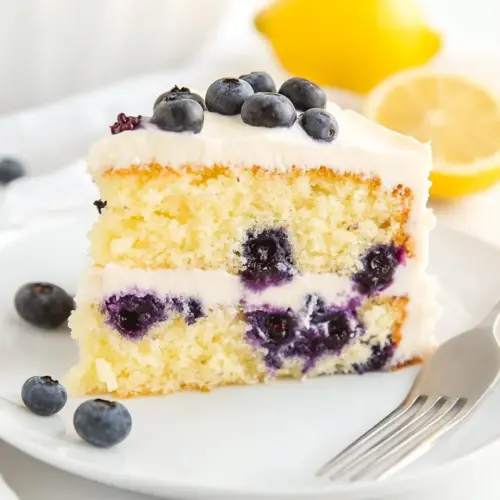
Lemon Blueberry Cake
Lemon Blueberry Cake is a bright, tender layered dessert that blends tangy lemon, juicy blueberries, and a silky cream cheese frosting into a crowd pleasing treat. The moist crumb from buttermilk and sour cream pairs beautifully with bursts of fruit and a balanced sweetness. Perfect for summer gatherings or casual celebrations, it is a reliable showstopper worth making again and again.
Equipment
- Mixing Bowls
- Electric Mixer
- Spatula
- Round cake pans
- Cooling rack
Ingredients
- 260 grams all-purpose flour (or 2 cups) plus 1 Tablespoon for the blueberries Measure and sift to provide structure and the main body for the cake batter, with the extra tablespoon reserved to coat the blueberries and prevent them from sinking during baking. Combine with dry leavening and salt for even distribution, ensuring a tender crumb and proper texture throughout the cake.
- 1 1/2 teaspoons baking powder Leaven gently to help the cake rise and create a light, airy crumb by releasing carbon dioxide when mixed with wet ingredients and heated. Whisk into the dry ingredients to ensure even lift and consistent texture across the baked cake.
- 1/2 teaspoons salt Season sparingly to balance sweetness and enhance other flavors, contributing to overall taste without being detectable on its own. Dissolve evenly in the dry mix so it doesn’t cluster and affects the batter uniformly.
- 3/4 cup unsalted butter, softened Cream thoroughly to incorporate air and create a smooth, rich base for the cake, contributing to tenderness and flavor due to its fat content. Allow to soften to room temperature for easier mixing and a lighter final crumb.
- 300 grams granulated sugar, or 1 1/2 cups Sweeten evenly to provide bulk, tenderness, and browning while helping stabilize the batter; measure precisely for balance with the lemon and sour components. Granulated sugar also helps with moisture retention and caramelization during baking.
- 1 lemon, zested Grate finely to release aromatic oils and bright citrus scent, contributing sharp, fresh flavor that complements blueberries and balances sweetness. Zesting just the yellow part avoids bitterness and maximizes fragrant lemon character.
- 2 teaspoons vanilla extract Flavor subtly to add depth and a warm, rounded aroma that complements lemon and vanilla notes in the cake and frosting. Use pure vanilla extract for the cleanest, most consistent flavor contribution.
- 3 large eggs, at room temp Bind firmly and enrich the batter with moisture and structure, helping to set the cake while adding richness and lift when beaten with sugar. Bring to room temperature to ensure even incorporation and a stable emulsion with fats.
- 3 tablespoons lemon juice Acidify and brighten when added to the batter, reinforcing lemon flavor while reacting slightly with baking powder and dairy to improve tenderness and lift. Measure fresh for the best citrus punch and natural acidity balance.
- 1/2 cup buttermilk Moisten and tenderize the crumb while contributing slight tanginess; buttermilk also reacts with leavening to create a finer texture and enhanced rise. Use room-temperature buttermilk to prevent seizing the batter and improve emulsification.
- 1/2 cup sour cream Enrich and add creamy tang to the batter, enhancing moisture and contributing to the cake’s tender mouthfeel and slight tangy complexity. Use at cooler temperature if desired for a thicker batter consistency and balanced flavor.
- 1 1/2 cups blueberries Distribute dot-like bursts of fresh fruit flavor and natural acidity, providing attractive color and textural contrast throughout the cake. Toss with reserved flour tablespoon to help blueberries remain suspended and not sink to the bottom.
- 1/2 cup unsalted butter, softened Cream like the earlier butter to provide richness and a smooth base for the frosting, contributing to spreadability and stability when whipped with cream cheese. Bring to soft temperature for easier mixing and a lump-free frosting.
- 8 ounces cream cheese Whip smooth to add tang, creaminess, and body to the frosting, balancing the powdered sugar’s sweetness and producing a silky, spreadable consistency. Keep chilled briefly if over-softened to maintain structure while assembling.
- 1 teaspoon lemon juice Acidify slightly to brighten the cream cheese frosting and add a touch of fresh lemon tang that enhances the cake’s citrus profile. Use sparingly to avoid thinning the frosting while achieving a fragrant citrus lift.
- 3 cups powdered sugar Sweeten and thicken the frosting while providing a smooth, pipeable finish that contrasts the cake’s tender crumb; sift if clumpy for a velvety texture. Gradually incorporate to reach desired sweetness and consistency without over-thinning.
- 1 pinch salt Season minimally to enhance overall flavors and balance sweetness in the frosting, ensuring a subtle savory lift that makes the lemon and cream cheese shine. Mix in small pinches to taste to avoid detectable saltiness.
- 1/2 teaspoon vanilla Flavor delicately to provide a gentle vanilla backdrop in the frosting, melding with cream cheese and lemon for a rounded profile. Use pure vanilla for consistent, clean flavor that supports rather than overwhelms the citrus.
- 1 tablespoon cream Thin slightly to adjust spreadability and sheen of the frosting, adding just enough cream to achieve a smooth, pipeable consistency without making it runny. Use room-temperature cream for more predictable incorporation.
- 1 lemon, zested Zest freshly to garnish or fold into the frosting for an extra burst of citrus aroma and bright finish, reinforcing lemon notes introduced earlier in the cake layers. Avoid pith and apply lightly to preserve vibrant lemon fragrance and visual appeal.
Instructions
- Preheat and prepare: Preheat oven to 350°F. Spray bottom and sides of (2) round pans with non-cooking spray, add parchment paper, and spray again. Use 6" pans for a thicker cake, 8" for a thinner cake.: The oven should smell warm and ready, a low hum of heat in the background as you prep the pans. Greasing and lining the pans ensures a clean release, and using parchment keeps the edges intact. Visual cues include a lightly glossy, evenly coated pan when you spray and a smoothly fitted parchment circle. If your pans look unevenly coated, the cake may stick in patches; take a paper towel and press the spray evenly to correct that before adding batter.
- Whisk dry ingredients: In a medium mixing bowl, whisk together 260 grams flour, 1 1/2 teaspoons baking powder, and 1/2 teaspoon salt.: The flour, baking powder, and salt should look uniform as a pale, sandy mixture with no lumps of baking powder. Whisking distributes the leavening so the cake rises evenly. You should see a fine, even texture and smell the faint wheat scent of the flour . A common mistake is insufficient whisking, which can cause dense pockets; always rake a spoon through the bowl to check for unmixed clumps.
- Beat butter, sugar and lemon zest: In a large mixing bowl, beat together 3/4 cup softened butter, 300 grams sugar, and the zest of one lemon until light and fluffy.: As you beat the softened butter , sugar , and zest, watch the mixture turn paler and fluffier, with a light ribbon when the beater lifts. The aroma of lemon oils hitting the butter is immediate and bright. This aeration traps tiny air bubbles that help the cake rise. Overbeating can cause a greasy texture, so stop once it looks light and voluminous.
- Add vanilla and eggs: Add 2 teaspoons vanilla and 3 eggs. Beat well.: When you incorporate the vanilla and the room temperature eggs , aim for a glossy, cohesive batter with no streaks of egg white. The mixture should sound slightly more fluid as you beat. Cold eggs can cause the batter to curdle, so if that happens, add a tablespoon of the dry mix to bring it back together.
- Add lemon juice and sour cream to buttermilk: Add 3 Tablespoons lemon juice and 1/2 cup sour cream to 1/2 cup buttermilk. Stir.: Mixing the lemon juice with the sour cream and buttermilk produces a slightly thickened, tangy liquid that smells bright and fresh. This combination adds moisture and a gentle tang that complements the lemon flavor. If you notice separation, whisk vigorously until uniform, then stir gently into the batter.
- Alternate adding wet and dry ingredients: Add 1/3 of the dry ingredients and mix on low speed. Add 1/3 wet ingredients. Alternate back and forth until all ingredients are added and it's just combined. Don't over mix.: Alternating 1 third of the dry then wet ingredients helps maintain a tender crumb and prevents overworking the batter. You will see the batter become smoother step by step, with no streaks of flour. The sound of the mixer should be steady, not strained. Over mixing here produces a tight, chewy crumb; stop as soon as the last streak disappears.
- Fold in blueberries: Add remaining 1 Tablespoon flour to the blueberries and stir. Fold into the cake batter gently.: The floured blueberries should glint in the batter, showing they are evenly coated and ready to suspend. Folding gently preserves their shape and prevents bleeding, keeping blue pockets rather than a mottled purple mass. If you stir vigorously, the berries will burst and tint the batter, so use a spatula and slow, sweeping motions to combine.
- Cook: Pour batter into prepared pans and bake at 350°F for 25 minutes. Check with a toothpick. The cake is done when the toothpick comes out clean.: As the cake bakes at the correct temperature, the surface will turn pale golden and the edges will pull slightly from the pan. You may hear a faint settling pop as steam escapes. Test with a toothpick; it should come out clean or with a few moist crumbs. Opening the oven too often can deflate the cake, so trust visual cues and the toothpick at the suggested time.
- Cool: Leave cakes in pans for 5 minutes, then move cakes to cooling rack until completely cooled.: Letting the cakes rest in the pans for a few minutes allows the structure to set, then moving them to a cooling rack finishes the job without sogginess. The centers will sink slightly as they cool, which is normal. If you try to frost while still warm, the frosting will melt and slide, so be patient until completely cool.
- Beat butter and cream cheese: In a medium sized bowl, beat the 1/2 cup softened butter for 1 minute. Add the 8 ounces of cream cheese and beat until blended well.: The frosting base should become smooth and silky, with a pale, slightly glossy texture. Beat the softened butter briefly before adding the cream cheese so everything blends seamlessly. If the frosting looks curdled, continue beating on low until smooth; adding a touch of cream can help bring it together.
- Add lemon juice, powdered sugar, salt, vanilla, lemon zest and whipping cream: Add 1 teaspoon lemon juice, 1 pinch salt, 1/2 teaspoon vanilla, the zest of 1 lemon, 1 Tablespoon whipping cream and 3 cups of powdered sugar. Beat until combined.: When you incorporate the powdered sugar and flavorings, the frosting will thicken and hold soft peaks, smelling bright from the lemon . The texture should be spreadable yet stable. If it becomes too stiff, add a teaspoon of cream at a time. Overbeating can make the frosting too airy and difficult to smooth.
- Frost: Add frosting between the two layers, on the top and around the sides.: The final frosting step should feel meditative as the frosting spreads smooth and even across layers. Use a spatula to coax the frosting into a neat finish and reserve a little for smoothing the sides. Visual cues include clean, even layers and a slight sheen on the frosting. If you see crumbs lifting, do a crumb coat first, chill briefly, and then finish for a clean presentation.
Notes
- Use room temperature eggs to ensure the batter emulsifies smoothly, which helps the cake rise evenly and develop a tender texture.
- Toss berries with flour as instructed to prevent sinking, which keeps the distribution of blueberries even throughout the crumb.
- Scale the pan by using a 9 by 13 pan for a single layer and monitor baking time closely to avoid over baking.
- Adjust frosting sweetness by adding powdered sugar gradually and tasting, so the tang of the cream cheese and lemon still comes through.
- Chill for clean slices by refrigerating the frosted cake for 20 to 30 minutes before slicing to get neater pieces.
- Double the frosting if you prefer a more luxurious coating; it also helps if you want decorative piping or a taller finish.