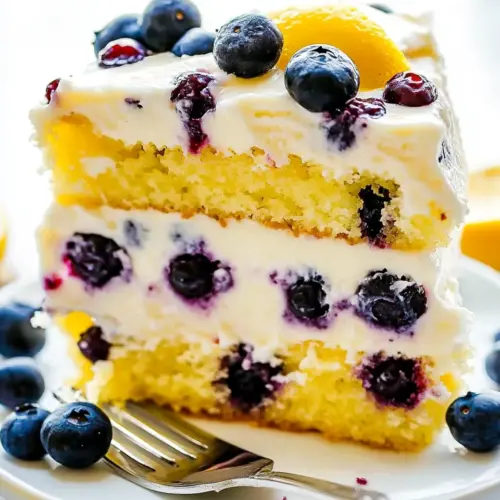
Lemon berry Cake
Lemon berry Cake is a bright, tender layer cake with juicy blueberries, tangy lemon curd, and a silky lemon cream cheese frosting. The cake offers a soft crumb from cake flour and rich pockets of butter, while the curd and frosting deliver zesty contrast. It is an approachable celebration cake that works for weekend baking or special occasions, worth making for its lively flavor balance.
Equipment
- Stand mixer
- Paddle attachment
- 9-inch cake pans
- Parchment Paper
- Wire Rack
- Medium Saucepan
- Fine-mesh strainer
- Handheld Mixer
- Long serrated knife
Ingredients
- 9 oz . (1 1/2 cups) blueberries + 1 tablespoon flour Tossed with a tablespoon of flour to prevent clumping, lends bright, juicy bursts of flavor and moisture throughout the cake batter while providing visual contrast.
- 4 large eggs at room temperature Beaten to incorporate air and structure, provides lift, richness, and helps bind ingredients for a tender, stable crumb in the cake.
- 1/3 cup milk (anything but nonfat) at room temperature Warmed to room temperature to ensure even mixing and emulsion, contributes fat and moisture to create a smooth, tender batter.
- 2 tablespoons lemon juice at room temperature Added at room temperature to brighten the batter with acidity and lemon aroma, balancing sweetness and enhancing overall flavor.
- 2 teaspoons vanilla extract Stirred in for aromatic depth and a rounded vanilla note, complements the lemon and berry flavors while adding complexity.
- 1 teaspoon lemon extract (may sub 2 tsps lemon zest) Included for concentrated citrus aroma or replaced with zest, intensifies lemon flavor without adding extra liquid and brightens the profile.
- 2 cups cake flour Sifted or measured precisely to provide the cake’s main structure and a delicate, tender crumb when combined with fats and leaveners.
- 1 1/2 cups granulated sugar Creamed with butter and sugar to add sweetness and assist in aeration, contributing tenderness and subtle caramelized notes as it bakes.
- 2 teaspoons baking powder Mixed into dry ingredients to release gases during baking, creating lift and a light, airy texture in the finished cake.
- 3/4 teaspoons salt Balanced against the sweetness and leavening, enhances flavor and controls fermentation while strengthening dough proteins for structure.
- 16 tablespoons unsalted butter cut into 16 pieces, softened at room temperature Softened and creamed to trap air and enrich the batter, supplies fat for tenderness, flavor, and moistness in each slice.
- 1 tablespoon lemon zest Zested to concentrate citrus oils and aroma, intensifies lemon flavor without extra acidity and adds bright aromatic notes.
- 2/3 cups lemon juice, hot but not boiling Poured hot but not boiling to draw out lemon oils and create a concentrated, tangy liquid that can bloom flavors in the batter or glaze.
- 4 large eggs Beaten to incorporate into a component (such as curd or custard), adds richness and structural proteins for setting and texture.
- 2 large egg yolks Whisked with other eggs to enrich fillings or batters, provides emulsification, color, and additional stability to custards or creams.
- 1 cup granulated sugar Used to thicken custards or curds, yolks offer a rich texture, creamy mouthfeel, and help emulsify butter and citrus into a glossy mixture.
- 6 tablespoons unsalted butter cut into 1/2 inch cubes (chilled) Creamed into mixtures for richness and smoothness, cold diced butter can be incorporated into curd or pastry to add silkiness and flavor.
- 1/2 teaspoon vanilla extract Added for subtle aroma and to round flavors, enhances the overall profile of creams or frostings with a gentle vanilla note.
- 1/8 teaspoons salt Sprinkled to balance sweetness and enhance other flavors, tiny amounts of salt sharpen taste and improve perception of richness.
- 12 oz . cream cheese softened to room temperature Softened to room temperature for easy incorporation, contributes tangy creaminess and aids in creating a smooth, rich frosting or filling.
- 1 cup unsalted butter softened to room temperature Brought to room temperature and creamed for volume and structure, supplies fat and body to frostings and enriches cake layers.
- 1/4 cup lemon curd *recipe included below Folded in to add concentrated lemon flavor and sweetness, provides glossy, tart-sweet pockets within frostings or fillings.
- 1 tablespoon lemon juice Added for bright acidity and to adjust balance, a small amount of lemon juice sharpens flavor and complements the curd or frosting.
- 1/2 teaspoon vanilla extract Used to add background aroma and roundness, vanilla enhances perceptions of sweetness and complexity in frostings or curds.
- pinch of salt Pinned in tiny amount to elevate sweetness and suppress bitterness, salt refines flavor and enhances the brightness of citrus components.
- 3 1/2 cups powdered sugar Whisked until smooth to create a thick, pipeable frosting, powdered sugar adds structure, sweetness, and stability to the final icing.
Instructions
- Preheat oven to 350 degrees F. Line the bottom of two 9-inch cake pans with parchment paper. Spray with nonstick cooking spray WITH flour or butter and flour pans.: You will notice the warm, slightly dry scent of the oven as it reaches 350 degrees F, which ensures even rise and browning. Properly lined and greased pans prevent the cake from sticking while the thin parchment creates a clean release. If you skip flouring the pans, the exterior may stick and tear when you try to remove the layers, so take the extra minute to coat the pans evenly. A common misstep is using cold pans that alter baking time slightly, so place pans on the counter while you mix the batter to bring them closer to room temp.
- Whisk eggs, milk, lemon juice, lemon extract, and vanilla extract together in a 3-cup (or more) liquid measuring cup. Set aside.: The mixture will smell fragrant with citrus and vanilla; whisking until smooth ensures the liquids blend evenly into the batter. This liquid mix helps hydrate the dry ingredients and distribute flavor uniformly. If the liquids are not at room temperature, the batter can seize or curdle when mixed with cold butter and flour, so allow ingredients to warm gently. Avoid overwhisking to prevent adding excess air that can collapse in the oven.
- Add blueberries to a medium bowl and toss with 1 tablespoon flour. Set aside.: Coating the blueberries gives them a thin film that helps them stay suspended in the batter rather than sinking. The fruit will look dusted, and this simple step preserves the cake's texture. Wet berries can clump, so pat them dry if they are very juicy. A common error is adding frozen berries straight from the freezer which can bleed into the batter during mixing; if using frozen, toss quickly with flour while still frozen to help.
- Using a stand mixer fitted with paddle attachment, mix cake flour, sugar, baking powder and salt on the lowest speed until combined, about 20 seconds. With the mixer still running at the lowest speed, add 1 piece of butter at a time and continue to beat until all the butter is added. Increase speed to medium and continue to beat until the mixture resembles coarse meal, with butter bits no larger than small peas.: As you work, you will see the mixture transform from dry powder to a coarse, sandy texture with pea sized pieces of butter . These visible butter bits are essential, because during baking they create steam pockets that give a tender crumb and lightness. If the butter melts too much, the mixture becomes pasty and you lose those pockets, so keep the butter just softened not oily. A typical mistake is adding all the butter at once, which prevents even distribution; adding one piece at a time ensures consistent incorporation.
- With the mixer running on low, add approximately half of the egg mixture to the flour mixture. Increase speed to medium-high and beat until light and fluffy, approximately 60 seconds. Reduce speed to medium-low and add remaining egg mixture and beat until incorporated, about 30 seconds (batter may look slightly curdled.) DO NOT OVERMIX. Add blueberries and lemon zest and gently fold into batter, taking care not to overmix.: After adding the liquids, the batter will emit a sweet, buttery aroma with citrus notes. When it becomes light and slightly fluffy, you know the leavening has been activated correctly. The slight curdling you may see is normal because of the fat distribution, and gentle folding preserves the air you created. Overmixing at this point will tighten the crumb and yield a dense cake; fold just until the streaks of flour disappear. When adding the coated blueberries , fold with a spatula using wide motions to prevent crushing the berries and coloring the batter.
- Divide batter equally between the cake pans, smooth with a spatula and drop a few times on the counter to get rid of air bubbles. Bake at 350 degrees F for 20-25 minutes or until a toothpick inserted in the center of the cakes comes out with a few moist crumbs, rotating pans halfway through baking.: The batter will look glossy when spread, and dropping the pans helps large air pockets escape so the crumb is even. As the cake bakes you will smell a warm lemony butter aroma, and the tops will turn a pale golden. Rotate pans to promote even rise; ovens vary so the visual cue of a toothpick with a few moist crumbs is more reliable than clock time. Underbaking yields a gummy center, while overbaking dries the crumb, so watch the visual cues closely.
- Cool the cakes in pans for 10 minutes then remove cakes to a wire rack and let cool completely before cutting. While the cakes are cooling make Lemon Curd (recipe below).: Cooling in the pans briefly allows the structure to set, then transferring to a rack prevents condensation on the bottom. The cakes will release a gentle steam as they cool, and handling them while still warm can cause tearing. Making the curd while the cakes cool uses your time efficiently. A common misstep is trying to slice warm layers, which can compress and crumble, so be patient and let them cool completely.
- OFF HEAT, whisk eggs and egg yolks in a medium saucepan, then gradually whisk in sugar. Whisking constantly, slowly pour hot lemon juice into the egg mixture. Cook over medium heat (medium-low if you know your stove runs hot), stirring constantly, until it reaches the consistency of pourable pudding (it will thicken more as it chills), 170 degrees F.: The mixture will smell intensely lemony as the hot lemon juice tempers the eggs, and constant stirring prevents curdling. When it thickens to a pourable pudding, it will coat the back of a spoon and slow to stream when tipped. If you rush heating, you risk scrambling the eggs, so take your time and use medium to medium-low heat. A thermometer is really helpful here to reach 170 degrees F without overcooking.
- Immediately remove pan from heat and stir in butter until melted, followed by vanilla and salt. Strain curd through a fine-mesh strainer/sieve into a small bowl. (Curd will thicken as it chills). Press plastic wrap directly on surface of curd and let it chill completely. You can either place Lemon Curd in the freezer for up to one hour to chill if using as soon as your cakes are cool or in the refrigerator if using later than one hour. **You will use 1/4 Lemon Curd in the Lemon Cream Cheese Frosting and the rest as specified in frosting your cake.: Off heat, the addition of cold cubed butter gives the curd a silky, glossy finish as it melts into the warm mixture. Straining removes any tiny cooked egg bits for a smooth texture. Pressing plastic wrap directly on the surface prevents a skin from forming. If the curd seems too loose after chilling, it will still firm up; avoid overcooking initially or it can become grainy.
- Using a handheld mixer, beat cream cheese and butter together at medium speed until very creamy. Beat in 1/4 cup lemon curd (from chilled Lemon Curd you made), lemon juice, vanilla extract and salt until smooth. Gradually beat in powdered sugar then continue to beat for 2 minutes at medium-high speed until smooth and fluffy. If frosting is too thick then you can beat in 1 teaspoon milk at a time until you’ve reached desired consistency. If frosting is too runny, then refrigerate until more set.: The cream cheese and butter should feel pillowy as you beat them, and the frosting will become glossy when the powdered sugar is fully incorporated. The addition of lemon curd intensifies citrus without adding liquid. If your cream cheese is too cold, you risk lumps, so ensure it is softened. Conversely, too-warm ingredients will give a loose frosting; chill briefly to firm up if needed.
- Cut cakes in half horizontally using a long serrated knife to create 4 even layers. Place 1 layer, cut side up, on a serving plate or cake pedestal then evenly top with a generous amount of Frosting (about a heaping cup). Top with 2 nd cake layer and evenly spread with half of the chilled Lemon Curd. Add third layer and evenly top with Frosting (heaping cup). Add final Cake Layer then frost top and sides of cake with remaining frosting. Evenly spread remaining Lemon Curd on top of cake, Decorate if desired with blueberries. (My blueberries are garnished with powdered sugar.): When slicing, use a steady sawing motion with a long serrated knife so each layer is even, producing a neat stack that showcases the fillings. The contrast of white frosting and bright lemon curd layers will be visually striking. Work on a cool surface to prevent frosting from sliding; a chilled crumb coat can help if the cake is warm. Avoid pressing too hard when smoothing the frosting or you can compress the layers.
- Refrigerate the cake for 30-45 minutes to firm up before slicing, or better yet, pop it in the freezer if you have time for it to thaw after being sliced. Best served at room temperature.: Chilling firms the frosting and helps the slices hold their shape, while a short thaw after slicing yields the ideal texture. You will notice the frosting become slightly firmer and the curd settle into glossy ribbons. A mistake to avoid is leaving it in the refrigerator for many hours uncovered, which can dry the cake surface; always cover gently or use a cake dome.
- The frosted cake should be covered with an inverted bowl or cake cover and refrigerated. Bring cake to room temperature before serving.: Covering protects the cake from odors and drying out while refrigerated. Bringing it to room temperature before serving releases the flavors and gives the frosting a soft, pleasing mouthfeel. Do not overheat slices in the microwave to warm them, as that can make the frosting greasy; instead let slices come to room temp for about 20 to 30 minutes.
Notes
- Swap citrus components Replace some or all of the lemon juice in the curd with orange juice for a milder, sweeter curd while keeping the same technique.
- Blueberry handling If using frozen blueberries, toss them frozen with the flour to reduce bleeding into the batter, and do not thaw before folding in.
- Make ahead strategy Prepare cake layers a day ahead and wrap tightly; assemble and frost on the day of serving for the best texture and flavor.
- Frosting consistency If your frosting is too thick, add 1 teaspoon of milk at a time, using chilled small additions to avoid making it runny.
- Storage tip Store the frosted cake covered in the refrigerator and bring to room temperature 20 to 30 minutes before serving to restore texture.