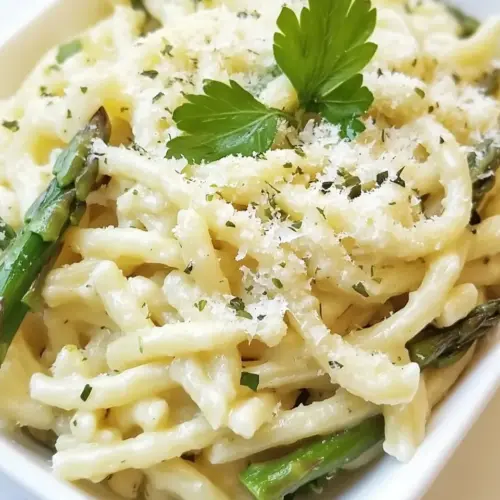
Lemon Asparagus Pasta
Lemon Asparagus Pasta is a creamy, bright, and easy weeknight dinner that combines tender asparagus, silky sauce, and savory parmesan cheese. The lemon juice and zest provide fresh citrus lift while the pasta soaks up the rich, whisked milk sauce. It makes a satisfying vegetarian meal that feels light yet indulgent, perfect for spring meals and quick entertaining.
Equipment
- Large Pot
- Medium Bowl
- Small Saucepan
- Whisk
- Colander
Ingredients
- 1 1/2 cups Gemelli pasta, or another short pasta like penne Provides a firm, chewy base to the dish and holds the sauce and other components. Boils quickly and pairs well with bright, acidic flavors like lemon. Accepts textures from vegetables and cheeses to create a cohesive pasta salad or warm entrée.
- 1/2 bunch asparagus, cut into 1 inch pieces Adds a crisp, green vegetable component with a mild, slightly sweet flavor that softens when cooked. Contributes vibrant color and a fresh contrast to creamy elements in the sauce. Supplies fiber and a gentle vegetal bite in each forkful.
- 3/4 cup whole milk Creates a creamy, silky body for the sauce and helps emulsify mustard and flour for thickness. Offers a mild dairy sweetness that balances acidic lemon and sharp parmesan. Controls sauce richness while keeping flavors cohesive.
- 2 teaspoons dijon mustard Provides tangy, sharp flavor that brightens the sauce and helps balance richness from milk and cheese. Assists with emulsification when combined into the sauce for a slight savory lift. Adds depth and a subtle piquant note.
- 2 teaspoons all purpose flour Acts as a thickening agent when combined with milk, helping the sauce cling to the pasta and asparagus. Offers a neutral base to pick up other flavors without altering taste significantly. Helps achieve a smooth, slightly glossy sauce texture.
- dash salt and pepper to taste Seasoning that enhances and balances overall flavor, ensuring the dish isn't flat or overly sweet. Brings out natural tastes of pasta, asparagus, and lemon without overpowering them. Allows for adjustment to personal salt and pepper preferences.
- 1 teaspoon olive oil, extra virgin Coats the pan to prevent sticking and helps lightly sauté aromatics like garlic for flavor release. Contributes a subtle fruity and peppery undertone in the finished dish. Supports gentle cooking of asparagus pieces without burning.
- 2 teaspoons minced garlic Delivers aromatic, savory depth and a pungent base note when warmed in oil. Melds with mustard and lemon to create a rounded, savory profile. Releases flavorful oils that infuse the sauce and vegetables.
- 1 1/2 teaspoons lemon juice Adds bright acidity to lift and freshen the overall dish, balancing creamy and salty elements. Enhances other flavors and provides a clean, citrus finish in each bite. Can be adjusted for intensity to taste.
- 1 teaspoon lemon zest Contributes concentrated citrus oils and intense lemon flavor that complement the juice and brighten the sauce. Provides aromatic zestiness that perfumes the pasta mixture. Helps tie together dairy, garlic, and vegetables.
- 1/3 cup grated parmesan cheese Imparts salty, nutty, and umami-rich complexity that enriches the sauce and binds flavors. Melts slightly into warm sauce to lend creaminess and savory depth. Balances bright lemon and vegetal asparagus with savory notes.
- 1/3 cup shaved parmesan cheese Adds textural contrast and a delicate salty finish with thin, decorative shavings on top of the finished pasta. Offers bursts of concentrated parmesan flavor with each bite and enhances presentation. Complements grated cheese by providing a different mouthfeel.
Instructions
- Cook pasta in boiling water for 6 minutes. Add asparagus and continue cooking until just tender (about 3-5 more minutes). Drain and return to the pot.: The pot should be at a rolling boil so the pasta moves freely and cooks evenly, producing a faintly elastic chew that we call al dente. When you add the asparagus , listen for the water to settle into a lighter boil, and watch the stalks go from dull to vibrant green in color, which signals tenderness. Drain promptly to stop cooking, and returning everything to the pot helps residual heat keep the pasta warm for the sauce to cling. A common mistake is overcooking the pasta which will make the texture mushy and the final dish gummy.
- In a medium bowl, whisk milk, mustard, flour, salt, and pepper.: As you whisk these elements together, you should aim for a smooth, lump free mixture, which will create a silkier sauce. The whisk action dissolves the flour into the milk , preventing gritty pockets and allowing the dijon mustard to distribute evenly. This blending stage is crucial for a consistent texture, and you will feel the mixture thicken slightly at room temperature. A typical misstep is adding flour directly to hot liquid, which can lead to clumping.
- Heat oil in a small saucepan on medium-high heat. Add garlic and cook until fragrant and lightly browned (stirring constantly) for about 1 minute. Pour in the milk mixture and whisk. Continue stirring as you bring it to a simmer. Cook until thick, 1 to 2 minutes. Stir in lemon zest and juice.: When the olive oil shimmers, add the minced garlic and smell the immediate floral aroma that develops as it warms. Browning should be subtle, just a hint of gold, because overbrowned garlic tastes bitter. Pour the combined milk mixture into the pan and whisk to form an emulsion; you will see the mixture thicken and coat the back of a spoon, which is the cue to remove heat. Stirring continuously prevents scorching and keeps the texture glossy. Adding the lemon zest and juice at the end preserves their bright aromatics. Watch closely to avoid rapid bubbling that can break the sauce.
- Stir this sauce into the pasta and cook over medium-high heat. Cook until sauce is thick and creamy. Mix grated Parmesan cheese into the pasta.: As you fold the warm sauce into the pasta and asparagus , pay attention to the way it clings and smooths across the pieces. The sound is gentle, a soft stirring, while the surface becomes glossy and slightly reduced. Incorporating the grated parmesan cheese now allows it to melt and further thicken the sauce, adding a savory backbone. If the sauce appears too loose, a minute of gentle heating will concentrate it, but be careful not to overheat, as high heat can make the dairy separate. Avoid dumping cheese in all at once which can clump.
- Top with remaining shaved Parmesan cheese as a topping. ENJOY!: The final touch of shaved parmesan cheese brings a creamy yet slightly granular texture that softens on contact with hot pasta, creating pleasing contrast. Serve immediately so the shavings melt lightly and the dish retains warmth. This finishing note also provides a visual cue, with the ribbons of cheese catching the light and drawing attention to the bright lemon flecks. A frequent error is letting the dish sit too long, which dulls flavors and causes the sauce to tighten and become less glossy.
Notes
- Swap pasta shapes Use penne or other short pasta if you cannot find Gemelli, both will trap the sauce effectively and maintain texture.
- Adjust lemon intensity Increase or decrease the lemon juice and zest to suit your palate, adding more for a punchier citrus note or less for subtle brightness.
- Milk alternatives Use a creamier milk for a richer sauce or a lower fat milk if you prefer a lighter finish, keeping in mind texture differences.
- Make it ahead Prepare components separately and combine briefly when serving to keep the parmesan cheese and sauce at their best texture.
- Add protein later If you want a non vegetarian option, cook and slice a protein separately then fold it in at the end to maintain the dish balance.