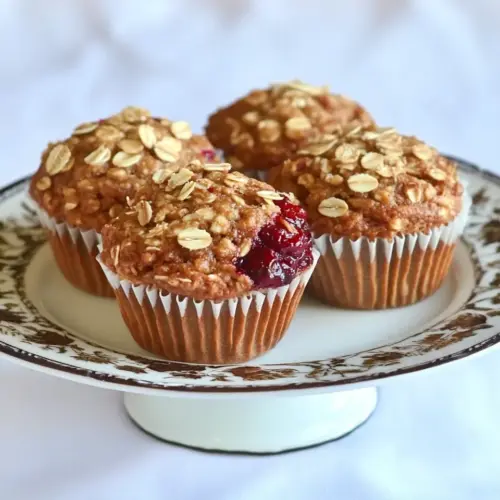
Leftover Cranberry Sauce Muffins
Leftover Cranberry Sauce Muffins are tender, slightly tangy muffins that make brilliant use of leftover cranberry sauce. These easy to bake muffins are moist and comforting with a light oat crunch on top, perfect for easy breakfasts or a post holiday treat. Make a batch to enjoy warm from the oven or to pack for a quick snack all week long.
Equipment
- Oven
- 12-cup muffin tin
- Mixing Bowls
- Whisk
Ingredients
- 1 1/2 cups all-purpose flour Provide structure and bulk to the muffins by forming the dry framework that holds liquids and leavening agents together; sifts lightness when combined with baking powder and soda. Offers a neutral base that allows the cranberry sauce flavor to shine while ensuring proper crumb and texture after baking.
- 1 cup + 3 tablespoons rolled oats (reserve the 3 tablespoons for the tops) Add chew, texture, and whole-grain flavor while contributing to the muffin body; reserve 3 tablespoons for a crunchy topping to contrast the soft crumb. Absorb some liquid from the cranberry sauce, helping balance moisture and preventing overly dense centers.
- 1/2 cup brown sugar Sweeten and tenderize the batter while contributing color and slight molasses notes that complement the cranberries; helps feed yeast in quick breads by interacting with other components. Also aids in creating a lightly caramelized top and improves overall flavor complexity.
- 1 tablespoon baking powder Act as the primary chemical leavening to give lift and create a light, airy crumb when activated by moisture and heat; works in tandem with baking soda when appropriate. Distributes through the dry ingredients to ensure even rise and consistent muffin height.
- 1/2 teaspoon baking soda Provide additional leavening and help neutralize acidity from the cranberry sauce, improving rise and flavor balance; reacts quickly when combined with an acid for immediate lift. Fine-tunes the crumb structure and prevents excessive density in the finished muffins.
- 1/2 teaspoons salt Enhance and balance overall flavor by bringing out sweetness and tempering tartness, while also strengthening gluten slightly to affect texture. Serve as a background seasoning that supports other spices and leavening performance.
- 1/2 teaspoon cinnamon Add warm, aromatic spice that complements the tart cranberry notes and deepens flavor complexity; can accentuate perceived sweetness without adding sugar. Blends into the batter to give a subtle, cozy profile typical of baked fruit muffins.
- 1 1/2 cups leftover cranberry sauce Provide moisture, concentrated fruit flavor, natural sweetness, and acidity; acts as the primary wet fruit component that imparts both color and texture to the crumb. Reacts with leavening agents and contributes to the overall moisture balance, so adjust liquid accordingly.
- 1/2 cup milk (can substitute almond milk) Contribute additional liquid to form batter consistency and assist in dissolving sugar and activating leavening; can be substituted with almond milk for dairy-free options. Help create tender crumb by hydrating flour proteins and starches.
- 1/3 cup vegetable oil Add fat to tenderize the muffins, increase moisture retention, and promote a soft mouthfeel while aiding in browning. Emulsifies with the egg to distribute richness evenly throughout the batter for consistent texture.
- 1 egg Bind ingredients together, provide structure from coagulated proteins, and contribute to leavening and richness in the crumb. Beat lightly into wet ingredients to incorporate air for lift and to ensure cohesive batter formation.
Instructions
- Preheat oven to 400 degrees Fahrenheit.: Warmth fills the kitchen as the oven comes up to temperature and you may notice a faint dry heat; this initial blast of heat is important because it helps the muffins rise quickly, creating a domed top and a tender interior. If you skip preheating, the batter will start cooking unevenly and the muffins can bake dense. A common mistake is setting the oven too low, which yields flat muffins, so always verify the temperature with an oven thermometer if you suspect your oven runs cool.
- Grease a 12-cup standard-size muffin tin (or add liners).: Preparing the tin ensures the muffins release cleanly, and the oil or liner will create a slight browning at the edges that I love. You can feel the difference when you run a knife around a perfectly released muffin, it lifts easily and the sides look neat. Forgetting to grease or skipping liners can lead to sticking, tearing the tops when you remove them, so take a moment to prep the pan.
- In a large bowl, whisk together the flour, 1 cup oats, brown sugar, baking powder, baking soda, salt, and cinnamon.: As you whisk dry ingredients, the scent of cinnamon and brown sugar will become evident, and the mixture should look uniform, without streaks of flour. This step is about even distribution of leaveners so each muffin rises consistently. Overmixing the dry and wet later will toughen the crumb, so keep this stage to a light, thorough whisk only.
- In a medium bowl, whisk together the cranberry sauce, milk, vegetable oil and egg.: When you blend these wet ingredients, the sauce loosens and the mixture becomes glossy; the smell of cranberry will be prominent and slightly tart. This emulsified mixture coats the dry ingredients more evenly, giving a consistent batter. If you notice clumps of sauce that will not incorporate, stir them gently; large unmixed pockets can create uneven texture in the final muffins.
- Pour the wet ingredients into the dry ingredients and stir just until blended.: There will be streaks where dry flour flecks are still visible, and that is fine, because the goal is a tender muffin not a uniform batter. You should stop as soon as no large pockets of dry flour remain. Overmixing activates gluten and produces a chewier, denser result; watch for that and avoid vigorous stirring. If your batter seems too stiff, a splash of milk can loosen it, but add sparingly to avoid thinning out the muffins too much.
- Divide the batter between the 12 muffin cups - about 3/4 to all the way full.: Filling the cups to this level gives the muffins room to rise and develop a nice dome. The batter will look a bit glossy and slightly lumpy from the oats and cranberry bits. Underfilling yields small, flat muffins, while overfilling causes spillover and uneven baking, so aim for that visual cue of about three quarters to full.
- Sprinkle with the three tablespoons oats.: The extra oats on top toast in the oven and provide a rustic, crunchy contrast to the soft crumb; you will see them turn slightly golden during baking. This finishing touch also gives a homemade look that I appreciate when serving. If you skip this, the muffins will still be tasty but miss that toasted oat texture that elevates them visually and by mouthfeel.
- Bake for 20 minutes or until tops spring back when you touch them and a toothpick inserted into the middle comes out dry.: As the muffins bake, you will see the edges firm and the tops gain color; the aroma of cooked oats and cranberry will fill the air. The spring back is a tactile check for doneness and the toothpick test confirms the interior is set. Opening the oven too frequently lowers the temperature and can cause uneven rise, so avoid peeking until around 18 to 20 minutes, unless your oven runs very hot or cold.
- Let cool for about five minutes. Serve.: After baking, the muffins need a brief rest in the tin where residual heat finishes cooking them gently, and steam redistributes so the crumb becomes stable. You will notice the scent deepen and the muffins firm slightly. Removing them too soon risks breaking them, while leaving them too long in the tin can trap steam and make bottoms soggy, so aim for that short cooling window.
- Serve: The ideal moment to enjoy these is still warm, when the edges are tender and the center is slightly springy, but they are also lovely at room temperature. Pair with a cup of coffee or tea and they make an effortless breakfast or snack. If you plan to store them, cool completely before placing in an airtight container to avoid condensation that would soften the tops.
Notes
- Reduce sweetness If you prefer less sugar, decrease the brown sugar by up to one quarter cup, which keeps the muffins moist while letting the cranberry tang shine more through.
- Make dairy free Swap the milk for almond milk or another plant milk. The texture will remain tender and the flavor will still be balanced by the cranberry sauce.
- Bake smaller muffins Use a mini muffin tin and shorten baking time to about 10 to 12 minutes; they become great bite sized snacks and cook through more quickly without drying.
- Add mix ins carefully If you want nuts or chocolate, fold them in gently at the end; too much extra will change the batter weight and might affect rise.
- Refresh day old muffins Warm in a toaster oven for a few minutes to restore a bit of crispness to the edges and revive aroma.