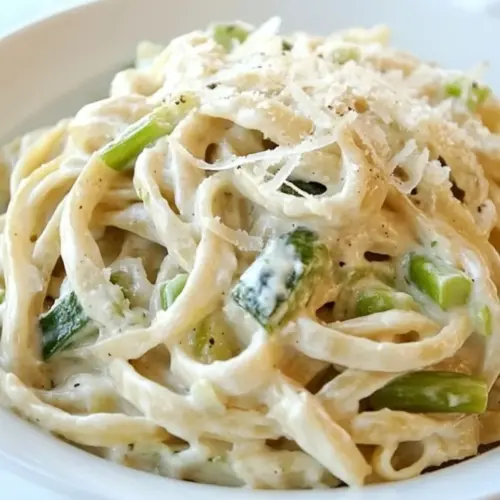
Leek Alfredo
Leek Alfredo is a creamy, comforting pasta that highlights sweet, softened leek in a silky sauce made from butter, a light roux, cream, and milk. It produces a luscious, clingy coating for spaghetti, perfect for an easy weeknight dinner that feels a bit special. Try it when you want something simple, rich, and satisfying that comes together quickly.
Equipment
- Skillet
- Saucepan
- Colander
- Whisk
Ingredients
- 1 large leek, sliced then thoroughly washed in colander and drained Sliced and thoroughly washed to remove grit and dirt from between the layers; provides a mild onion-like sweetness and tender texture when sautéed, forming the aromatic base of the sauce.
- 3 tablespoons butter Melted in the pan to provide rich flavor and a silky mouthfeel; acts as the cooking fat to sauté the leeks and to help create a smooth, cohesive sauce.
- 2 tablespoons all-purpose flour Whisked into melted butter to form a roux that thickens the sauce; cooks briefly to remove raw flour taste while giving body and stability to the Alfredo.
- 1/2 cup heavy cream Added after the roux to enrich the sauce with a luxurious, creamy texture; contributes fat and a subtle dairy sweetness that enhances mouthfeel and flavor.
- 1 cup whole milk Poured in to loosen the roux and extend the sauce while adding a gentle, milky backdrop; helps balance richness and creates a smooth, pourable consistency.
- 1 -2 teaspoons chicken or vegetable bouillon base (e.g., Better Than Bouillon) Dissolved into the sauce to introduce concentrated savory depth; supplies umami and saltiness that elevates the overall flavor profile without using straight salt alone.
- 3/4 teaspoons salt Sprinkled to season the sauce and heighten flavor; works with the bouillon and cheese to ensure the dish is properly seasoned and balanced.
- 1/4 teaspoon freshly ground black pepper Ground and added to provide bright, aromatic heat and contrast; complements the creaminess with a subtle peppery bite and enhances overall complexity.
- 10 ounces spaghetti, cooked al dente (or pasta of choice) Cooked al dente and tossed with the sauce to provide structure and satisfyingly chewy texture; serves as the neutral vehicle that carries the creamy leek Alfredo to the plate.
- freshly grated Asiago or Parmesan cheese for serving Freshly grated over the finished pasta to add savory, salty, nutty notes and a slightly granular texture; melts into the hot sauce to enrich flavor and create a cohesive finish.
Instructions
- Heat the butter in a skillet over medium-high heat and saute the leek until soft, 5-7 minutes. Stir in the flour and cook for another minute or two. Stir in the cream and milk and add the bouillon, salt and pepper. Bring to a boil, reduce the heat to medium, cover and simmer for 5 minutes until thickened. Add salt and pepper to taste. Add the cooked spaghetti and toss to coat. Serve immediately with freshly grated Asiago or Parmesan cheese.: First, you will notice butter melting quietly, then the sound shifts to a gentle sizzle as the sliced leek joins the pan, releasing a soft, fragrant sweetness that fills the kitchen. The visual cue is the leek turning translucent with edges that may take on a light golden tint, signaling the sugars are developing. This step softens fibers so the leek blends into the sauce, rather than remaining chewy. Why it matters, I always say, is that properly softened leek creates a mellow base without any harsh onion bite, which keeps the Alfredo delicate. A common mistake is using too high heat, which will brown the leek too quickly and introduce bitter notes. If you see rapid darkening, lower the heat to medium and stir more often to promote even cooking.
- Stir in the flour and cook for another minute or two: At this point you will add the all purpose flour to the warm pan and it will smell faintly toasted as the raw edge cooks off, giving the roux a subtle, nutty aroma. Visually you should see the mixture become pasty and coat the leek and pan, which is the roux forming. This stage is crucial because cooking the flour removes raw starch taste and helps the sauce thicken smoothly when liquids are added. If you skip this brief cook time, the sauce can taste floury or grainy. A trap I warn about is letting the roux darken too much; you need it pale to medium for this sauce, so stir constantly and watch color closely.
- Stir in the cream and milk and add the bouillon, salt and pepper: As you whisk in the heavy cream and whole milk , the roux will melt into the liquids, and steam rises with a comforting dairy sweetness. The texture should shift from pasty to a velvety stream, and you will hear a soft popping as the mixture warms. Add the bouillon base in small increments so you control the savory depth; the aroma will deepen to a rounded, savory creaminess. This is where flavors harmonize, and the milk tempers the richness of the cream. A common slip is adding cold dairy too quickly, which can create lumps, so add slowly while whisking to keep the sauce silky.
- Bring to a boil, reduce the heat to medium, cover and simmer for 5 minutes until thickened: You will see small, rolling bubbles as the sauce hits a gentle boil; this is the moment starches activate and the sauce starts to thicken. Reducing to medium and covering traps steady heat to finish the thickening process. The surface will glisten and the sauce should coat the back of a spoon, leaving a defined film when you run your finger through it. Texture here is everything, because under reduced sauce will be too thin and over reduced can become pasty. To avoid this, watch the consistency and stir occasionally. If the sauce separates or looks curdled, lower the heat and whisk vigorously to bring it back together.
- Add salt and pepper to taste: After simmering, the aroma becomes more concentrated and it is time to taste. Adjust the salt and black pepper gently, because the bouillon and grated cheese later will contribute saltiness. This tasting step calibrates the balance between savory and creamy, ensuring the final dish is bright rather than flat. A typical error is over seasoning at this stage, especially with concentrated bouillon, so add small amounts and re-taste after a minute to let flavors settle.
- Add the cooked spaghetti and toss to coat: The final act is folding the al dente spaghetti into the sauce. You will hear a soft gliding sound as the pasta meets the sauce and visually see the strands become slick and glossy, each one sheathed in creamy sauce. Tossing briefly warms the pasta and integrates sauce into its crevices, producing cohesive bites where sauce and noodle are balanced. This step matters because it ensures the sauce clings rather than pools. A common mistake is adding pasta that is too hot or too wet; reserve a little pasta water to adjust consistency if the sauce tightens, and toss quickly to avoid overcooking the pasta in the hot sauce.
- Serve immediately with freshly grated Asiago or Parmesan cheese: Serve the pasta while it is hot so the sauce stays silky and the grated Asiago or Parmesan cheese melts slightly on contact, releasing sharp, salty notes that lift the cream. Visually, you want a light dusting of cheese that glistens when it melts and a few ribbons of leek visible among the pasta. The aroma at the table should be inviting, with the cheese adding a nutty finish. One pitfall is letting the plated pasta sit too long, which causes the sauce to tighten; serve promptly to preserve the ideal texture.
Notes
- Cheese swap: Try finishing with Asiago for a sharper, nuttier hit, or use Parmesan for a classic, salty lift; freshly grated cheese melts best and brightens the sauce.
- Milk ratio: Adjust the balance of heavy cream and whole milk to make the sauce lighter or richer, but keep the roux proportion the same to maintain thickness.
- Bouillon control: Add the bouillon base in small increments and taste as you go to avoid over salting, because concentrated bases can quickly overpower the gentle leek flavor.
- Pasta choice: While the recipe uses spaghetti, you can use other long or short pasta shapes, keeping in mind that shapes with grooves hold more sauce and change the bite.
- Make ahead: Prepare the sauce up to the simmer step, cool quickly, and refrigerate; rewarm gently while adding a splash of milk to revive texture before tossing with freshly cooked spaghetti.