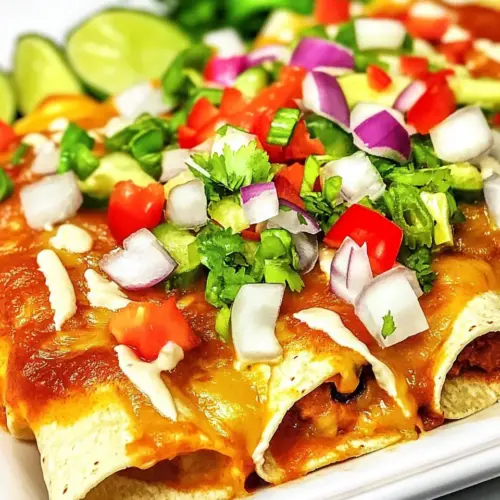
Lazy Enchiladas
Lazy Enchiladas are a creamy, cheesy, and easy weeknight dinner that turns frozen taquitos into a bubbling enchilada bake. With saucy warmth and crisp edges, this simple assembly delivers comforting flavors and minimal effort, perfect when you need a fast family meal that still feels special.
Equipment
- 9x13-inch Baking Dish
- Rotary Cheese Grater
Ingredients
- 1 (22.5-oz) box frozen Taquitos, (any flavor) Frozen: Provides a convenient, fully cooked base of rolled tortillas filled with seasoned meat or cheese that saves time and effort when assembling the dish. Adds texture and bulk, becoming crispier when baked and absorbing sauce for flavor. Works as the primary starch and protein component in lazy enchiladas, simplifying layering and portioning.
- 1 (10-oz) can enchilada sauce Canned: Supplies a ready-made, concentrated chili-tomato sauce seasoned with spices to coat and flavor the taquitos. Adds moisture and depth, ensuring the dish remains saucy while preventing dryness during baking. Acts as the binding flavor that unifies the components and imparts traditional enchilada taste.
- 1 1/2 cups shredded pepper jack cheese Shredded: Contributes melty, spicy-creamy cheese that blankets the dish and creates a gooey, golden topping when baked. Enhances richness and adds both flavor and a slightly tangy heat from the pepper jack variety. Functions as a finishing element that helps hold the assembled enchiladas together and provides visual appeal.
Instructions
- Preheat oven to 425ºF. Lightly spray a 9×13-inch pan with cooking spray.: The air in the oven should feel noticeably hot when you open it, and the higher temperature helps the edges of the taquitos crisp up while the center heats through. You want the oven to be at the right temperature before the pan goes in to avoid soggy outcomes. A common mistake is placing the pan in a not fully preheated oven, which can lead to uneven baking and limp tortillas, so wait until the oven reaches the set heat.
- Place frozen taquitos in a single layer in the prepared pan. Top with enchilada sauce.: The pan surface should glisten slightly, which prevents sticking and makes for cleaner serving. A light spray also promotes easier cleanup. If you skip this, cheese can bake onto the dish, making washing more difficult and risking torn taquitos when serving.
- Bake for 20 minutes.: You should hear a slight thunk as each taquito meets the pan, and they should sit snugly without overlapping too much so heat can circulate. Single layering ensures even heating and prevents cold spots. Overcrowding is a frequent error, and it often causes the interiors to remain underheated while exteriors brown unevenly.
- Remove from oven and top with shredded cheese.: Pour the enchilada sauce evenly over the taquitos so it coats the tops and seeps into crevices, creating pockets of savory moisture. You want an even glossy layer, not a drowning amount, to maintain some textural contrast. Pouring too much sauce can yield a soggy texture rather than a pleasantly saucy bake.
- Bake for an additional 5 minutes, until cheese is melted.: As the oven works, the kitchen will fill with the warm scent of sauce and corn tortilla, and the edges will begin to firm. This stage is about warming through and starting to crisp, so keep an eye out for bubbling sauce and slightly darkening edges. Leaving it in too long at this stage can overbrown the tortillas before the center gets hot, so follow the timing closely.
- Remove from oven and top with shredded cheese: The surface should be bubbling gently, and when you scatter the pepper jack cheese it should sizzle slightly on contact, beginning to melt. Even coverage ensures every bite has cheesy pull. A mistake is piling cheese too thickly, which can prevent full melting; distribute evenly for the best texture.
- Bake for an additional 5 minutes, until cheese is melted: During these final minutes watch the cheese transform from stringy to glossy and slightly golden in spots, which signals readiness. The sound is mostly quiet, but you might see small bubbles around the edges. Overbaking here risks drying out the filling and making the cheese rubbery, so remove when it’s nicely melted and serve promptly.
Notes
- Swap taquito flavors: Use chicken, cheese, or beef taquitos depending on preference, which changes the filling profile without altering the method.
- Choose your sauce style: Pick red or green enchilada sauce to shift the dish toward traditional or bright herbaceous notes, each giving a distinct final taste.
- Try different cheeses: Pepper jack gives heat, while a Mexican blend or cheddar provides milder, creamier melt for different palates.
- Scale down easily: Halve the quantities and bake in a 9 inch pan for a smaller family while preserving texture and timing.
- Add mix ins sparingly: Fold in small amounts of chopped mild chiles if you want extra heat, taking care not to over-moisten the bake.
- Leftover strategy: Store in an airtight container and reheat gently in the oven so the top regains some crispness rather than steaming in the microwave.