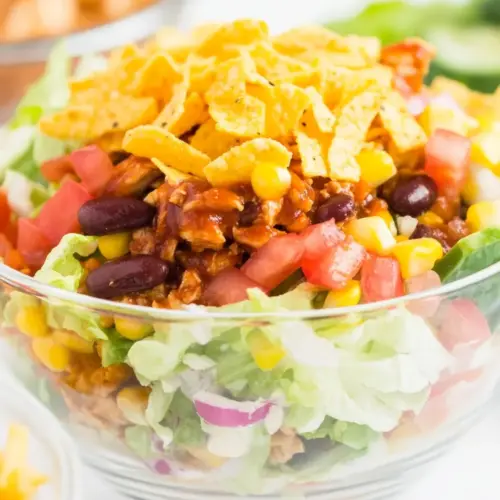
Layered Loaded Chicken Taco Salad
Layered Loaded Chicken Taco Salad is a creamy crispy, easy weeknight dinner that balances warm seasoned chicken with crunchy tortilla chips, fresh lettuce, and a bright lime cilantro dressing. This vibrant salad delivers texture and bold Mexican inspired flavors that make every bite exciting. Perfect for quick family meals or casual entertaining, it’s a reliable crowd pleaser that comes together in minutes.
Equipment
- Large Skillet
- Large Bowl
- Small Bowl
- Whisk
Ingredients
- 2 tablespoons olive oil Heat and sauté in a skillet to provide a cooking medium and bring out flavors in proteins or vegetables; olive oil adds a smooth mouthfeel and helps brown the chicken for attractive color and texture.
- about 1 1/4 pounds boneless skinless chicken breasts, cut into bite-sized pieces Cut into bite-sized pieces and cook evenly so they absorb seasoning; boneless skinless chicken breasts supply lean protein and a tender base for the layered salad.
- one 1.25-ounce packet taco seasoning, divided (I use reduced sodium, medium heat) Season and coat the chicken and other layers to deliver bold Mexican-inspired flavors; a taco seasoning packet combines spices like chili, cumin, and garlic for consistent seasoning.
- 6 cups one 9-ounce bag romaine lettuce, divided Chop or tear and layer to add crispness and fresh green notes; romaine lettuce supplies bulk, hydration, and a crunchy contrast to heavier salad components.
- 1 1/2 cups seasoned tortilla chips, crushed (I crush Doritos in my palm), divided Crush and sprinkle in stages to add salty, crunchy texture and a chip-forward flavor; seasoned tortilla chips contribute both seasoning and a satisfying crunch in the salad.
- one 15-ounce can black beans, drained and rinsed (I used no-salt added) Drain, rinse, and layer to add creamy texture, fiber, and plant-based protein; black beans bring earthiness and help make the salad heartier and more filling.
- 1 1/4 cups corn, fresh, frozen, or canned that’s been drained Drain or cook and layer to contribute sweet, tender kernels and bright color; corn provides natural sweetness and a pop of texture whether fresh, frozen, or canned.
- 2 small/medium Roma tomatoes or 1 cup cherry tomatoes, I used a mixture of both Dice and scatter across layers to add juiciness, acidity, and fresh tomato flavor; Roma or cherry tomatoes bring vibrant color and balance richer components.
- 1 cup shredded cheese, I use a Mexican cheese blend Shred and sprinkle to contribute creamy, melty richness and a savory, salty note; shredded Mexican cheese blend adds depth and helps bind ingredients together.
- 1 medium Hass avocado, peeled and diced small Peel, dice small, and gently fold in to add creamy richness, mild buttery flavor, and a silky texture; Hass avocado supplies healthy fats and a smooth mouthfeel.
- 1 or 2 green onions, sliced into thin rounds Slice thinly and scatter on top to add mild onion bite and a bright, slightly pungent note; green onions provide freshness and a crisp, aromatic finish.
- 1/2 cup mayonnaise, lite okay Whisk or blend into the dressing to add richness, body, and a slightly tangy fat element; mayonnaise helps emulsify other dressing components and create creaminess.
- 1/4 cups sour cream, lite okay, plain Greek yogurt may be substituted Spoon and mix with other creamy ingredients to add cool tang and light acidity; sour cream or Greek yogurt lightens the dressing while adding creamy texture.
- 3 to 4 tablespoons lime juice, or as necessary for flavor and consistency Squeeze and adjust to taste to add bright acidity and balance richness; lime juice brings citrusy freshness that lifts flavors and can thin the dressing to desired consistency.
- 1/4 cup cilantro leaves, minced Mince and mix into dressings or garnish to add bright, herbaceous aroma and citrusy-green flavor; cilantro leaves contribute a fresh herbal lift typical in Mexican-style dishes.
- 1/2 teaspoon granulated sugar, optional and to taste Sprinkle lightly to soften acidity and balance flavors; granulated sugar can round harsh edges and enhance the natural sweetness of tomatoes and corn when used sparingly.
Instructions
- To a large skillet, add the olive oil, chicken, evenly sprinkle with 1 heaping tablespoon taco seasoning, and cook over medium-high heat for about 5 minutes, flipping intermittently so all sides cook evenly. Tip – If you prefer your chicken more saucy, add about 1/2 cup water about 2 minutes into the cooking process. Cooking time will vary based on thickness of chicken breasts and sizes of pieces.: The first sizzle is the signal that aroma is coming, and you should hear a light popping as the chicken hits the hot pan. You will notice a faint browning developing after a minute or two, which adds caramelized flavor, and the taco seasoning will bloom in the oil and perfume the kitchen. I like to keep the heat steady at medium high so the exterior browns without the interior overcooking. Use a spatula to turn pieces so they color on multiple faces, and watch for clear juices running when you press a piece lightly. A common mistake is overcrowding the pan; if you do that the meat will steam instead of sear, resulting in pale, softer pieces. If the pan starts to smoke, lower the heat slightly. This step matters because those browned bits are where much of the savory depth develops, and they will flavor the cooking juices that later dress the salad.
- Allow chicken to rest in pan off the heat while you assemble the salad.: After the chicken finishes cooking, you will notice the sizzling quiet down and a gentle steaming as residual heat carries on. Letting it rest in the pan off the heat keeps the juices from rushing out when you cut or move the pieces, preserving tenderness. The surface will cool slightly, yet still retain warmth that helps the salad meld flavors. A frequent misstep is transferring immediately and cutting into the meat while it is still aggressively bubbling, which forces juices out and dries the bites. Resting for a few minutes allows the proteins to relax and reabsorb liquids, keeping the texture moist and pleasant in the final dish.
- To a large trifle bowl (substitute with your favorite large bowl and/or simply place ingredients on a large platter like this salad), add about 4 cups lettuce, half the chips, black beans, corn, tomatoes, remaining lettuce, chicken plus cooking juices from the pan if desired, cheese, avocado, green onions, and remaining tortilla chips; set aside.: As you layer, pay attention to contrast. The base of crisp lettuce creates structure, then the crushed chips and black beans add crunch and density. When you add the hot chicken and any cooking juices, you will see steam rise and those juices will carry seasoning into lower layers which deepens flavor. The avocado and cheese should be added so they sit near the top where their texture and creaminess remain distinct. One thing to avoid is overmixing the layered bowl at this stage, because the chips will break down; reserve the final toss until after the dressing is added. Layering matters because it creates those delightful mixed bites where you get crispy, soft, tangy, and salty in a single forkful.
- To a small bowl, add the mayo, sour cream, lime juice, 1 heaping tablespoon taco seasoning, and whisk to combine.: As you whisk, notice the dressing thicken and emulsify; the aroma will shift as the taco seasoning disperses evenly. The texture should be smooth and coating, with the lime juice cutting through the richness of the mayonnaise and sour cream. If the mixture is too thick, a bit more lime juice or a teaspoon of water will loosen it while brightening flavor. A typical error is under mixing, which leaves pockets of seasoning; whisk briskly until homogenous for the best mouthfeel and even seasoning distribution.
- Add the cilantro and stir to incorporate. Add additional lime juice to thin out dressing if desired.: When you fold in the minced cilantro , the dressing will take on a fresh green perfume and look flecked with herb. Taste and adjust acidity, adding more lime juice if you want a brighter tang or a thinner consistency. The contrast between the creamy base and herbaceous notes elevates the dressing from merely rich to lively. Watch for over thinning, which will make the dressing run and soak the chips; adjust incrementally to reach the ideal pourable but clingy texture. A common oversight is adding too much liquid at once, so add gradually and taste as you go.
- Taste dressing and depending on how much lime juice was used, add sugar to taste. Evenly drizzle dressing over salad to taste and toss.: The final taste test is crucial. A pinch of granulated sugar can soften the acidity if the lime juice feels sharp, bringing a rounder balance. Drizzle the dressing evenly so every section receives some coating, then gently toss to combine textures without pulverizing the chips. As you toss, listen for the light crunch and watch the colors mingle; the salad should glisten but not sit in a pool of dressing. One mistake I see often is overdressing which causes the chips to lose crunch quickly, so start light and add more if needed. Tossing also helps distribute residual warm pan juices from the chicken for cohesive flavor across the salad.
Notes
- Swap the protein - Use shredded rotisserie chicken if you want to cut down on hands on cook time, the warm meat still integrates well with the dressing and keeps the salad hearty.
- Make it lighter - Substitute plain Greek yogurt for the sour cream to boost protein and reduce calories while keeping the dressing creamy and tangy.
- Keep chips extra crunchy - Add half the crushed tortilla chips in the initial layers and save the rest to sprinkle on top just before serving to preserve texture.
- Prep ahead - Cook the chicken and make the dressing the day before, store them separately in airtight containers, and assemble when ready to serve to save time.
- Adjust heat - If you want more kick, add a pinch of the taco seasoning to the dressing or include a few sliced pickled jalapeños to lend brightness and spice.